Belgium E-Invoicing Penalties: VAT Code Fines & Compliance Consequences
Tax & Compliance Series
This guide is part of a comprehensive series. Explore all 202 topics:
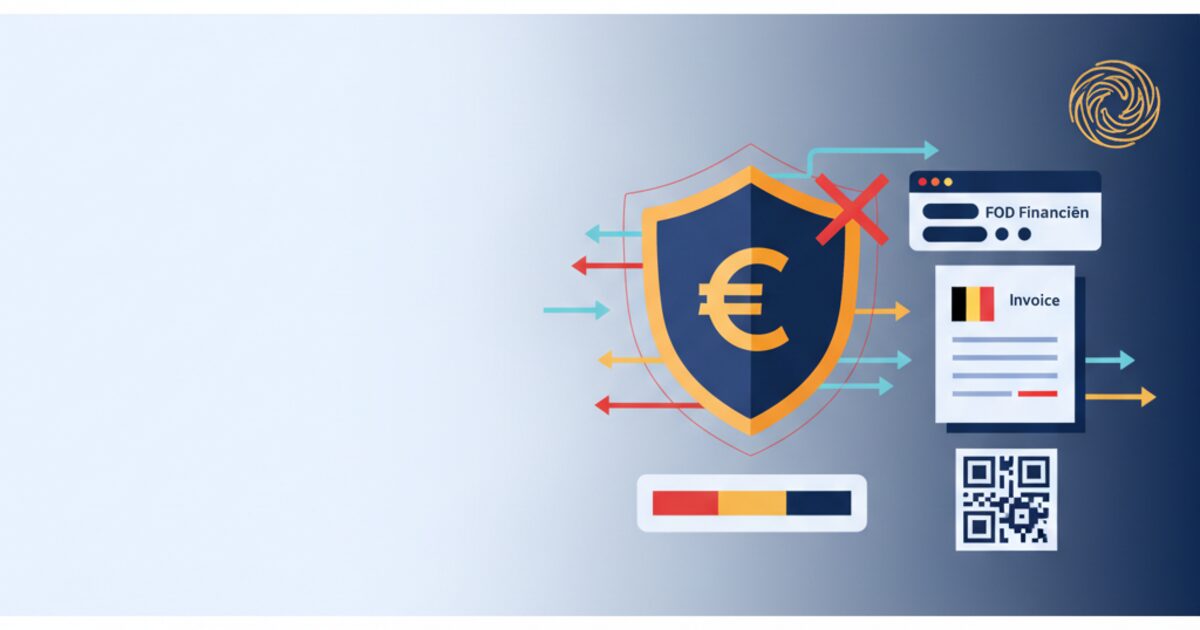
Belgium enforces its PEPPOL e-invoicing mandate through the existing VAT Code penalty framework, with administrative fines ranging from €50 to €5,000 per infraction under Article 70. Beyond direct fines, non-compliant invoices risk being rejected for VAT deduction purposes by the buyer, creating financial exposure on both sides of a transaction. The SPF Finances has emphasized that the January 1, 2026 deadline is firm with no general grace period.
What Specific Penalties Apply to E-Invoicing Non-Compliance?
Belgium's penalty structure operates through the proportional fine system established in the VAT Code:
Belgium's penalty structure operates through the proportional fine system established in the VAT Code:
| Violation | Fine Range | Basis |
|---|---|---|
| Failure to issue a structured e-invoice | €50–€5,000 per invoice | VAT Code Art. 70 §1 |
| Incorrect or incomplete e-invoice data | €50–€2,500 per invoice | VAT Code Art. 70 §1 |
| Repeated non-compliance (habitual) | Proportional to VAT amount | VAT Code Art. 70 §2 |
| Intentional non-compliance | 100%-200% of VAT amount | VAT Code Art. 70 §3 |
How Does VAT Deduction Refusal Work?
This is potentially the most costly consequence.
This is potentially the most costly consequence. Under the updated Belgian VAT rules:
- A buyer who receives a non-structured invoice (PDF, paper) instead of a PEPPOL e-invoice for a domestic B2B transaction may have their input VAT deduction refused by the SPF Finances during an audit.
- At 21% standard VAT, this means a €10,000 purchase could result in €2,100 in non-deductible VAT.
- This creates pressure on buyers to demand PEPPOL invoices from their suppliers.
Is There a Grace Period for Belgian E-Invoicing?
Unlike France, Belgium has not announced an official tolerance period. The SPF Finances has indicated that the mandate is effective from January 1, 2026, and businesses should be prepared.
Unlike France, Belgium has not announced an official tolerance period. The SPF Finances has indicated that the mandate is effective from January 1, 2026, and businesses should be prepared. However, in practice:
- First-time minor infractions may receive warnings rather than maximum fines, at the discretion of the tax inspector.
- Businesses demonstrating good faith efforts (e.g., contract signed with an Access Point, implementation in progress) may receive leniency.
- The 120% tax deduction for e-invoicing implementation costs signals the government's intent to encourage rather than punish during the transition.
What Is the 120% Tax Deduction for E-Invoicing Costs?
Belgium offers a significant financial incentive: businesses can claim a 120% tax deduction on investments related to e-invoicing implementation.
Belgium offers a significant financial incentive: businesses can claim a 120% tax deduction on investments related to e-invoicing implementation. This covers:
- PEPPOL Access Point subscription fees
- Software licensing or upgrade costs
- Integration and consulting fees
- Staff training costs related to e-invoicing
This means a €1,000 investment in e-invoicing setup yields a €1,200 tax deduction—effectively a government subsidy for compliance. Documentation requirements include invoices from service providers and proof of e-invoicing capability.
Using affordable solutions like Invoicemonk with built-in PEPPOL support minimizes compliance costs while maximizing the 120% deduction benefit.
More in this series (202 articles)
From this series
Stay audit-ready and compliant with tax regulations across different regions.
Related Topics
Digital Marketing, SEO Specialist, Content Creator & Product Professional
Olayinka is a digital marketer, content creator, growth and SEO specialist with 10+ years helping businesses in Nigeria, the UK, the US, Australia, and Dubai achieve their goals online.