Brazil NFC-e Consumer Invoice: Complete State-by-State Guide
Tax & Compliance Series
This guide is part of a comprehensive series. Explore all 202 topics:
What Is NFC-e and How Does It Differ From NF-e?
What Is NFC-e and How Does It Differ From NF-e — Purpose: B2B goods transactions — B2C retail consumer sales.
| Feature | NF-e | NFC-e |
|---|---|---|
| Purpose | B2B goods transactions | B2C retail consumer sales |
| Recipient | Business (CNPJ required) | Consumer (CPF optional) |
| DANFE | Full A4 document | Simplified receipt (thermal print or QR code) |
| Authorization | Must be authorized before goods ship | Real-time or offline contingency mode |
| Contingency | SCAN/SVC modes | Offline mode with later transmission |
What Is the State-by-State NFC-e Status?
All 27 states now mandate NFC-e, though implementation timelines varied:
All 27 states now mandate NFC-e, though implementation timelines varied:
- Early adopters (2013-2015): Amazonas, Sergipe, Acre, Mato Grosso, Rio Grande do Norte
- Major states (2016-2019): Minas Gerais, Rio de Janeiro, Paraná, Rio Grande do Sul, Bahia
- São Paulo: Transitioned from SAT to NFC-e, with SAT coexistence until full migration
- Late adopters (2020-2023): Remaining states including Santa Catarina (2023)
What About São Paulo's SAT System?
São Paulo previously used the SAT (Sistema Autenticador e Transmissor), a hardware device that authenticated consumer invoices offline. The state is transitioning to NFC-e, with SAT devices being phased out.
São Paulo previously used the SAT (Sistema Autenticador e Transmissor), a hardware device that authenticated consumer invoices offline. The state is transitioning to NFC-e, with SAT devices being phased out. Businesses should prepare for full NFC-e adoption.
What Are the Technical Requirements for NFC-e?
the Technical Requirements for NFC-e includes: XML format: Same NF-e layout 4.
- XML format: Same NF-e layout 4.00 schema with consumer-specific fields
- CSC (Código de Segurança do Contribuinte): State-issued security code for QR code generation
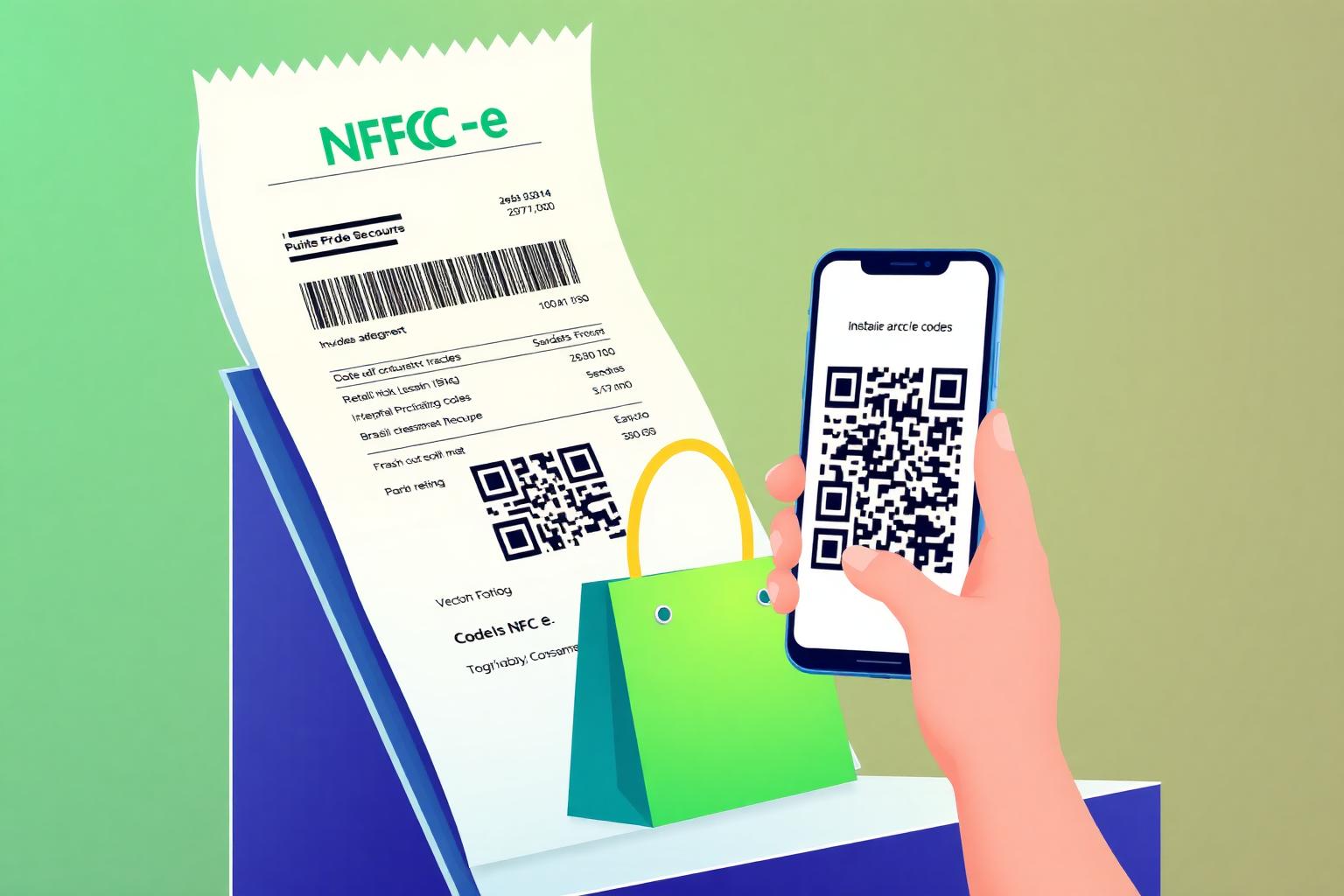
- QR Code: Every NFC-e must include a QR code linking to the validation portal
- Contingency mode: Offline issuance with mandatory transmission within 24 hours when connectivity is restored
- Digital certificate: e-CNPJ A1 or A3 (same as NF-e)
How to Implement NFC-e in Your Business
Register for NFC-e on your state SEFAZ portal and obtain CSC codes Configure POS software or cloud invoicing platform with NFC-e support
- Register for NFC-e on your state SEFAZ portal and obtain CSC codes
- Configure POS software or cloud invoicing platform with NFC-e support
- Set up contingency mode for offline operation during internet outages
- Train staff on QR code issuance and consumer CPF collection (optional but incentivized)
Invoicemonk supports NFC-e issuance with QR code generation, real-time SEFAZ authorization, offline contingency mode, and automated state-specific rule compliance across all 27 Brazilian states.
More in this series (202 articles)
From this series
Stay audit-ready and compliant with tax regulations across different regions.
Related Topics
Digital Marketing, SEO Specialist, Content Creator & Product Professional
Olayinka is a digital marketer, content creator, growth and SEO specialist with 10+ years helping businesses in Nigeria, the UK, the US, Australia, and Dubai achieve their goals online.