GRA Invoice Requirements: Complete Ghana Tax Compliance Guide
Tax & Compliance Series
This guide is part of a comprehensive series. Explore all 202 topics:
Operating a business in Ghana means complying with the Ghana Revenue Authority (GRA) regulations. Understanding invoice requirements isn't just about avoiding penalties — it's essential for maintaining your business reputation and ensuring smooth operations with clients, vendors, and government agencies.
Understanding GRA and the Ghanaian Tax Framework
The Ghana Revenue Authority was established in 2009 by merging the Internal Revenue Service, Customs Excise & Preventive Service, and the VAT Service. GRA is responsible for assessing, collecting, and accounting for all tax revenues in Ghana.
The Ghana Revenue Authority was established in 2009 by merging the Internal Revenue Service, Customs Excise & Preventive Service, and the VAT Service. GRA is responsible for assessing, collecting, and accounting for all tax revenues in Ghana.
Key taxes that affect invoicing include:
- Value Added Tax (VAT): 15% standard rate on most goods and services
- National Health Insurance Levy (NHIL): 2.5% on the value of supply
- GETFund Levy: 2.5% on the value of supply
- COVID-19 Health Recovery Levy: 1% on the value of supply
- Income Tax: Based on business profits
- Withholding Tax: Deducted at source on certain payments
The combined effective rate on goods and services is therefore 21% (15% VAT + 2.5% NHIL + 2.5% GETFund + 1% COVID levy), though these are separate line items on invoices.
Mandatory Invoice Elements for GRA Compliance
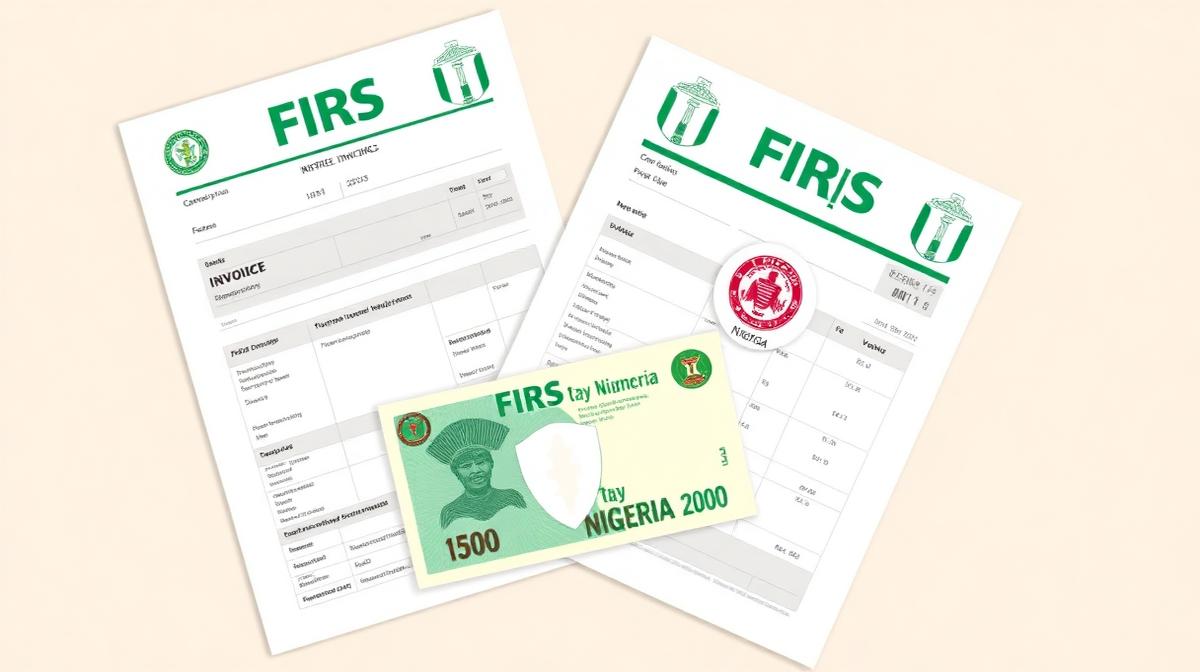
Every tax-compliant invoice in Ghana must include:
Every tax-compliant invoice in Ghana must include:
- Business name and address — your registered business name as it appears with the Registrar General's Department
- Taxpayer Identification Number (TIN) — your unique GRA-issued identifier
- VAT registration number — if your turnover exceeds the threshold
- Customer details — name, address, and TIN (for B2B transactions)
- Invoice number — sequential and unique
- Invoice date — the date of issue
- Description of goods or services — clear and specific
- Quantity and unit price — for each line item
- Subtotal amount — before VAT and levies
- VAT amount — calculated at 15%
- NHIL amount — calculated at 2.5%
- GETFund Levy amount — calculated at 2.5%
- COVID-19 Health Recovery Levy — calculated at 1%
- Total amount payable — including all taxes and levies
VAT Registration and Obligations
Businesses with annual taxable turnover exceeding GHS 200,000 are required to register for VAT with GRA.
Businesses with annual taxable turnover exceeding GHS 200,000 are required to register for VAT with GRA. Once registered, you must:
- Charge VAT at 15% on taxable supplies
- Separately itemise NHIL (2.5%), GETFund (2.5%), and COVID levy (1%)
- Issue VAT-compliant invoices for all taxable transactions
- File VAT returns monthly by the last working day of the following month
- Remit collected VAT and levies to GRA
- Maintain records for at least 6 years
VAT Exemptions
Certain goods and services are exempt from VAT in Ghana, including:
- Unprocessed foodstuffs (fresh fruit, vegetables, grains)
- Medical and pharmaceutical products and services
- Educational services and materials
- Agricultural inputs and equipment
- Domestic transport services
- Financial services (excluding insurance premiums)
Always verify current exemptions on the official GRA website.
Record Keeping Requirements
GRA requires businesses to maintain comprehensive records for a minimum of 6 years.
GRA requires businesses to maintain comprehensive records for a minimum of 6 years. This includes:
- All issued invoices (sales)
- All received invoices (purchases)
- Bank statements and payment records
- Contracts and agreements
- Receipts for expenses
- VAT returns and payment confirmations
Digital record-keeping is accepted and recommended. Using invoicing software ensures your records are organised, searchable, and audit-ready.
E-Invoicing and Digital Compliance
Ghana has been accelerating its digital tax infrastructure. GRA now requires businesses above the VAT threshold to use certified e-VAT software for generating invoices.
Ghana has been accelerating its digital tax infrastructure. GRA now requires businesses above the VAT threshold to use certified e-VAT software for generating invoices. Key developments include:
- E-VAT certified invoicing software must be used by VAT-registered businesses
- Invoices generated through certified systems are automatically reported to GRA
- The system reduces manual errors and simplifies return filing
- Non-certified software may not produce legally valid VAT invoices
Businesses should ensure their invoicing software is GRA e-VAT certified or produces invoices that meet all mandatory element requirements.
Common Compliance Mistakes to Avoid
Common Compliance Mistakes to Avoid includes: Missing TIN on invoices — makes invoices invalid for tax purposes Not separating levies — NHIL, GETFund, and COVID levy must appear as distinct line items, not lumped into VAT
- Missing TIN on invoices — makes invoices invalid for tax purposes
- Not separating levies — NHIL, GETFund, and COVID levy must appear as distinct line items, not lumped into VAT
- Incorrect VAT calculations — use 15% for VAT, not the combined 21% rate
- Late VAT remittance — attracts significant penalties and interest
- Inadequate invoice numbering — gaps or duplicates raise red flags during audits
- Not retaining records — 6-year minimum is strictly enforced
- Using non-certified software — may render VAT invoices non-compliant
Penalties for Non-Compliance
GRA imposes various penalties for non-compliance:
GRA imposes various penalties for non-compliance:
- Late filing of returns: GHS 500 penalty plus 3% of the tax due for each month of default
- Late payment of tax: Interest at 125% of the Bank of Ghana prime rate
- Failure to register for VAT: Fine of up to GHS 5,000 and/or imprisonment
- Failure to issue proper invoices: May result in assessment, back-taxes, and additional penalties
- Fraudulent claims or evasion: Criminal prosecution with fines and imprisonment
How Invoicemonk Helps You Stay Compliant
Invoicemonk is designed with Ghanaian tax compliance in mind.
Invoicemonk is designed with Ghanaian tax compliance in mind. Our platform:
- Automatically includes all required invoice elements including TIN
- Calculates VAT at 15% and separately itemises NHIL, GETFund, and COVID levies
- Generates sequential invoice numbers with no gaps
- Stores invoices securely for 6+ years
- Provides audit-ready reports on demand
- Supports GHS and multi-currency invoicing
Start your Pro plan and create GRA-compliant invoices in minutes.
Frequently Asked Questions
What is the current VAT rate in Ghana?
The standard VAT rate in Ghana is 15%. However, the total tax on goods and services is effectively 21% when you include the 2.
The standard VAT rate in Ghana is 15%. However, the total tax on goods and services is effectively 21% when you include the 2.5% NHIL, 2.5% GETFund Levy, and 1% COVID-19 Health Recovery Levy.
Do I need a TIN to invoice in Ghana?
Yes, all businesses operating in Ghana must obtain a Taxpayer Identification Number (TIN) from the GRA. It is mandatory for all tax-compliant invoicing and B2B transactions.
Yes, all businesses operating in Ghana must obtain a Taxpayer Identification Number (TIN) from the GRA. It is mandatory for all tax-compliant invoicing and B2B transactions.
How long must I keep invoices and records?
GRA requires businesses to retain records for at least 6 years from the end of the relevant tax year.
GRA requires businesses to retain records for at least 6 years from the end of the relevant tax year.
Is electronic invoicing mandatory in Ghana?
VAT-registered businesses are required to use GRA e-VAT certified software for invoice generation. Electronic invoices are accepted and increasingly expected by GRA.
VAT-registered businesses are required to use GRA e-VAT certified software for invoice generation. Electronic invoices are accepted and increasingly expected by GRA.
What happens if I make a mistake on an invoice?
Issue a credit note referencing the original invoice number and create a new, correct invoice. Never delete or alter issued invoices — this is a compliance violation.
Issue a credit note referencing the original invoice number and create a new, correct invoice. Never delete or alter issued invoices — this is a compliance violation.
More in this series (202 articles)
From this series
Stay audit-ready and compliant with tax regulations across different regions.
Related Topics
Digital Marketing, SEO Specialist, Content Creator & Product Professional
Olayinka is a digital marketer, content creator, growth and SEO specialist with 10+ years helping businesses in Nigeria, the UK, the US, Australia, and Dubai achieve their goals online.