Early Payment Discounts: Do They Work? (2/10 Net 30 Explained)
Getting Paid Faster Series
This guide is part of a comprehensive series. Explore all 40 topics:
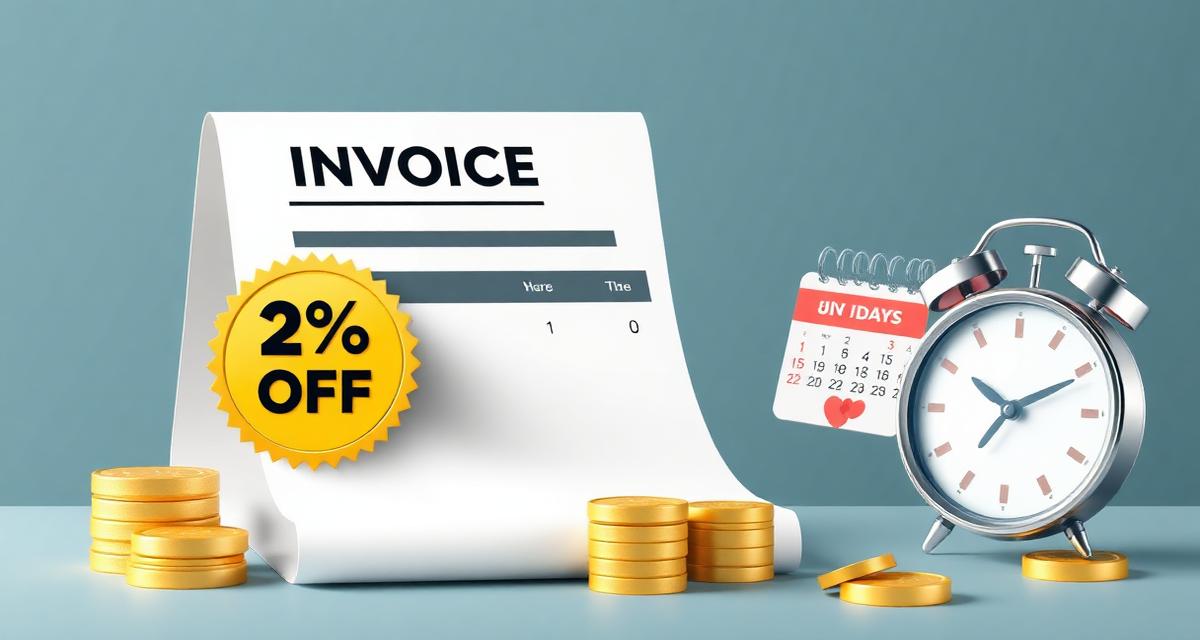
Early payment discounts—offering clients a reduced rate if they pay before the standard due date—have been a business strategy for centuries. The classic "2/10 Net 30" terms (2% discount if paid within 10 days, otherwise full amount due in 30 days) remain common today. But do these discounts actually work for small businesses, and are they worth the cost?
Understanding the True Cost
Before offering early payment discounts, you need to understand their real cost. A 2% discount for paying 20 days early might seem small, but the annualized cost tells a different story.
Before offering early payment discounts, you need to understand their real cost. A 2% discount for paying 20 days early might seem small, but the annualized cost tells a different story.
Here's the math: If a client pays 20 days early to get 2% off, that's equivalent to an annual interest rate of approximately 36% (2% × 365 ÷ 20 days). You're essentially paying 36% per year for faster cash.
Compare this to other financing options:
- Business line of credit: 8-15% APR
- Invoice factoring: 1-5% per month
- Business credit card: 15-25% APR
In most cases, early payment discounts are more expensive than alternative financing. However, cost isn't the only consideration.
When Early Payment Discounts Make Sense
Despite the high effective cost, early payment discounts can be valuable in specific situations:
Despite the high effective cost, early payment discounts can be valuable in specific situations:
1. High Profit Margins
If your gross margins are 50% or higher, a 2% discount barely dents your profitability. For low-margin businesses (10-20%), it's harder to justify.
2. Critical Cash Flow Needs
When you need cash urgently—to take advantage of supplier discounts, cover seasonal expenses, or seize a growth opportunity—the cost of an early payment discount may be worth it. The key is whether the opportunity outweighs the discount cost.
3. Clients Who Reliably Take the Discount
If a client consistently pays early to get the discount, you can factor this into your pricing. Build the discount into your quoted price, effectively maintaining your margin while offering faster payment terms.
4. Competitive Advantage
In industries where early payment discounts are expected, not offering them puts you at a disadvantage. Know your industry norms before deciding.
5. Avoiding Collection Hassles
Some clients are chronic late payers. An early payment discount can convert them to early payers, saving you the time and stress of collections.
When to Avoid Early Payment Discounts
Low margins: If you're already working on thin margins, discounts erode profitability too quickly Healthy cash flow: If you don't need the cash faster, why pay for it?
- Low margins: If you're already working on thin margins, discounts erode profitability too quickly
- Healthy cash flow: If you don't need the cash faster, why pay for it?
- Clients who ignore them: If clients pay at Net 30 regardless, the discount offer provides no benefit
- Better alternatives available: If you can access cheaper financing, use that instead
Alternative Strategies for Faster Payment
Instead of paying for early payment, consider these alternatives:
Instead of paying for early payment, consider these alternatives:
- Shorter payment terms: Move from Net 30 to Net 15 or Due on Receipt
- Require deposits: Get 30-50% upfront before starting work
- Automatic payment reminders: Reduce late payments without discounts
- Multiple payment options: Make it easy to pay via credit card, bank transfer, or online payment
- Late payment fees: Penalize lateness instead of rewarding earliness
How to Structure Effective Discounts
If you decide to offer early payment discounts, structure them effectively:
If you decide to offer early payment discounts, structure them effectively:
- Make the math compelling: 2% isn't exciting, but "$200 savings" catches attention
- Set clear deadlines: "Pay by [specific date]" works better than "within 10 days"
- Highlight on invoices: Make the discount offer prominent, not buried in terms
- Track results: Monitor how many clients take the discount and whether it improves overall cash flow
The Bottom Line
Early payment discounts are a tool, not a universal solution. They work best for high-margin businesses with specific cash flow needs and clients who will actually use them.
Early payment discounts are a tool, not a universal solution. They work best for high-margin businesses with specific cash flow needs and clients who will actually use them. For most small businesses, improving invoicing processes, setting clearer payment terms, and automating reminders provides better returns.
Before offering discounts, calculate the true cost, consider alternatives, and test with a few clients before rolling out broadly.
For more cash flow strategies, see our guide to getting paid faster and learn about effective payment terms.
More in this series (40 articles)
From this series
Strategies and tools to accelerate your payment collection and improve cash flow.
Related Topics
Digital Marketing, SEO Specialist, Content Creator & Product Professional
Olayinka is a digital marketer, content creator, growth and SEO specialist with 10+ years helping businesses in Nigeria, the UK, the US, Australia, and Dubai achieve their goals online.