Freelance Contract Templates: Protect Yourself and Your Clients
Freelancer Success Series
This guide is part of a comprehensive series. Explore all 11 topics:
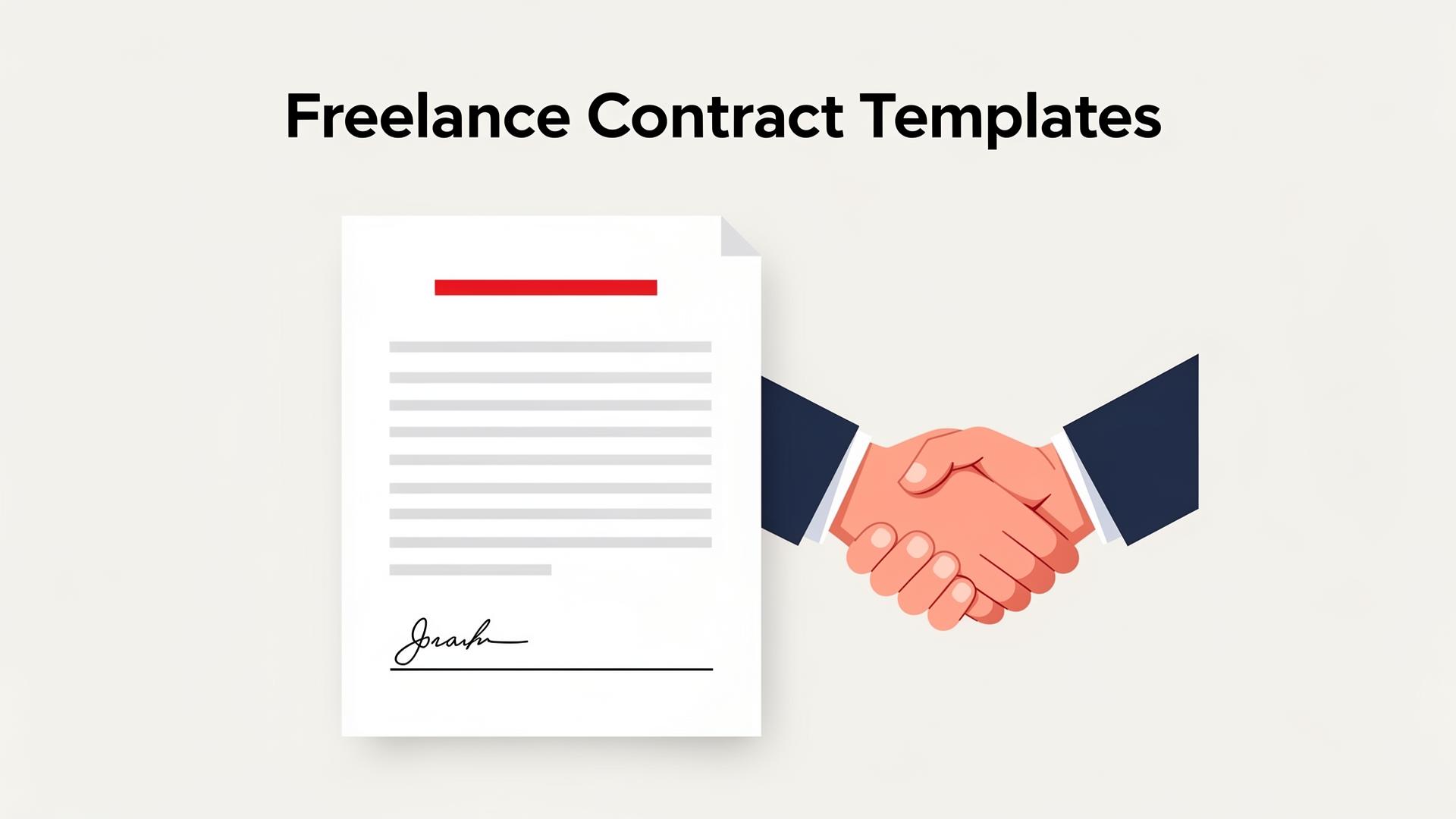
A good contract protects both you and your client. It prevents misunderstandings, establishes clear expectations, and gives you legal recourse if things go wrong. Yet many freelancers work without contracts—or use inadequate templates—putting themselves at significant risk. This guide covers the essential elements every freelance contract needs and provides frameworks you can adapt for your own use.
Why Every Freelancer Needs a Contract
Working without a contract might feel simpler, but it exposes you to serious risks:
Working without a contract might feel simpler, but it exposes you to serious risks:
- Scope creep: Clients add work without additional payment
- Payment disputes: No proof of agreed terms when clients refuse to pay
- Intellectual property confusion: Unclear who owns the work
- Liability exposure: No limits on your responsibility if something goes wrong
- Termination chaos: No clear exit path if the relationship sours
A contract isn't about distrust—it's about clarity. Good clients appreciate clear terms because it protects them too.
Essential Contract Elements
Every freelance contract should include these core sections:
Every freelance contract should include these core sections:
1. Scope of Work
This is the most important section. Define exactly what you will deliver, including:
- Specific deliverables (files, documents, features)
- What's NOT included (explicitly state boundaries)
- Quality standards or specifications
- Approval process for deliverables
Example: "Deliverables include: homepage design (desktop and mobile), 5 inner page templates, and a style guide PDF. Does not include: copywriting, stock photography, or development."
2. Timeline and Milestones
Establish clear deadlines:
- Project start date
- Key milestones (drafts, reviews, final delivery)
- Client dependencies (what you need from them by when)
- Consequences of delays (on both sides)
Key clause: "Client delays in providing required materials or feedback will extend the project timeline by an equivalent period."
3. Payment Terms
Be specific about money:
- Total project fee or rate structure
- Payment schedule (deposit, milestones, final payment)
- Due dates for each payment
- Accepted payment methods
- Late payment penalties
- Currency
Common structure: 50% deposit before work begins, 50% upon completion. For larger projects, consider 30/30/40 split with a milestone in the middle.
4. Revision Policy
Unlimited revisions is a recipe for disaster. Define:
- Number of revision rounds included
- What constitutes a "revision" vs. new work
- Cost of additional revisions
- Timeframe for requesting revisions
Example: "Contract includes two rounds of revisions on each deliverable. Additional revisions will be billed at [rate] per hour. Revision requests must be submitted within 7 business days of delivery."
5. Intellectual Property Rights
Who owns the work? Common approaches:
- Full transfer: Client owns all rights upon final payment
- License: Client gets usage rights; you retain ownership
- Portfolio rights: Client owns work, but you can display it in your portfolio
Critical clause: "Intellectual property rights transfer to Client only upon receipt of final payment in full. Until then, all rights remain with Freelancer."
6. Confidentiality
Protect your client's sensitive information:
- What information is considered confidential
- How you'll protect it
- How long confidentiality lasts
- Exceptions (required by law, already public, etc.)
7. Termination Conditions
Define how either party can exit:
- Notice period required (typically 14-30 days)
- Payment for work completed up to termination
- Handling of partially completed work
- Return of materials
- Causes for immediate termination (non-payment, breach)
Kill fee clause: "If Client terminates the agreement after work has begun, Client will pay for all work completed plus 25% of the remaining contract value."
8. Liability Limitations
Limit your exposure:
- Cap liability to the contract value
- Exclude consequential damages
- Require indemnification for client-provided content
Additional Clauses to Consider
Additional Clauses to Consider includes: Force majeure: Neither party liable for delays due to circumstances beyond control Dispute resolution: How disputes will be handled (mediation, arbitration, jurisdiction)
- Force majeure: Neither party liable for delays due to circumstances beyond control
- Dispute resolution: How disputes will be handled (mediation, arbitration, jurisdiction)
- Subcontracting: Whether you can use subcontractors
- Non-compete: Restrictions on working with competitors (be cautious about agreeing to these)
Red Flags to Avoid
Red Flags to Avoid includes: Unlimited revisions or "until satisfied" Payment only upon client satisfaction
- Unlimited revisions or "until satisfied"
- Payment only upon client satisfaction
- Broad non-compete clauses
- Full liability without limitation
- Rights transfer before payment
- Vague scope definitions
Getting Contracts Signed
Always get signed agreement before starting work. Use electronic signature tools for convenience.
Always get signed agreement before starting work. Use electronic signature tools for convenience. Keep signed copies for your records. For extra protection, use invoicing software that links invoices to specific contracts and deliverables.
Next Steps
Create a template contract with all essential elements, then customize it for each client. Review and update annually as your business evolves. For complex or high-value projects, consider having an attorney review your template.
For more on running a successful freelance business, see our guides on pricing your services and building a freelance business.
More in this series (11 articles)
From this series
Build a thriving freelance business with practical guidance and tools.
Related Topics
Digital Marketing, SEO Specialist, Content Creator & Product Professional
Olayinka is a digital marketer, content creator, growth and SEO specialist with 10+ years helping businesses in Nigeria, the UK, the US, Australia, and Dubai achieve their goals online.