How to Comply with ZATCA Phase 1: Generation Phase Setup (2026)
Global E-Invoicing Platform Series
This guide is part of a comprehensive series. Explore all 36 topics:
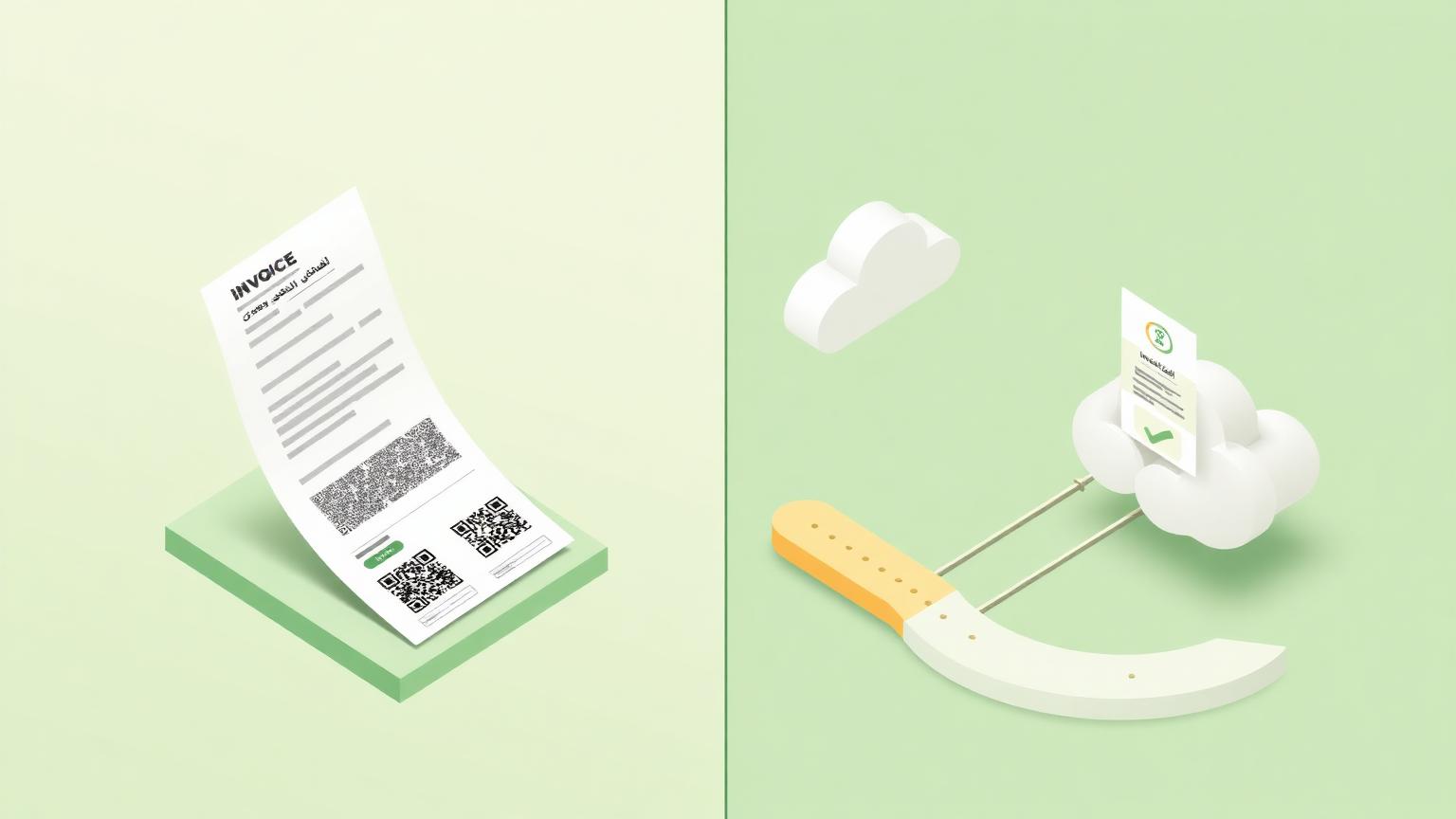
To comply with ZATCA Phase 1, every VAT-registered Saudi taxpayer must issue invoices from a compliant Phase 1 EGS: structured XML payload, tamper-resistant storage, sequential numbering with no gaps, immutable record retention for six years, and a Base64-encoded TLV QR on every Simplified Tax Invoice (B2C). Phase 1 has no portal submission and no signing certificate — those are Phase 2.
At a glance
- Authority: ZATCA
- Mandate: Generation Phase (Phase 1) of Fatoorah
- Artefact: Structured electronic invoice + TLV QR (Simplified only)
- Transport: None (no portal submission until Phase 2)
- Applies to: All VAT-registered resident persons in KSA
- Live since: 4 December 2021
- Last reviewed: 23 June 2026 against the ZATCA Simplified Guide (Phase 1)
Macro context — why Phase 1 exists
Phase 1 is the foundational layer ZATCA put under every VAT-registered business so that Phase 2 (the CTC clearance layer) could be rolled out wave-by-wave without anyone still issuing handwritten invoices.
Phase 1 is the foundational layer ZATCA put under every VAT-registered business so that Phase 2 (the CTC clearance layer) could be rolled out wave-by-wave without anyone still issuing handwritten invoices. Functionally it is a "structured-invoice mandate without transport" — closer to France's pre-2026 e-invoicing prep than to a clearance regime. The rules are simpler than Phase 2 but the controls are real, and the penalty schedule is shared with Phase 2.
What Phase 1 requires
Invoices generated in a structured electronic format (XML, or a system that stores the structured payload alongside a PDF/A-3 rendering). Handwritten and editable spreadsheet "invoices" are non-compliant.
- Invoices generated in a structured electronic format (XML, or a system that stores the structured payload alongside a PDF/A-3 rendering). Handwritten and editable spreadsheet "invoices" are non-compliant.
- The system must be tamper-resistant: issued invoices cannot be edited or deleted; corrections happen through linked credit and debit notes.
- Sequential numbering per Solution Unit, no gaps.
- A TLV QR on every Simplified Tax Invoice (B2C) containing the five mandatory tags.
- Records retained for six years in immutable storage.
Implementation steps
Step 1 — Lock down sequential numbering
Allocate the invoice number atomically when the invoice is finalised. Do not derive it from a database row ID, do not allow user-entered numbers, and never skip a number — gaps are an audit red flag and the most common Phase 1 finding in ZATCA inspections.
Step 2 — Make issued invoices immutable
Once issued, the record (XML payload, totals, line items, timestamp) must be append-only. Corrections happen through linked credit and debit notes that reference the original invoice's UUID. Both documents stay in the audit trail.
Step 3 — Generate the TLV QR for B2C invoices
For every Simplified Tax Invoice, embed the Base64-encoded TLV QR in both the PDF and (where supported) the XML. Specification below.
Step 4 — Store the hash chain even though Phase 1 does not require it
Phase 1 does not enforce a previous-invoice-hash (PIH) chain, but Phase 2 does. Compute and persist it from day one so that on your Phase 2 wave you are not retro-fitting the chain onto historical records.
Step 5 — Retain in immutable storage
The XML, the PDF/A-3 rendering, and the QR must be retained for six years in storage that prevents deletion or alteration. Cloud object storage with versioning plus object-lock is the standard pattern; on-premise archives must use WORM (write-once-read-many) media.
The TLV QR — the only piece of cryptography in Phase 1
The Simplified Tax Invoice QR uses TLV (Tag-Length-Value) encoding, base64-wrapped.
The Simplified Tax Invoice QR uses TLV (Tag-Length-Value) encoding, base64-wrapped. Phase 1 requires five tags:
- Tag 1 — Seller name (UTF-8).
- Tag 2 — VAT registration number (15 digits, ends in
03). - Tag 3 — Invoice timestamp (ISO-8601 with timezone, e.g.
2026-06-23T10:15:00+03:00). - Tag 4 — Invoice total including VAT.
- Tag 5 — VAT amount.
The length byte must be computed on the UTF-8 byte array, not on string length — a frequent bug with Arabic seller names where one character is typically two bytes.
Build Phase 2-ready from day one
When ZATCA calls your wave for the Integration Phase, you typically have six months to integrate. The transition is dramatically easier from a well-configured Phase 1 setup.
When ZATCA calls your wave for the Integration Phase, you typically have six months to integrate. The transition is dramatically easier from a well-configured Phase 1 setup. Two non-required but high-leverage additions:
- Compute and persist the PIH chain in Phase 1. Phase 2 needs it; retrofitting it across historical invoices is painful.
- Use UBL 2.1 as the structured payload now. Even if you render only PDF in Phase 1, persist the UBL XML alongside — Phase 2 mandates exactly that schema.
For the full delta, see ZATCA Phase 1 vs Phase 2; the Phase 2 implementation guide is here.
Compliance checklist
Compliance checklist includes: ☐ Invoices issued from a structured-format system (UBL 2. 1 recommended).
- ☐ Invoices issued from a structured-format system (UBL 2.1 recommended).
- ☐ Sequential numbering, allocated atomically, no gaps.
- ☐ Tamper-resistance: issued invoices cannot be edited or deleted, only reversed via credit notes.
- ☐ TLV QR on every Simplified Tax Invoice, length bytes computed on UTF-8.
- ☐ Six-year archive in object-locked / WORM storage.
- ☐ PIH chain optional-but-stored (Phase 2-ready).
- ☐ UBL 2.1 XML persisted alongside the PDF (Phase 2-ready).
Key takeaways
Key takeaways includes: Phase 1 is about structure, sequence, immutability, and a five-tag QR — not signing or transport. The penalty schedule is shared with Phase 2; missing QR on a B2C invoice still triggers fines.
- Phase 1 is about structure, sequence, immutability, and a five-tag QR — not signing or transport.
- The penalty schedule is shared with Phase 2; missing QR on a B2C invoice still triggers fines.
- Doing Phase 1 properly (UBL 2.1 + PIH chain stored) cuts Phase 2 onboarding from weeks to days.
Authority sources
- ZATCA — Phase 1 Simplified Guide (PDF)
- ZATCA — TLV QR Code Creation guide (PDF)
- ZATCA — Roll-out phases
- ZATCA — E-invoicing FAQ (PDF)
- ZATCA — Simplified Technical Guide
Want a system that already enforces all of the above and migrates you to Phase 2 in place? See Invoicemonk for ZATCA Phase 1.
More in this series (36 articles)
From this series
Mandate-compliant e-invoicing in 17 jurisdictions, with the local artefact (CSID, IRN, UUID, QR, digital signature) issued automatically.
Digital Marketing, SEO Specialist, Content Creator & Product Professional
Olayinka is a digital marketer, content creator, growth and SEO specialist with 10+ years helping businesses in Nigeria, the UK, the US, Australia, and Dubai achieve their goals online.