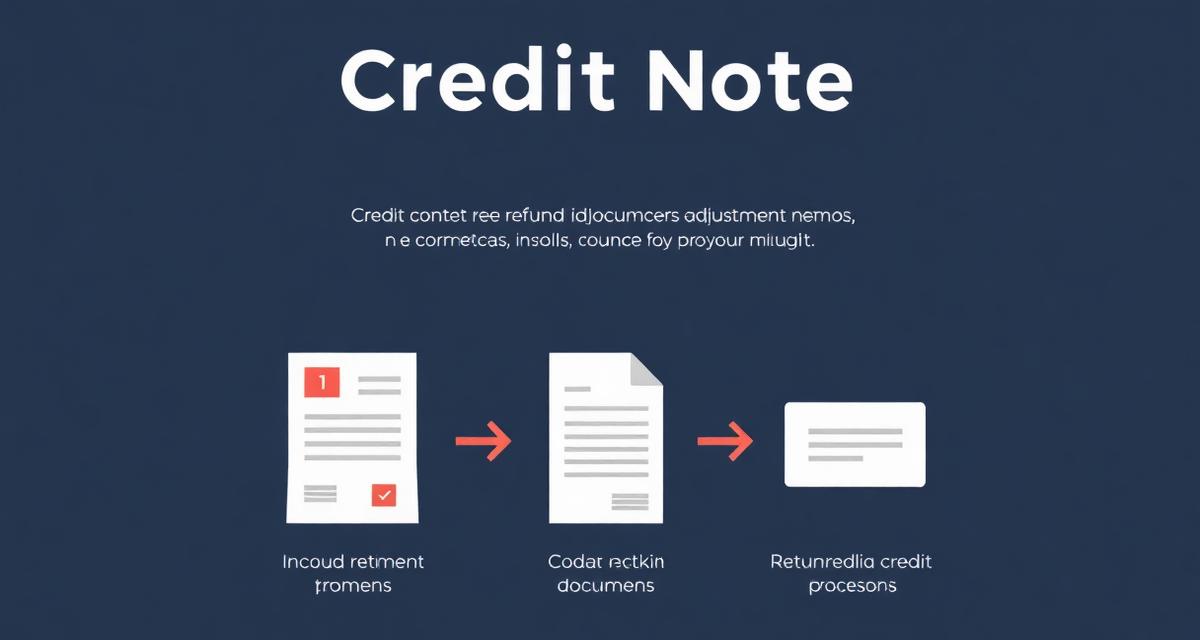
How to issue a credit note — the complete freelancer guide
You sent the invoice. Then you spotted the error: wrong amount, wrong VAT rate, wrong client name. Or the client cancelled the project three days later. Your instinct is to delete the invoice and start again. Do not do that.
In the EU, deleting or modifying a sent invoice is not a valid correction method. The correct approach is a credit note: a separate document that formally reverses or adjusts the original. This guide explains exactly when to use one, what it must contain, how it affects your VAT, and how to do it without creating gaps in your invoice sequence.
What is a credit note, and what is it not?
A credit note, sometimes called a correction invoice or cancellation invoice depending on the country, is a legally binding document that reduces or cancels a previously issued invoice. It is the only compliant method under EU VAT law for correcting a sent invoice.
A credit note, sometimes called a correction invoice or cancellation invoice depending on the country, is a legally binding document that reduces or cancels a previously issued invoice. It is the only compliant method under EU VAT law for correcting a sent invoice.
What makes it different from a replacement invoice: it does not replace the original. Both documents coexist in your records. The credit note references the original by number and date, creates a negative entry in your accounts, and formally adjusts what the client owes.
Three things a credit note is not:
- It is not a refund. A credit note is a document. If money needs to be returned to the client, that is a separate bank transaction. The credit note provides the legal basis for the refund; it is not the refund itself.
- It is not a deleted invoice. You cannot retroactively remove a sent invoice from your records. A sent invoice is a legal document that must be retained, typically for 6 to 10 years depending on the country.
- It is not optional. In most EU member states, issuing a credit note when a correction is required is a legal obligation, not a courtesy. Skipping it and simply accepting less payment than invoiced creates a discrepancy that will surface in a VAT audit.
When do you need to issue a credit note?
You need to issue a credit note in five common scenarios: a material error on a sent invoice, a cancelled project, a partial refund or scope reduction agreed with the client, a duplicate or wrong-client invoice, or a retrospective adjustment to a previously paid invoice.
You need to issue a credit note in five common scenarios: a material error on a sent invoice, a cancelled project, a partial refund or scope reduction agreed with the client, a duplicate or wrong-client invoice, or a retrospective adjustment to a previously paid invoice.
Scenario 1: You made an error on the invoice (wrong amount, wrong rate, wrong VAT)
Any material error on a sent invoice requires a correction document. Minor typographical errors that do not affect the transaction (a misspelled street name, for example) generally do not require formal correction. But errors that affect the financial or tax position, such as a wrong net amount, wrong VAT rate, wrong currency, or incorrect service description, must be corrected with a credit note.
Scenario 2: The client cancelled the project after you sent the invoice
If a client cancels after the invoice was issued, you cannot simply forget about the invoice. It exists in your accounts as receivable income and VAT collected (or declared). You must issue a credit note for the full amount to formally reverse the transaction.
Scenario 3: The client is disputing part of the invoice (partial refund agreed)
If you and the client agree to reduce the invoice amount because the scope changed, a milestone was not completed, or quality was disputed, issue a partial credit note for the difference. The original invoice remains valid for the agreed amount.
Scenario 4: The client was invoiced in error (duplicate invoice or wrong client)
If you accidentally sent the same invoice twice, or sent it to the wrong client, issue a full credit note referencing the incorrect invoice. Then, if applicable, issue a new correct invoice to the right client.
Scenario 5: A previously paid invoice needs a retrospective adjustment
If an overpayment was made and you need to offset it against a future invoice, a credit note documents the adjustment formally. This keeps both parties' VAT records consistent.
Now that you know when to issue one, here is exactly what needs to go on it.
What a credit note must include
Under EU VAT Directive 2006/112/EC, a credit note is treated as an invoice for VAT purposes. It must contain essentially the same mandatory fields as the original invoice it references, plus the specific reference information that links it back.
Under EU VAT Directive 2006/112/EC, a credit note is treated as an invoice for VAT purposes. It must contain essentially the same mandatory fields as the original invoice it references, plus the specific reference information that links it back.
The complete credit note checklist:
- The words "Credit Note" (or country-equivalent). It must be clearly labelled as a credit note, not an invoice. In Germany: "Stornorechnung" or "Gutschrift" (use carefully; Gutschrift has a specific legal meaning in Germany). In France: "Note de crédit" or "Avoir". In the Netherlands: "Creditnota".
- A unique, sequential credit note number. Credit notes have their own number sequence, separate from your invoice sequence. Use a format like CN-2026-001, CN-2026-002. These numbers must also be sequential and gap-free.
- Date of issue.
- A specific and unambiguous reference to the original invoice. This is the critical field. Include the original invoice number and date. Example: "This credit note cancels invoice INV-2026-049, dated 3 June 2026." Without this reference, the credit note has no legal link to the transaction it is correcting.
- Your full name and address.
- Your VAT number (if applicable).
- Your client's full name and address.
- Your client's VAT number (if applicable).
- A description of what is being credited and why. Be specific. "Credit for cancelled project: web development, contracted May 2026" is correct. "Credit" alone is not sufficient.
- The credited amount, shown as a negative figure. The net amount being reversed, displayed as a negative number (for example, -€2,000.00). Some tools show it as a positive with the credit note label making the direction clear; either is acceptable as long as it is unambiguous.
- The VAT amount being reversed (if the original invoice included VAT). Also shown as a negative figure.
- The total amount credited (gross), also negative.
Invoicemonk callout: Invoicemonk generates credit notes with all of these fields pre-filled from the original invoice, including the sequential credit note number and the reference to the original. You select the invoice to credit, enter the amount and reason, and the document is ready. Try Invoicemonk's invoice generator.
Full cancellation vs partial credit: which one to use?
Use a full cancellation credit note when the entire transaction is being reversed; use a partial credit note when only part of the invoice is being adjusted. When in doubt, cancel fully and reissue cleanly.
Use a full cancellation credit note when the entire transaction is being reversed; use a partial credit note when only part of the invoice is being adjusted. When in doubt, cancel fully and reissue cleanly.
Full cancellation credit note
Use when you need to completely reverse an invoice: the project was cancelled, the invoice was sent to the wrong client, or the error is so significant that starting fresh is cleaner.
The credit note mirrors the original invoice exactly (same amounts, same line items) but all figures are negative. Net amount: -€2,000.00. VAT: -€380.00. Total: -€2,380.00.
After the credit note is issued, the original invoice is formally cancelled. If a new correct invoice is needed, issue it as a new document with the next sequential number.
Partial credit note
Use when only part of the invoice needs to be adjusted: a pricing error on one line item, a scope reduction, or a partial refund agreed with the client.
The credit note shows only the amount being reversed, not the full invoice total. Example: original invoice was €3,000. Client agreed to pay €2,500 after a scope change. Issue a credit note for -€500 (plus any applicable VAT adjustment). The original invoice remains valid; the net position is €2,500 owed.
Which to use depends on whether the transaction itself is being cancelled or just adjusted. When in doubt: cancel fully and reissue cleanly. Partial corrections with multiple credit notes and re-invoices create complex audit trails that are harder to explain.
How credit notes affect VAT, and your VAT return
When you issue a VAT invoice, you declare output VAT. If you later issue a credit note that reduces or cancels that invoice, your output VAT must be adjusted accordingly: in the same VAT return period if possible, or in the next period if the original return has already been filed.
When you issue a VAT invoice, you declare output VAT. If you later issue a credit note that reduces or cancels that invoice, your output VAT must be adjusted accordingly: in the same VAT return period if possible, or in the next period if the original return has already been filed.
Concretely: you invoiced €2,000 + €380 VAT (19%) in May. In June you issue a full credit note. Your June VAT return must reflect a -€380 adjustment to output VAT. If you already filed the May return without knowing the correction was coming, you correct it in June's return, not by amending the May return.
For your client: if they already claimed input VAT based on your invoice, they must reduce their input VAT claim by the same amount when they receive the credit note. This is why sending the credit note to the client promptly matters; delays cause their VAT records to be overstated until they receive it.
For reverse charge invoices: if the original invoice was a reverse charge transaction with no VAT shown, the credit note also shows no VAT. The reversal is handled by the client in their own VAT return. For a deeper walkthrough, see our pillar on cross-border VAT and reverse charge for EU freelancers.
Credit notes and sequential numbering: keeping the sequence intact
The original invoice number is never reused. Once INV-2026-049 is issued, that number belongs to that document permanently, even if a credit note cancels it completely.
The original invoice number is never reused. Once INV-2026-049 is issued, that number belongs to that document permanently, even if a credit note cancels it completely. Credit notes have their own sequence (CN-2026-001, CN-2026-002), and a corrected replacement invoice receives the next number in the invoice sequence.
The relationship between credit notes and sequential numbering is one of the most misunderstood aspects of invoice compliance. Here is how they interact:
- The original invoice number is never reused. Once INV-2026-049 is issued, that number belongs to that document permanently, even if a credit note cancels it completely. The cancelled invoice and its credit note both remain in your records as an audit trail.
- Credit notes have their own sequence. Do not number credit notes within your invoice sequence. Use a separate prefix: CN-2026-001, CN-2026-002. This keeps the two document types clearly distinguishable in your records.
- A corrected replacement invoice gets the next invoice number. If you cancel INV-2026-049 with credit note CN-2026-001 and need to reissue a corrected invoice, the corrected version is INV-2026-050: the next number in the invoice sequence.
What the audit trail looks like:
| Document | Date | Amount | Status |
|---|---|---|---|
| INV-2026-049 (original) | 3 June 2026 | €2,000 + VAT | Cancelled |
| CN-2026-001 (credit note) | 5 June 2026 | -€2,000 - VAT | References INV-2026-049 |
| INV-2026-050 (corrected) | 5 June 2026 | €1,800 + VAT | Active |
Three documents. No gaps. A clear audit trail that any tax authority can follow without asking questions. For a full explanation of sequential invoice numbering rules, see our guide to sequential invoice numbering and gap prevention.
Country-specific nuances worth knowing
The EU baseline credit note rules are consistent across all 27 member states, but Germany, France, and the Netherlands each add specific requirements freelancers should know.
The EU baseline credit note rules are consistent across all 27 member states, but Germany, France, and the Netherlands each add specific requirements freelancers should know.
- Germany: the term "Gutschrift" (credit note) has a specific legal meaning. It refers to a self-billing arrangement where the client issues the invoice on behalf of the supplier. Using it to mean a correction invoice is technically incorrect under German VAT law since 2013. Use "Stornorechnung" (cancellation invoice) or "Rechnungskorrektur" (invoice correction) instead. See our guide on invoicing German clients.
- France: credit notes are called "avoirs" or "notes de crédit". France's e-invoicing mandate (September 2026 for large and medium businesses, September 2027 for small and micro-enterprises) includes credit notes in scope; they must be submitted through the same Plateforme Agréée certified platforms as regular invoices. See our French invoice requirements guide.
- Netherlands: credit notes (creditnota) follow the same BTW rules as invoices. They must include the client's BTW-ID and the KVK number of the Dutch party. See our Dutch invoice requirements guide.
Quick answers
What is a credit note and when should I issue one?
A credit note is a legally binding document that reduces or cancels a previously issued invoice.
A credit note is a legally binding document that reduces or cancels a previously issued invoice. It is the correct method under EU VAT law for correcting invoicing mistakes, processing cancellations, or issuing partial refunds. Issue one when an invoice contains a material error, when a project is cancelled after invoicing, when a partial refund is agreed, or when a duplicate invoice has been sent. Deleting or modifying a sent invoice is not a valid correction method in the EU.
What must a credit note include under EU law?
Under EU VAT Directive 2006/112/EC, a credit note must include a clear "Credit Note" label, a unique sequential credit note number (separate from invoices), the date of issue, a specific reference to the original invoice by number and date, both parties' names and addresses, VAT numbers where applicable, a…
Under EU VAT Directive 2006/112/EC, a credit note must include a clear "Credit Note" label, a unique sequential credit note number (separate from invoices), the date of issue, a specific reference to the original invoice by number and date, both parties' names and addresses, VAT numbers where applicable, a description of what is being credited and why, the credited net amount as a negative figure, and the VAT amount being reversed (also negative).
How does a credit note affect my VAT return?
Your output VAT is reduced by the amount on the credit note.
Your output VAT is reduced by the amount on the credit note. If the credit note is issued in the same VAT period as the original invoice, the adjustment appears in the same return. If the original return has already been filed, adjust it in the next VAT return period. Your client must reduce their input VAT claim by the same amount on receipt. For reverse charge invoices, the credit note also shows no VAT; the client mirrors the reversal in their own return.
What is the difference between a full cancellation credit note and a partial credit note?
the difference between a full cancellation credit note and a partial credit note is a full cancellation credit note completely reverses an original invoice, with all amounts shown as negative figures mirroring the original.
A full cancellation credit note completely reverses an original invoice, with all amounts shown as negative figures mirroring the original. A partial credit note reverses only part of an invoice (one line item, an agreed price reduction), and the original invoice remains valid for the balance. After either type, a replacement invoice (if needed) gets the next sequential number; the original number is never reused.
Do credit notes have their own invoice number sequence?
Yes. Credit notes use a separate sequential series, commonly formatted as CN-2026-001, CN-2026-002.
Yes. Credit notes use a separate sequential series, commonly formatted as CN-2026-001, CN-2026-002. The cancelled invoice number is never reused. The audit trail shows three documents in sequence: the original invoice, the credit note that references it, and (if needed) a corrected replacement invoice with the next number in the invoice series.
The five rules to screenshot
The five rules to screenshot includes: Never delete or modify a sent invoice. Always issue a credit note instead.
- Never delete or modify a sent invoice. Always issue a credit note instead.
- A credit note must reference the original invoice by number and date.
- Credit notes have their own sequential number series, separate from your invoice sequence.
- VAT on the credit note must mirror the VAT treatment on the original invoice.
- If you reissue a corrected invoice, it gets the next number in your invoice sequence. Never reuse the cancelled number.
Invoicemonk generates credit notes directly from the original invoice: pre-filled with the reference, the correct amounts (positive or negative), and the next sequential credit note number. The audit trail is built automatically.
Issue your first credit note in Invoicemonk.
Want to understand how sequential invoice numbering works and why gaps are dangerous? Read our complete guide to sequential invoice numbering and gap prevention. For the EU-wide rules behind credit notes, see EU VAT invoice requirements and cross-border VAT for EU freelancers. External: European Commission eInvoicing France page.
Digital Marketing, SEO Specialist, Content Creator & Product Professional
Olayinka is a digital marketer, content creator, growth and SEO specialist with 10+ years helping businesses in Nigeria, the UK, the US, Australia, and Dubai achieve their goals online.