EU VAT invoice requirements for freelancers (2026 guide)
Tax & Compliance
Stay audit-ready and compliant with tax regulations across different regions.
Tax & Compliance Series
This guide is part of a comprehensive series. Explore all 202 topics:
You just landed a client in Germany or the Netherlands. Great news. Then their accountant emails back asking for a "VAT-compliant invoice" and you stare at the screen wondering what that actually means. What goes on it? What if you get it wrong? And do you even need to charge VAT?
This guide answers all of that. It covers the EU-wide rules that apply in all 27 member states, the mandatory fields every compliant invoice must include, how the reverse charge mechanism works (and when it applies to you), the sequential numbering rule that quietly trips up most freelancers, what happens when you issue a non-compliant invoice, and how Invoicemonk handles all of this automatically.
Section 1: The legal foundation, what EU law actually says
EU invoicing is governed by a single piece of legislation: the VAT Directive (Council Directive 2006/112/EC). This directive sets the baseline that all 27 member states must follow.
EU invoicing is governed by a single piece of legislation: the VAT Directive (Council Directive 2006/112/EC). This directive sets the baseline that all 27 member states must follow. Individual countries can add requirements on top of it (Germany and Italy do), but they cannot drop below the floor it sets.
Here's the part most freelancers miss: a VAT invoice is not just a payment request. It is a legal document that allows your client to reclaim input VAT from their own tax authority. If your invoice is missing a required field, your client's accountant will reject it. Your payment gets delayed, and you look unprofessional in front of a brand-new client.
Tax law sounds intimidating. The actual list of required fields is shorter than you think.
Section 2: The mandatory fields, what every EU VAT invoice must include
This is the core list. These fields come straight from the EU VAT Directive and are confirmed by the European Commission's own guidance.
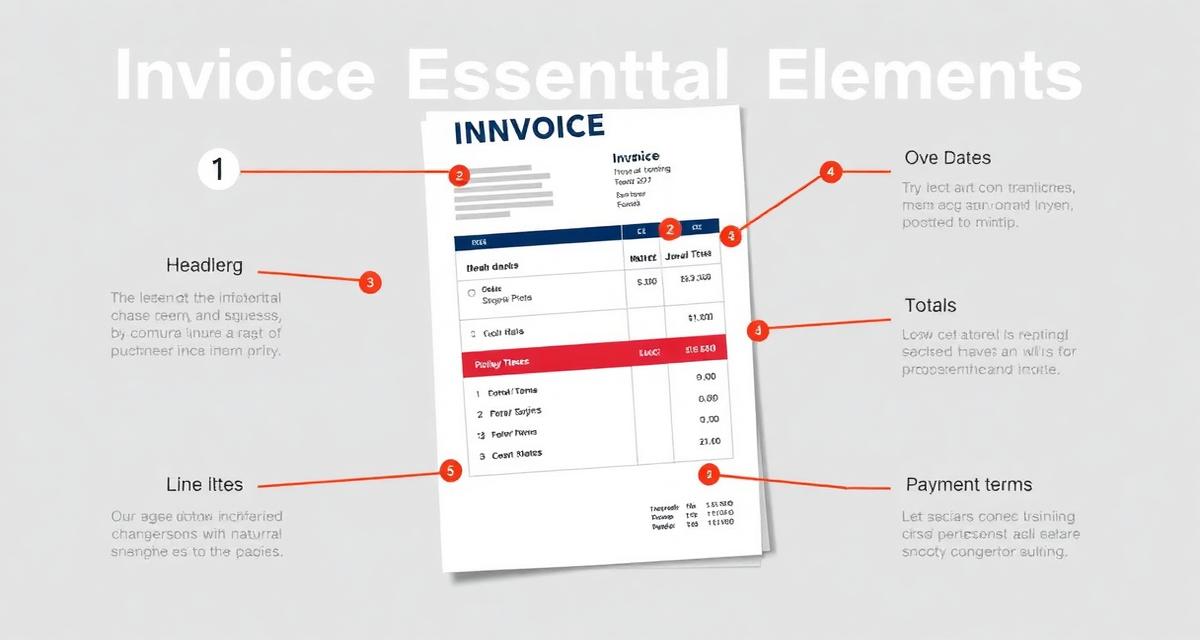
This is the core list. These fields come straight from the EU VAT Directive and are confirmed by the European Commission's own guidance. Every compliant freelance invoice issued anywhere in the EU must include:
- Your full name and address. Your legal trading name, not just a brand or business name.
- Your VAT identification number. The number issued by your country's tax authority. Format varies by country (e.g. DE123456789 in Germany, BG123456789 in Bulgaria, FR12345678901 in France).
- Your client's full name and address.
- Your client's VAT number. Critical for B2B cross-border invoices; without it, you cannot apply reverse charge.
- A unique, sequential invoice number. Must form part of an unbroken sequence (more on this below).
- Date of issue. The date the invoice is created.
- Date of supply. The date the service was actually delivered. This is different from the invoice date and is mandatory in some countries (notably Germany under §14 UStG).
- A clear description of the services provided. "Project work" or "consulting" is not enough. Describe what you delivered: "Backend API development, March 2026, 40 hours".
- The taxable amount per VAT rate. The net amount, before VAT.
- The VAT rate applied. For example 19% (Germany), 20% (France), 21% (Netherlands).
- The total VAT amount payable.
- The total amount payable. Gross amount including VAT.
- A reverse charge note where applicable. The phrase "VAT: reverse charge" plus a reference to Article 196 of the VAT Directive.
Section 3: The reverse charge mechanism, the most important concept for cross-border invoicing
This deserves its own section because it confuses almost every freelancer the first time they see it on an EU invoice.
This deserves its own section because it confuses almost every freelancer the first time they see it on an EU invoice.
Here's how it works:
- Normally, the seller charges VAT and pays it to their government.
- Under reverse charge, that responsibility shifts to the buyer.
- So when you, the freelancer, invoice an EU business in another country, you do not add VAT to your invoice.
- You add the note "VAT: reverse charge" and cite Article 196 of the VAT Directive.
- Your client then self-reports the VAT on their own tax return.
When does it apply? For services supplied by a freelancer to a VAT-registered business in another EU member state, reverse charge applies automatically. The "place of supply" rule under EU law deems services to be supplied where the client is established, not where you are.
What if your client is a private individual rather than a business? Different rules apply, the reverse charge does not. We cover that in detail in our cross-border VAT guide for EU freelancers (publishing soon).
The mistake to avoid: not including the reverse charge note. Without it, the client cannot apply the mechanism. Their accountant will reject the invoice and may hold payment until you reissue it. Our German invoice requirements guide walks through a worked example.
Section 4: Sequential invoice numbering, why gaps are a serious problem
Most freelancers do not realise this until their accountant or a tax auditor brings it up. EU rules require invoice numbers to form a continuous, unbroken sequence.
Most freelancers do not realise this until their accountant or a tax auditor brings it up. EU rules require invoice numbers to form a continuous, unbroken sequence.
What that means in practice:
- You cannot delete an invoice and reuse its number.
- If you make an error, you must issue a credit note (not delete the original). See our guide on how to issue a credit note.
- Gaps in numbering are a red flag during tax audits. They can be interpreted as attempts to hide income.
- In Bulgaria, Germany, and France, the rules around this are strictly enforced.
This is one place where free invoicing tools genuinely fall down. Word templates have no concept of sequential numbering. Google Docs neither. Wave does not enforce it. Invoicemonk does, and it is impossible to create a gap by accident: every invoice gets the next number in the sequence, and corrections must go through a credit note.
Section 5: What happens if your invoice is non-compliant
The consequences are not catastrophic, but they are annoying and they cost you money.
The consequences are not catastrophic, but they are annoying and they cost you money.
- Your client's accountant will reject the invoice and ask you to reissue it. This delays your payment, sometimes by weeks.
- National tax authorities can fine you if errors are systematic across many invoices. Severity varies by country: Germany can levy fines up to €5,000 per breach under §26a UStG.
- You remain liable for the correct VAT even if your invoice showed less. The tax authority will come to you, not your client, for the unpaid amount.
- Corrections require a formal credit note, not a replacement document. Issuing a "corrected" invoice with the same number is itself a compliance breach.
None of this is hard to avoid if you use a tool that enforces compliance at the point of creation. The hard part is doing it manually for every invoice across multiple EU clients with different VAT setups.
Section 6: VAT registration thresholds, do you even need to charge VAT?
Many EU freelancers operate below their country's VAT registration threshold and do not need to charge VAT at all. This is a genuinely important nuance and it varies a lot between countries.
Many EU freelancers operate below their country's VAT registration threshold and do not need to charge VAT at all. This is a genuinely important nuance and it varies a lot between countries.
- Germany: €22,000 per year (Kleinunternehmerregelung under §19 UStG). Below this, you do not charge VAT but must cite §19 UStG on your invoice.
- France: €37,500 for services (régime micro-entrepreneur).
- Netherlands: €20,000 (kleineondernemersregeling).
- Bulgaria: BGN 100,000 (around €51,000).
- Italy: €85,000 (regime forfettario).
- Poland: PLN 200,000 (around €46,500).
If you are above the threshold, you must register for VAT and charge it on domestic sales. If you are below, you do not charge VAT but must note the reason on your invoice.
Here's the catch most freelancers miss: for cross-border B2B EU invoices, the reverse charge applies regardless of your registration status. So even a German Kleinunternehmer invoicing a Dutch company applies reverse charge, just with a slightly different note.
Country-specific deep dives: Bulgaria, Romania, Poland, Italy, Hungary.
Section 7: What's changing, the EU's e-invoicing mandate
Worth knowing about, even if you don't have to act on it yet. The EU's VAT in the Digital Age (ViDA) directive is rolling out structured e-invoicing requirements for intra-EU B2B transactions from July 2030.
Worth knowing about, even if you don't have to act on it yet. The EU's VAT in the Digital Age (ViDA) directive is rolling out structured e-invoicing requirements for intra-EU B2B transactions from July 2030. From that date, cross-border B2B invoices will need to be issued in a structured electronic format and reported to tax authorities in near real time.
Several countries are already ahead of the timeline:
- Italy: Mandatory B2B e-invoicing via SDI since 2019. See our Italy fattura elettronica guide for freelancers.
- Romania: Mandatory B2B e-invoicing via RO e-Factura since 2024.
- Germany: ZUGFeRD/XRechnung phasing in, with full B2B enforcement by January 2028.
- France: PPF/PDP rollout currently underway. See our France e-invoicing guide.
Invoicemonk is building these formats natively, not bolting them on. By the time ViDA is enforced, you will not have to think about it.
Quick answers (the things people actually ask)
What are the VAT invoice requirements for freelancers in the EU?
EU freelancers must include 13 mandatory fields on every VAT invoice: their name and address, their VAT number, the client's name and address, the client's VAT number, a unique sequential invoice number, the date of issue, the date of supply, a description of the services, the taxable amount per VAT rate, the VAT…
EU freelancers must include 13 mandatory fields on every VAT invoice: their name and address, their VAT number, the client's name and address, the client's VAT number, a unique sequential invoice number, the date of issue, the date of supply, a description of the services, the taxable amount per VAT rate, the VAT rate applied, the total VAT amount, the total amount payable, and, for cross-border B2B invoices, a reverse charge note citing Article 196 of the VAT Directive. These requirements are set by EU VAT Directive 2006/112/EC and apply across all 27 member states.
What is reverse charge on a freelance invoice?
Reverse charge is a VAT mechanism that shifts the responsibility to report and pay VAT from the seller to the buyer.
Reverse charge is a VAT mechanism that shifts the responsibility to report and pay VAT from the seller to the buyer. When a freelancer invoices a VAT-registered business in another EU country, they do not add VAT to the invoice. Instead, they include the note "VAT: reverse charge" and cite Article 196 of the EU VAT Directive. The client then accounts for the VAT on their own tax return. Without this note, the client cannot apply the mechanism and may refuse to pay until the invoice is corrected.
Do EU freelancers have to charge VAT?
Not always.
Not always. Most EU countries have a VAT registration threshold below which freelancers are not required to register for or charge VAT. Germany's threshold is €22,000 per year; France's is €37,500 for services. Freelancers below their domestic threshold do not charge VAT, but must note the reason on their invoice. For cross-border B2B invoices to VAT-registered EU clients, the reverse charge mechanism applies regardless of whether the freelancer is VAT-registered.
What happens if a freelance invoice is not VAT compliant in the EU?
If a freelance invoice is missing mandatory VAT fields, the client's accountant will typically reject it and ask for a corrected version.
If a freelance invoice is missing mandatory VAT fields, the client's accountant will typically reject it and ask for a corrected version. This delays payment. If errors are repeated, national tax authorities can impose fines. The freelancer also remains liable for the correct VAT amount even if the invoice showed less, meaning the tax authority can pursue them for unpaid VAT. Mistakes must be corrected by issuing a formal credit note, not by deleting and reissuing the original invoice.
What is sequential invoice numbering and why does it matter?
Sequential invoice numbering means every invoice must be part of an unbroken numerical sequence.
Sequential invoice numbering means every invoice must be part of an unbroken numerical sequence. Gaps in that sequence, created by deleting invoices or skipping numbers, are treated as a red flag during tax audits in many EU countries and can be interpreted as an attempt to conceal income. If an invoice needs to be cancelled or corrected, the correct approach is to issue a credit note rather than delete the original. This rule is strictly enforced in several EU countries including Bulgaria, Germany, and France.
The five things every EU freelancer needs to remember
The five things every EU freelancer needs to remember includes: Include all 13 mandatory fields, especially your VAT number and your client's VAT number. Use reverse charge language for cross-border B2B invoices, with the Article 196 reference.
- Include all 13 mandatory fields, especially your VAT number and your client's VAT number.
- Use reverse charge language for cross-border B2B invoices, with the Article 196 reference.
- Never skip or delete invoice numbers. Always issue a credit note to correct errors.
- Know your local VAT threshold. You may not need to charge VAT at all on domestic sales.
- Use a tool that enforces compliance automatically so you never have to think about it again.
Invoicemonk is built for exactly this. Sequential numbering enforced by design, automatic reverse charge handling for EU B2B clients, country-aware tax fields, and credit notes baked into the workflow. Create your first VAT-compliant EU invoice.
P.S. One small thing that will save you hours later: store your client's VAT number against their record the first time they give it to you, and validate it via the EU's VIES tool. An invalid VAT number means you cannot apply reverse charge, and you find out about it weeks later when payment stalls. Invoicemonk validates VIES numbers automatically when you add an EU client.
Frequently Asked Questions
How long should I keep business records?
Generally, keep records for 6-7 years. Nigeria (FIRS): 6 years, UK (HMRC): 6 years, US (IRS): 7 years for most records, Canada (CRA): 6 years, Australia (ATO): 5 years. Keep permanently: annual accounts, asset purchase records, and legal documents.
Learn more: Tax DeductionsWhat invoice elements are legally required?
Requirements vary by country but typically include: your business name/address, client details, unique invoice number, date, description of goods/services, amounts, tax breakdown (VAT/GST), and your tax registration number.
Learn more: Audit PreparationHow do I prepare for a tax audit?
Keep organized, dated records of all transactions. Maintain supporting documents (receipts, contracts, bank statements). Reconcile accounts regularly. Use accounting software for accurate, searchable records. Respond promptly to authority requests.
Learn more: Nigeria (FIRS)Do I need to charge VAT/GST on my invoices?
This depends on your registration status and thresholds. UK: VAT if turnover exceeds £85,000. Australia: GST if turnover exceeds $75,000. Nigeria: VAT registration required for businesses above threshold. US: Sales tax varies by state.
Learn more: UK (HMRC)Table of Contents
Explore the Tax & Compliance Series
202 articles to master this topic
Small Business Tax Compliance Guide: Stay Audit-Ready and Maximize Deductions
Navigate tax obligations with confidence. Learn record-keeping requirements, common deductions, and strategies to stay compliant while minimizing your tax burden.
17 min read
France E-Invoicing Guide: PPF, PDP & e-Reporting Mandate (2026)
France's e-invoicing mandate starts September 1, 2026 for receiving and large-business emission. Learn the PPF/PDP Y-scheme, Factur-X format, and €15-per-invoice penalties (capped €15,000/year).
18 min read
Belgium E-Invoicing Guide: PEPPOL B2B Mandate, SPF Finances & Compliance (2026)
Belgium mandates PEPPOL e-invoicing for all B2B transactions from January 1, 2026. Complete guide to SPF Finances requirements, deadlines, and compliance.
14 min readDigital Marketing, SEO Specialist, Content Creator & Product Professional
Olayinka is a digital marketer, content creator, growth and SEO specialist with 10+ years helping businesses in Nigeria, the UK, the US, Australia, and Dubai achieve their goals online.