How to Invoice Kenyan Clients from Abroad: Cross-Border Guide
Getting Paid Faster Series
This guide is part of a comprehensive series. Explore all 40 topics:
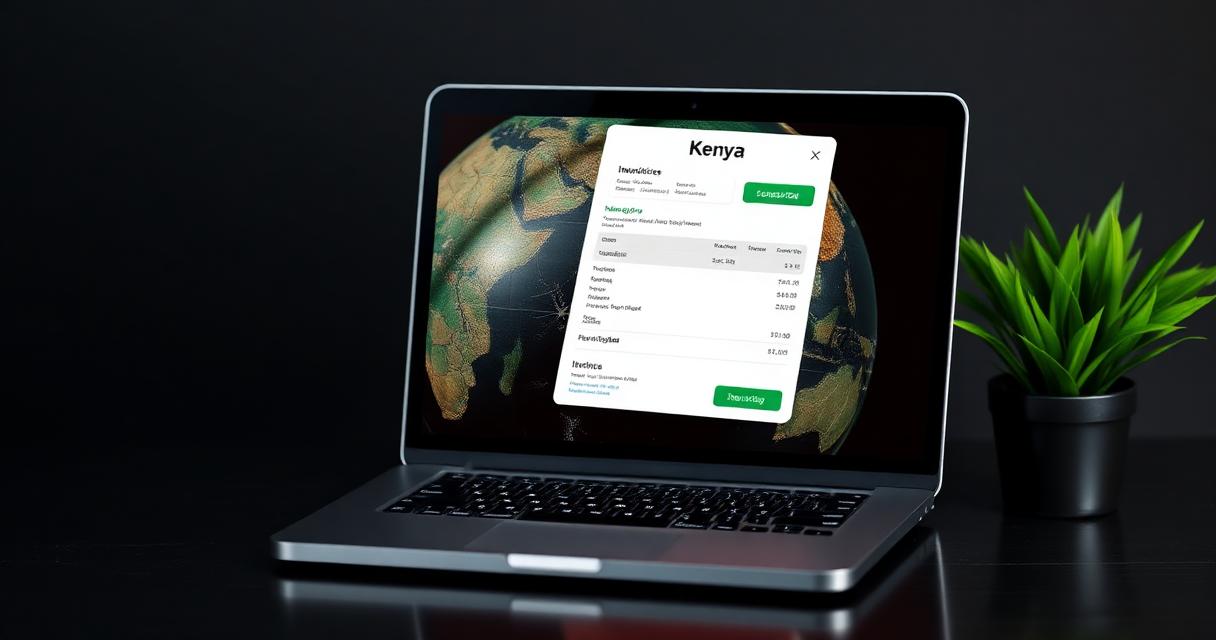
Invoicing clients in Kenya from abroad requires understanding local tax rules, currency considerations, and payment preferences. This guide covers everything international freelancers and businesses need to know about billing Kenyan clients compliantly and getting paid efficiently.
Currency Considerations
When invoicing Kenyan clients, you have two options:
When invoicing Kenyan clients, you have two options:
- Invoice in KES (KSh): More convenient for your client, but you bear exchange rate risk
- Invoice in your home currency: Simpler for your accounting, but may cause friction for the client
Invoicemonk's multi-currency feature lets you invoice in any currency while tracking the value in your home currency automatically.
VAT Obligations for Foreign Suppliers
If you're based outside Kenya and invoicing Kenyan clients:
If you're based outside Kenya and invoicing Kenyan clients:
- You generally do not charge Kenyan VAT if you have no permanent establishment in Kenya
- Your Kenyan client may need to account for the VAT under the reverse-charge mechanism
- Include a note on your invoice explaining the VAT treatment (e.g., "Supply subject to reverse charge")
- Keep records of all cross-border transactions
Always consult a tax advisor familiar with both your jurisdiction and Kenya.
Withholding Tax
Some payments from Kenya may be subject to withholding tax. Your Kenyan client may be required to deduct tax at source before paying you.
Some payments from Kenya may be subject to withholding tax. Your Kenyan client may be required to deduct tax at source before paying you. Check if a double taxation agreement (DTA) between your country and Kenya reduces or eliminates withholding obligations.
Getting Paid from Kenya
Popular payment methods for receiving money from Kenya include:
Popular payment methods for receiving money from Kenya include:
- International bank transfer: Traditional but may involve high fees
- Wise (TransferWise): Competitive exchange rates, lower fees
- PayPal/Payoneer: Widely used, convenient but higher fees
- Local payment integration: M-Pesa, Paystack, bank transfer, and debit cards
Compare fees using our international payment fee calculator.
Essential Invoice Elements for Cross-Border Billing
Essential Invoice Elements for Cross-Border Billing includes: Your full business name, address, and tax ID Client's name, address, and KRA PIN
- Your full business name, address, and tax ID
- Client's name, address, and KRA PIN
- Clear currency designation (KES)
- VAT treatment note
- International bank details (IBAN/SWIFT) or payment link
- Payment terms and due date
How Invoicemonk Simplifies Cross-Border Invoicing
Invoicemonk handles multi-currency invoicing, automatic exchange rate tracking, and generates professional invoices that comply with both your local requirements and Kenyan expectations.
Invoicemonk handles multi-currency invoicing, automatic exchange rate tracking, and generates professional invoices that comply with both your local requirements and Kenyan expectations. Get started →
More in this series (40 articles)
From this series
Strategies and tools to accelerate your payment collection and improve cash flow.
Related Topics
Digital Marketing, SEO Specialist, Content Creator & Product Professional
Olayinka is a digital marketer, content creator, growth and SEO specialist with 10+ years helping businesses in Nigeria, the UK, the US, Australia, and Dubai achieve their goals online.