Multi-Currency Invoicing Explained: A Guide for International Businesses
Getting Paid Faster Series
This guide is part of a comprehensive series. Explore all 40 topics:
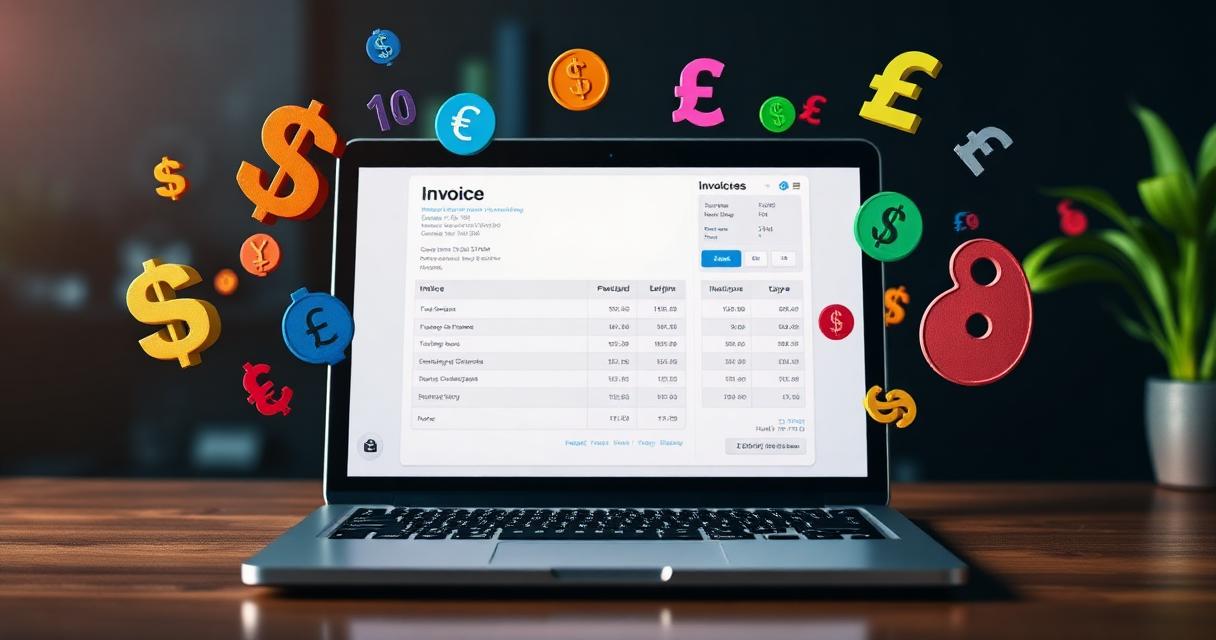
If you work with clients in different countries, multi-currency invoicing isn't optional — it's essential. Sending a USD invoice to a client who works in GBP creates friction, confusion, and often delays payment.
This guide covers everything you need to handle multi-currency invoicing professionally: from choosing the right currency and managing exchange rates to collecting payments and handling the accounting.
Why Multi-Currency Invoicing Matters
Faster payments: Clients pay quicker when invoiced in their local currency Professional image: Shows you understand international business
- Faster payments: Clients pay quicker when invoiced in their local currency
- Professional image: Shows you understand international business
- Competitive advantage: Removes a barrier for international clients
- Better client relationships: No confusion about amounts owed
Choosing the Right Currency
Consider these factors:
- Client preference: Ask your client which currency they prefer
- Contract terms: Your agreement may specify the currency
- Exchange rate stability: Volatile currencies increase your risk
- Payment method availability: Some payment processors work better with certain currencies
Managing Exchange Rates
Exchange rates fluctuate constantly.
Exchange rates fluctuate constantly. Here's how to manage the risk:
- Lock the rate at invoice time: Use the mid-market rate when creating the invoice
- Record the rate: Note the exchange rate on the invoice for transparency
- Track gains and losses: When payment arrives, the rate may have changed — record the difference
- Consider hedging: For large amounts, forward contracts can lock in rates
Tax Implications
Multi-currency invoicing has tax consequences:
Multi-currency invoicing has tax consequences:
- Report all income in your home currency for tax purposes
- Exchange gains are typically taxable income
- Exchange losses may be deductible
- Keep records of every exchange rate used
- VAT/GST may need to be calculated in local currency
Collecting International Payments
Choose payment methods that minimise fees and maximise convenience:
Choose payment methods that minimise fees and maximise convenience:
- Wise: Best exchange rates, lowest fees for most corridors
- PayPal: Widely accepted but higher fees (2.9% + currency conversion)
- Stripe: Great for online payments, supports 135+ currencies
- Bank transfer: Traditional but can involve high intermediary fees
Compare options using our international payment fee calculator.
Accounting for Multi-Currency Transactions
Accounting for Multi-Currency Transactions includes: Record the invoice in both currencies (foreign and home) Use the exchange rate on the invoice date for initial recording
- Record the invoice in both currencies (foreign and home)
- Use the exchange rate on the invoice date for initial recording
- When payment is received, record at the actual received amount in home currency
- Book any exchange difference as a gain or loss
How Invoicemonk Handles Multi-Currency
Invoicemonk's multi-currency invoicing automates the entire process. Create invoices in any currency, and the platform tracks exchange rates, records transactions in your home currency, and generates accurate reports.
Invoicemonk's multi-currency invoicing automates the entire process. Create invoices in any currency, and the platform tracks exchange rates, records transactions in your home currency, and generates accurate reports. Get started →
More in this series (40 articles)
From this series
Strategies and tools to accelerate your payment collection and improve cash flow.
Related Topics
Digital Marketing, SEO Specialist, Content Creator & Product Professional
Olayinka is a digital marketer, content creator, growth and SEO specialist with 10+ years helping businesses in Nigeria, the UK, the US, Australia, and Dubai achieve their goals online.