Peppol EU Explained: Scope, Country Mandates, and What Changes Through 2028
Global E-Invoicing Platform Series
This guide is part of a comprehensive series. Explore all 36 topics:
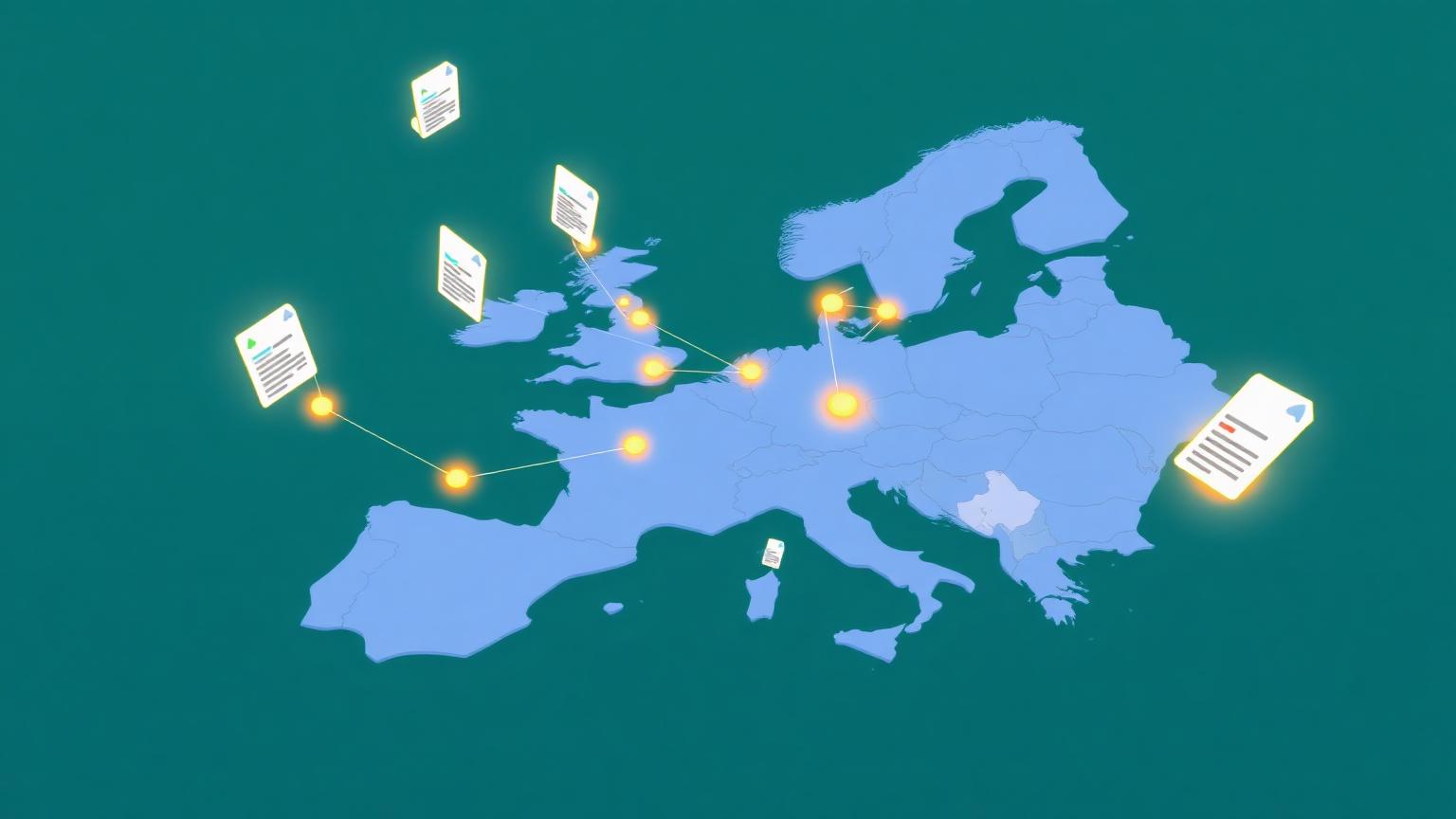
Peppol is the EU-governed network for exchanging structured business documents — most prominently invoices — between trading partners across borders. It runs on a four-corner model where senders and receivers transact through certified Access Points over AS4, using Peppol BIS Billing 3.0 (a UBL 2.1 customisation of EN 16931). It is mandatory for B2G across the EU under Directive 2014/55/EU, and now for B2B in Belgium (2026), Germany (phased 2025–2028), and France (phased 2026–2027). The VAT in the Digital Age (ViDA) package, adopted on 11 March 2025, rolls digital reporting requirements out to January 2035.
At a glance
- Governance: OpenPeppol AISBL + national Peppol Authorities
- Network model: Four-corner; AP-to-AP via AS4
- Invoice standard: Peppol BIS Billing 3.0 (CIUS of EN 16931, UBL 2.1)
- Lookup: SML (DNS) → SMP (metadata)
- Mandatory for: EU B2G under Dir 2014/55/EU; B2B in BE (2026), DE (2025–2028), FR (2026–2027)
- Wider context: ViDA package adopted 11 Mar 2025, in force 14 Apr 2025
- Last reviewed: 23 June 2026
What Peppol actually is
Peppol started as a 2008 EU-funded project (Pan-European Public Procurement Online) and is now governed by OpenPeppol AISBL, a non-profit incorporated in Belgium.
Peppol started as a 2008 EU-funded project (Pan-European Public Procurement Online) and is now governed by OpenPeppol AISBL, a non-profit incorporated in Belgium. Each member state has a Peppol Authority — for example the Belgian FPS Finance (BOSA), the Dutch NPa, the German KoSIT and the French DGFiP. The Peppol product is a network plus a set of business document specifications. The Peppol EU mandate page documents how Invoicemonk implements it; this article covers the regulation.
The four-corner model in detail
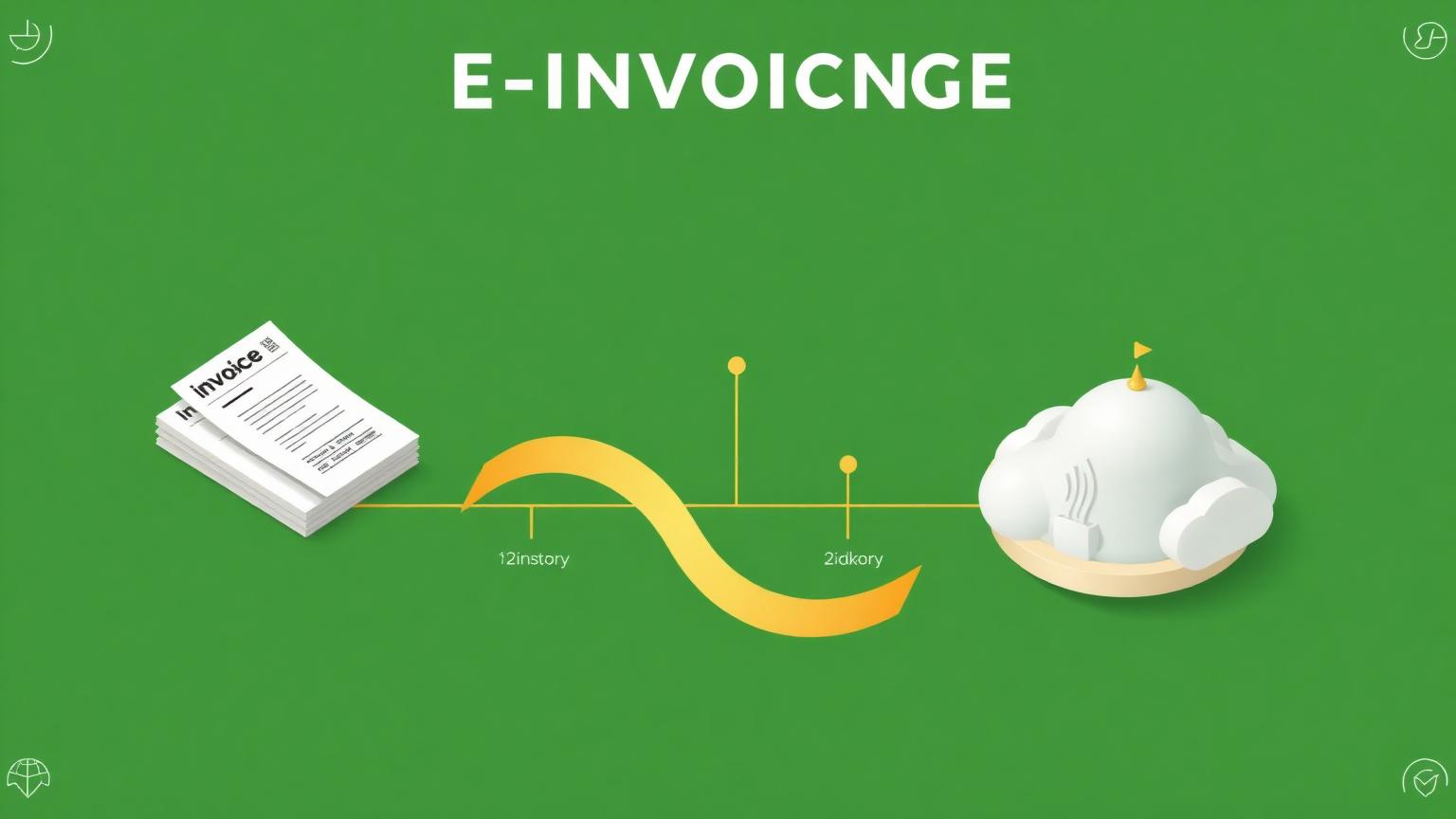
Peppol uses a four-corner model:
Peppol uses a four-corner model:
- Corner 1 (C1) — the sender (the invoicing application).
- Corner 2 (C2) — the sender's certified Access Point.
- Corner 3 (C3) — the receiver's certified Access Point.
- Corner 4 (C4) — the receiver (the buyer's accounts payable system).
C1 and C4 never connect directly. C2 looks up C3 in the Peppol SML (Service Metadata Locator, a DNS-backed directory) and the SMP (Service Metadata Publisher) of the receiver, retrieves the endpoint URL, certificate, and accepted document types, then transmits over AS4 with non-repudiation receipts on both sides.
Why a four-corner model and not point-to-point?
Point-to-point requires every sender to onboard every buyer bilaterally. The four-corner model means any sender's AP can reach any receiver's AP without prior bilateral configuration — Peppol becomes "the email of B2B documents".
Point-to-point requires every sender to onboard every buyer bilaterally. The four-corner model means any sender's AP can reach any receiver's AP without prior bilateral configuration — Peppol becomes "the email of B2B documents".
Where does the tax authority sit?
Outside the path. Peppol carries documents buyer-to-buyer; tax reporting happens separately (national DRRs, future ViDA intra-community DRR).
Outside the path. Peppol carries documents buyer-to-buyer; tax reporting happens separately (national DRRs, future ViDA intra-community DRR). That is the key contrast with clearance models like ZATCA, MyInvois, or GST IRN, where the regulator sits inside the path.
The Peppol BIS Billing 3.0 specification
The current invoice standard is Peppol BIS Billing 3.
The current invoice standard is Peppol BIS Billing 3.0, with the November 2025 release at version 3.0.20. BIS Billing 3.0 is a Core Invoice Usage Specification (CIUS) of EN 16931, serialised as UBL 2.1, validated by a published Schematron rule set, and transmitted by Access Points. Every compliant Peppol invoice is therefore both a valid EN 16931 invoice and a valid UBL 2.1 document with Peppol's customisation layer on top.
What is the role of Schematron?
Schematron files encode the business rules. Rule codes are namespaced: BR-* for EN 16931 business rules, BR-CO-* for calculation rules, BR-S-* for VAT category rules, and PEPPOL-* for Peppol-only rules.
Schematron files encode the business rules. Rule codes are namespaced: BR-* for EN 16931 business rules, BR-CO-* for calculation rules, BR-S-* for VAT category rules, and PEPPOL-* for Peppol-only rules.
What is the difference between CIUS and Extension?
A CIUS restricts EN 16931 (removes optionality, narrows code lists) without adding new elements. An Extension adds new elements.
A CIUS restricts EN 16931 (removes optionality, narrows code lists) without adding new elements. An Extension adds new elements. Peppol BIS Billing 3.0 is a CIUS — that is why it remains EN 16931 compliant.
Who must use Peppol today
EU public buyers (B2G): under Directive 2014/55/EU, every contracting authority must be able to receive EN 16931 invoices. In practice almost all do so over Peppol.
- EU public buyers (B2G): under Directive 2014/55/EU, every contracting authority must be able to receive EN 16931 invoices. In practice almost all do so over Peppol.
- Belgium: B2B e-invoicing via Peppol BIS became mandatory on 1 January 2026 (Royal Decree of 18 September 2025); the FPS Finance grace period ended 27 March 2026 and full enforcement is in effect.
- France: B2B reform begins 1 September 2026 with mandatory receipt for all businesses and mandatory issuance for large and mid-sized companies; SMEs and micro-enterprises join issuance from 1 September 2027. The model uses PDPs (private platforms) connected to the public portal.
- Germany: B2B receipt of e-invoices mandatory since 1 January 2025 under the Wachstumschancengesetz; issuance obligations phased through 1 January 2028 with revenue thresholds. Permitted formats: XRechnung, ZUGFeRD ≥2.0.1, Peppol BIS.
- Nordics, Netherlands, Luxembourg: Peppol is the de facto B2G rail and widely used for B2B.
- Italy: SDI (FatturaPA) since 2019, with Peppol used for cross-border flows.
- Poland: KSeF B2B mandatory from 1 February 2026 for large taxpayers (>PLN 200 million), 1 April 2026 for others; Peppol gateway in development.
What changes through ViDA (2025–2035)
The VAT in the Digital Age (ViDA) package was adopted by the Council on 11 March 2025 and entered into force on 14 April 2025.
The VAT in the Digital Age (ViDA) package was adopted by the Council on 11 March 2025 and entered into force on 14 April 2025. Three pillars:
- Digital Reporting Requirements (DRR): from July 2030, all intra-EU B2B transactions must be reported in near-real-time using EN 16931 syntaxes; PDF-only invoices for those transactions become non-compliant.
- Platform Economy: deemed supplier rules for short-term accommodation and passenger transport platforms from 1 January 2030.
- Single VAT Registration: extended OSS scope from 1 January 2027.
Critically, ViDA removed the derogation requirement: since 14 April 2025, member states can mandate e-invoicing for domestic transactions without prior Commission approval. That is the legal lever behind the cascade of national B2B mandates landing in 2025–2026.
How Peppol differs from clearance regimes
Peppol is a delivery network — it routes documents between trading partners. It is not a tax authority clearance system.
Peppol is a delivery network — it routes documents between trading partners. It is not a tax authority clearance system. Regimes like ZATCA Phase 2 or MyInvois require the tax authority to approve or receive every invoice in near real time; Peppol does not. The two models are compared in Peppol vs national portals.
Peppol glossary — 8 terms you need
Peppol glossary — 8 terms you need includes: Access Point (AP): certified Peppol service provider that sends/receives documents on behalf of a participant. SML: Service Metadata Locator — DNS-backed root directory of all SMPs on the network.
- Access Point (AP): certified Peppol service provider that sends/receives documents on behalf of a participant.
- SML: Service Metadata Locator — DNS-backed root directory of all SMPs on the network.
- SMP: Service Metadata Publisher — per-participant metadata (endpoint URL, certificate, accepted document types).
- Participant Identifier:
scheme::value, e.g.0208::0123456789. - AS4: OASIS messaging protocol (ebMS3 v3.0) profiled by Peppol AS4 v2.0.3 for AP-to-AP transmission.
- BIS: Business Interoperability Specification — a usage profile of a base standard.
- CIUS: Core Invoice Usage Specification — a restriction (no new elements) of EN 16931.
- MLR: Message Level Response — receiver's acknowledgement or business-level reject of a document.
Key takeaways
Key takeaways includes: Peppol = four-corner network + BIS Billing 3. 0 standard + AS4 transport + SMP/SML lookup.
- Peppol = four-corner network + BIS Billing 3.0 standard + AS4 transport + SMP/SML lookup.
- EU B2G compliance is universal under Directive 2014/55/EU. B2B is country-by-country.
- ViDA's adoption on 11 Mar 2025 unlocked the wave of national B2B mandates and sets the intra-EU DRR for 2030.
- Peppol is a network model — it does not replace clearance regimes outside the EU.
Related reading
Pillar: e-invoicing. Sub-source: Peppol EU mandate page.
Pillar: e-invoicing. Sub-source: Peppol EU mandate page. Siblings: how to comply with Peppol in the EU, Peppol vs national portals, what is a Peppol Access Point, UBL 2.1 explained, XAdES digital signatures.
Sources
- OpenPeppol — Peppol BIS Billing 3.0 (v3.0.20, Nov 2025)
- OpenPeppol eDEC Specifications index
- Directive 2014/55/EU on e-invoicing in public procurement
- European Commission — VAT in the Digital Age (ViDA)
- European Commission — eInvoicing in Germany factsheet
- Loyens & Loeff — Belgian B2B Royal Decree analysis
- Service-Public — France e-invoicing timetable
More in this series (36 articles)
From this series
Mandate-compliant e-invoicing in 17 jurisdictions, with the local artefact (CSID, IRN, UUID, QR, digital signature) issued automatically.
Digital Marketing, SEO Specialist, Content Creator & Product Professional
Olayinka is a digital marketer, content creator, growth and SEO specialist with 10+ years helping businesses in Nigeria, the UK, the US, Australia, and Dubai achieve their goals online.