VAT Flat Rate Scheme Invoicing: How to Invoice Correctly Under FRS
Tax & Compliance Series
This guide is part of a comprehensive series. Explore all 202 topics:
What Is the VAT Flat Rate Scheme?
The VAT Flat Rate Scheme (FRS) simplifies VAT for small businesses with taxable turnover under £150,000. Instead of calculating the actual VAT on every purchase and sale, you pay HMRC a fixed percentage of your gross turnover.
The VAT Flat Rate Scheme (FRS) simplifies VAT for small businesses with taxable turnover under £150,000. Instead of calculating the actual VAT on every purchase and sale, you pay HMRC a fixed percentage of your gross turnover. The percentage depends on your industry — ranging from 4% (retail food) to 14.5% (professional services).
The key benefit: simplicity. You don't need to track VAT on every purchase. But the invoicing rules catch many businesses out.
How FRS Affects Your Invoices
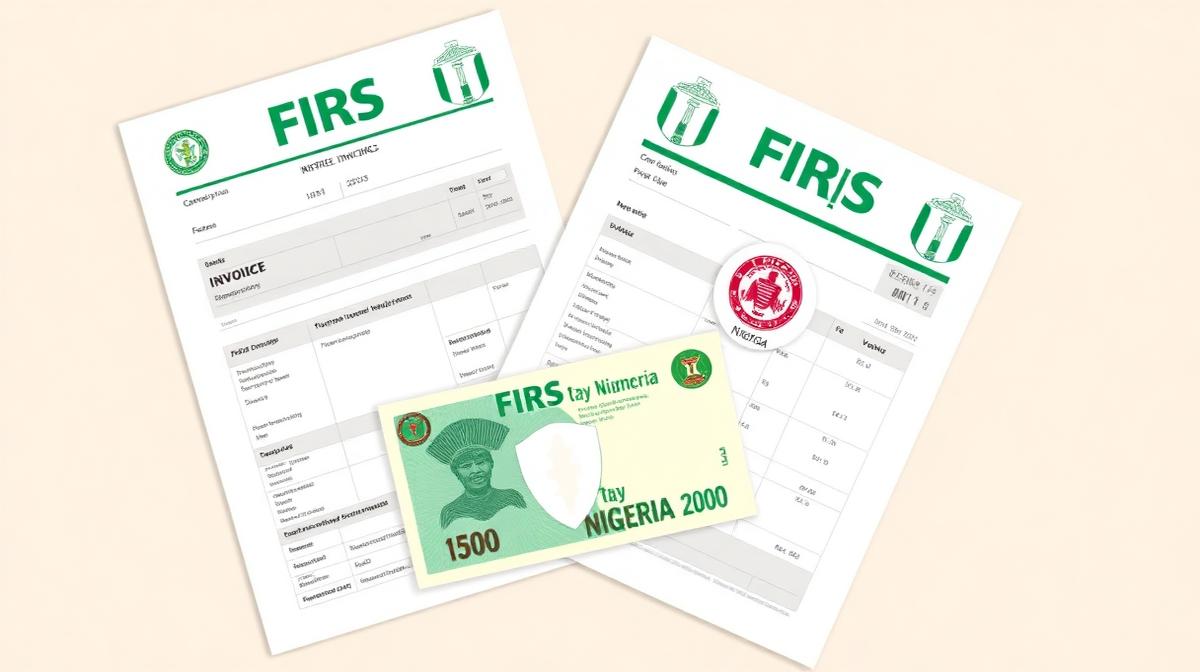
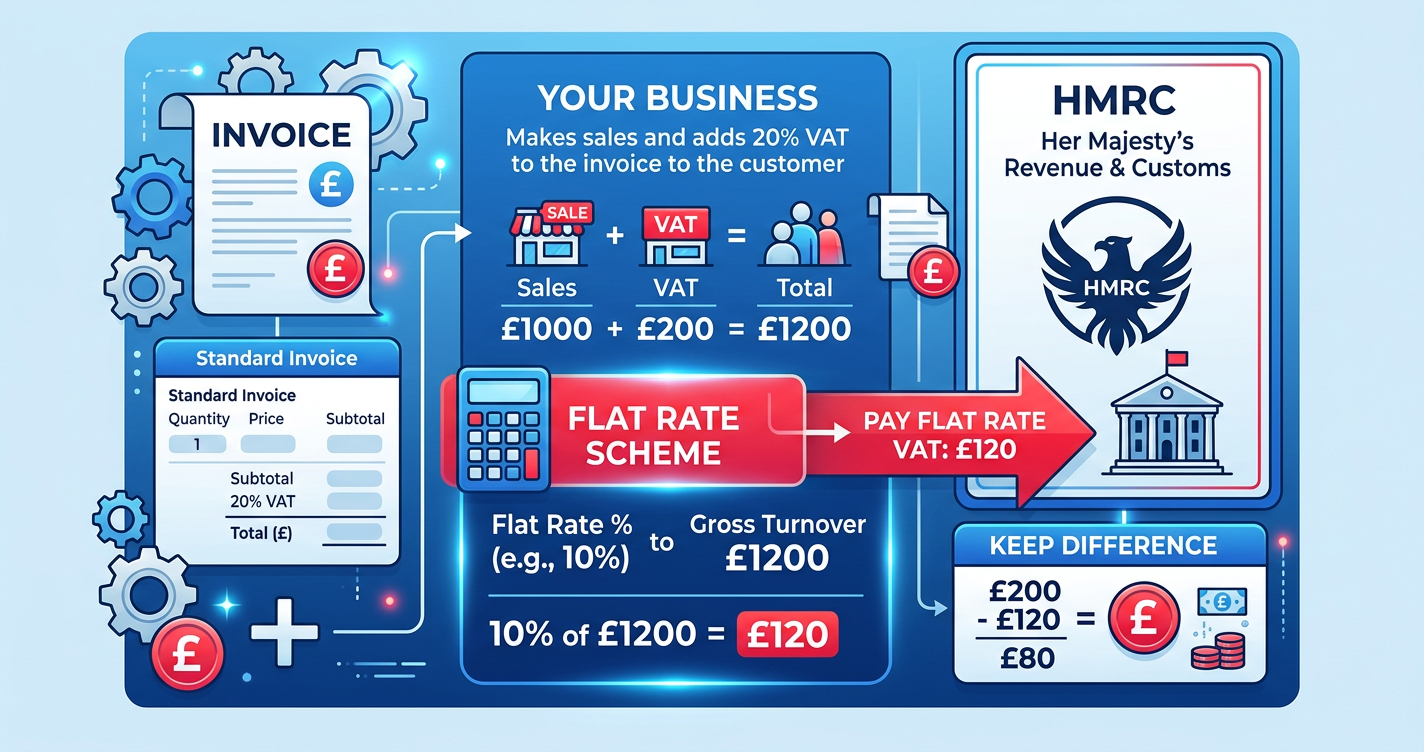
Here's the critical rule: you still charge VAT at 20% on your invoices, even though you pay HMRC a lower flat rate. Your invoices look identical to those of a standard-rate business.
Here's the critical rule: you still charge VAT at 20% on your invoices, even though you pay HMRC a lower flat rate. Your invoices look identical to those of a standard-rate business.
For example, if you're a consultant (14.5% flat rate):
- You invoice a client for £1,000 + 20% VAT = £1,200
- You pay HMRC 14.5% of £1,200 = £174
- You keep the difference: £200 (VAT charged) - £174 (paid to HMRC) = £26
This means the flat rate calculation is entirely internal. Your customer sees a normal 20% VAT invoice and can reclaim the full £200 as input VAT.
First-Year Discount
In your first year of VAT registration, you get a 1% discount on your flat rate percentage. So a consultant would pay 13.
In your first year of VAT registration, you get a 1% discount on your flat rate percentage. So a consultant would pay 13.5% instead of 14.5%. This can make the FRS significantly more attractive in year one.
Limited Cost Trader Rules
If you spend less than 2% of your turnover on "relevant goods" (or less than £1,000 per year), HMRC classifies you as a limited cost trader and your flat rate jumps to 16. 5% regardless of your industry.
If you spend less than 2% of your turnover on "relevant goods" (or less than £1,000 per year), HMRC classifies you as a limited cost trader and your flat rate jumps to 16.5% regardless of your industry. This affects many service businesses — freelancers, consultants, and digital agencies often fall into this category because they have minimal physical goods purchases.
At 16.5%, the FRS is rarely beneficial. If you're a limited cost trader, consider whether standard VAT accounting would save you more.
Common FRS Invoicing Mistakes
Common FRS Invoicing Mistakes includes: Charging the flat rate on invoices — you must always charge 20%, not your flat rate percentage Reclaiming input VAT on purchases — under FRS, you generally cannot reclaim VAT on purchases (except capital assets over £2,000)
- Charging the flat rate on invoices — you must always charge 20%, not your flat rate percentage
- Reclaiming input VAT on purchases — under FRS, you generally cannot reclaim VAT on purchases (except capital assets over £2,000)
- Forgetting the limited cost trader check — review this quarterly to ensure you're using the correct rate
- Not switching when it's no longer beneficial — if you regularly buy goods with VAT, standard accounting may save you more
When to Leave the FRS
You must leave the FRS if your total business income exceeds £230,000 (including VAT-exempt income).
You must leave the FRS if your total business income exceeds £230,000 (including VAT-exempt income). You should also consider leaving voluntarily if:
- You're classified as a limited cost trader (16.5% rate)
- You regularly purchase goods or services with significant VAT amounts
- Your clients are mainly VAT-registered businesses (no advantage to you)
More in this series (202 articles)
From this series
Stay audit-ready and compliant with tax regulations across different regions.
Related Topics
Digital Marketing, SEO Specialist, Content Creator & Product Professional
Olayinka is a digital marketer, content creator, growth and SEO specialist with 10+ years helping businesses in Nigeria, the UK, the US, Australia, and Dubai achieve their goals online.