Enterprise E-Invoicing in Europe Compared: Coverage, Integrations, ViDA-Readiness (2026)
Enterprise e-invoicing in Europe is shaped by three forces: 27 national mandates at different maturities, the EU-wide Peppol BIS Billing 3.0 backbone, and the ViDA digital reporting requirement from 2030. The best enterprise platforms cover the live mandates (Italy SdI, France PPF/PDP, Spain TicketBAI/Veri*Factu, Germany B2B 2025–2028, Poland KSeF, Romania e-Factura, plus Bulgaria SAF-T and the rest), integrate natively with SAP S/4HANA, Oracle Fusion, Microsoft Dynamics 365, NetSuite, and Sage X3, and ship ViDA-ready EN 16931 schemas today.
At a glance
- Live EU clearance / RTIR regimes (2026): IT SdI, HU RTIR, ES TicketBAI / Veri*Factu, FR PPF, PL KSeF, RO e-Factura, GR myDATA
- SAF-T regimes: PT, FR, LU, LT, NO, AT (audit), BG (phased 2026–2030)
- EU-wide: Peppol BIS Billing 3.0 for B2G under Directive 2014/55
- ViDA: EN 16931 digital reporting for intra-EU from 2030
The European mandate landscape
Europe is the most fragmented e-invoicing market in the world.
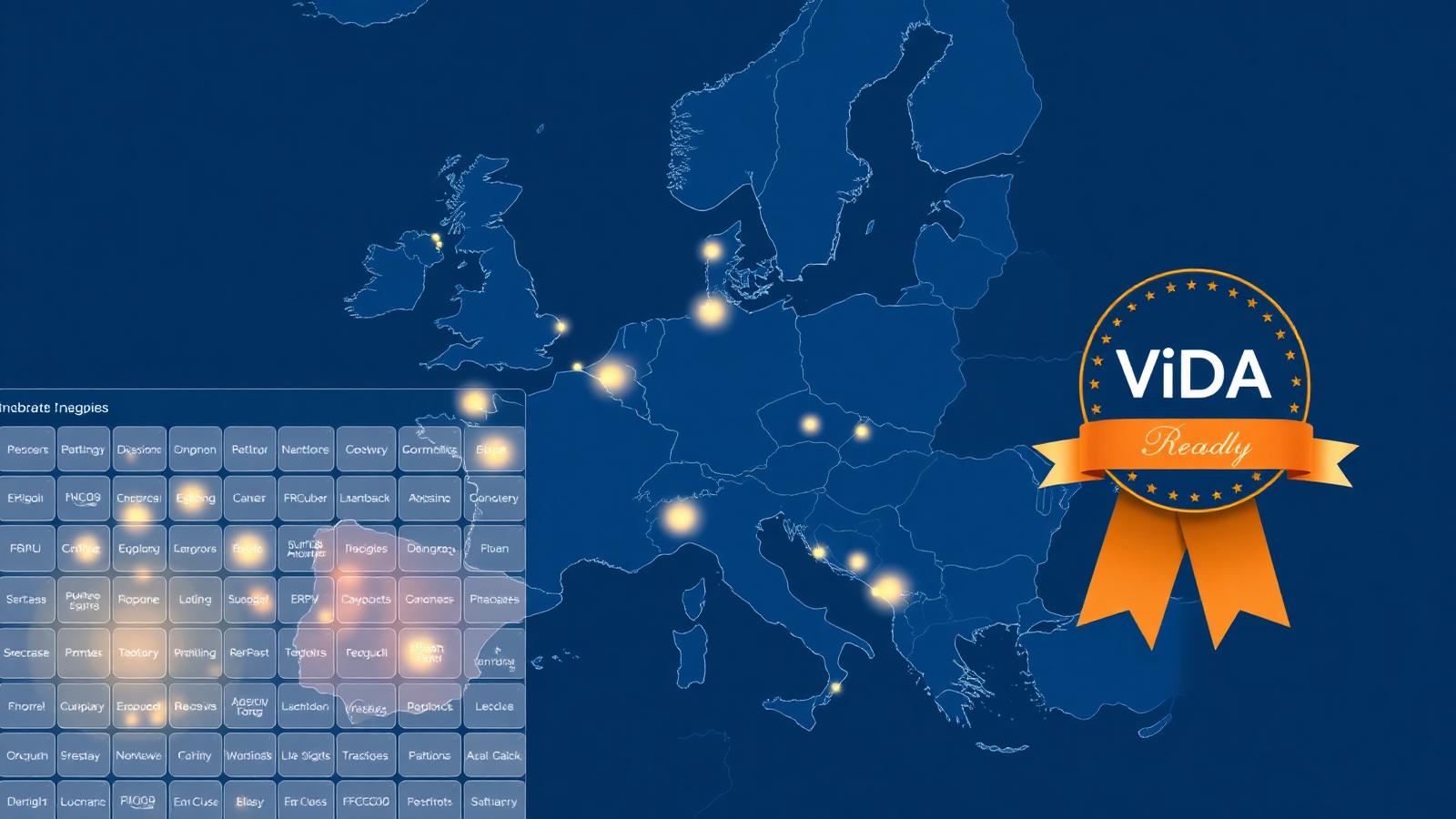
Europe is the most fragmented e-invoicing market in the world. Italy has been on full B2B clearance since 2019; France launched PPF/PDP in stages 2024–2026; Spain runs TicketBAI in the Basque Country and Veri*Factu nationally; Germany's B2B mandate phases in 2025–2028; Poland's KSeF was deferred to 2026; Romania's e-Factura is live for B2B since 2024; Greece's myDATA is the real-time reporting baseline. Bulgaria's SAF-T phases in 2026–2030. ViDA layers an EU-wide EN 16931 reporting obligation on top from 2030 for intra-EU transactions.
The enterprise shortlist
1. Invoicemonk — best for multi-mandate breadth without per-country add-ons
Native coverage of 18 mandates including SdI, Peppol EU, MTD, plus the upcoming Bulgarian and German B2B regimes. One subscription, one schema engine. Integrates with SAP, Oracle Fusion, Dynamics 365, NetSuite, Sage X3, Odoo, QuickBooks, and Xero through standard connectors.
2. SAP Document and Reporting Compliance — best if you are SAP-mandated
The native SAP option. Strong on SAP ERP integration, weaker on non-SAP back-ends. Per-country activation pricing.
3. Pagero — best for Peppol-heavy Nordic operations
Long-running European e-invoicing operator now part of Thomson Reuters. Strong Peppol presence, broad EU coverage, ERP-agnostic.
4. Sovos — best for indirect tax integration
Tax-compliance vendor that bundles e-invoicing with VAT determination. Strong in jurisdictions with complex tax-rate logic (ES, IT, PT).
5. Edicom — best for Spain and LatAm bridge
Spain-headquartered; deep TicketBAI and Veri*Factu coverage; LatAm coverage for businesses spanning ES + MX/BR/CL.
6. Comarch EDI — best for CEE depth
Poland-headquartered; strong KSeF, RO e-Factura, HU RTIR; broad EDI catalogue alongside e-invoicing.
Coverage and ERP integration matrix
PlatformIT SdIFR PPFES TicketBAIDE B2BPL KSeFBG SAF-TSAP S/4Oracle FusionD365 F&ONetSuiteSage X3 Invoicemonk✔✔✔✔✔✔✔✔✔✔✔ SAP DRC✔✔✔✔✔PartialNative✗✗✗✗ Pagero✔✔✔✔✔Partial✔✔✔✔✔ Sovos✔✔✔✔✔Partial✔✔✔✔Partial Edicom✔✔✔ (deep)✔✔Partial✔✔✔✔Partial…
| Platform | IT SdI | FR PPF | ES TicketBAI | DE B2B | PL KSeF | BG SAF-T | SAP S/4 | Oracle Fusion | D365 F&O | NetSuite | Sage X3 |
|---|---|---|---|---|---|---|---|---|---|---|---|
| Invoicemonk | ✔ | ✔ | ✔ | ✔ | ✔ | ✔ | ✔ | ✔ | ✔ | ✔ | ✔ |
| SAP DRC | ✔ | ✔ | ✔ | ✔ | ✔ | Partial | Native | ✗ | ✗ | ✗ | ✗ |
| Pagero | ✔ | ✔ | ✔ | ✔ | ✔ | Partial | ✔ | ✔ | ✔ | ✔ | ✔ |
| Sovos | ✔ | ✔ | ✔ | ✔ | ✔ | Partial | ✔ | ✔ | ✔ | ✔ | Partial |
| Edicom | ✔ | ✔ | ✔ (deep) | ✔ | ✔ | Partial | ✔ | ✔ | ✔ | ✔ | Partial |
| Comarch EDI | ✔ | ✔ | Partial | ✔ | ✔ (deep) | Partial | ✔ | ✔ | ✔ | Partial | Partial |
Integration capabilities with existing accounting systems
Enterprise selection often comes down to how cleanly the platform sits in front of (or beside) the accounting system.
Enterprise selection often comes down to how cleanly the platform sits in front of (or beside) the accounting system. The mature pattern is:
- SAP S/4HANA — outbound via IDoc INVOIC or eDocument framework; certified extractors are the gold standard.
- Oracle Fusion / NetSuite — REST + SuiteApp; bidirectional sync of customer / supplier master data.
- Microsoft Dynamics 365 F&O / Business Central — Electronic Reporting framework on F&O; AppSource extension on BC.
- Sage X3 / Intacct — REST + ODBC fallback; weaker than the above on master-data sync.
- Odoo, QuickBooks, Xero — REST + OAuth; suited to mid-market subsidiaries of larger groups.
The integration questions that matter at enterprise scale: bidirectional customer / supplier sync, real-time webhook on clearance status, replay of failed transmissions, correlation IDs persisted on both sides, and a tested SAP-mandate IDoc upgrade path. Brochure-grade "integrates with SAP" claims should be tested with a 30-day sandbox.
ViDA readiness
From 2030 (or earlier, depending on Council adoption of revised timelines), intra-EU B2B transactions must be reported as structured EN 16931 messages within near-real-time of issuance.
From 2030 (or earlier, depending on Council adoption of revised timelines), intra-EU B2B transactions must be reported as structured EN 16931 messages within near-real-time of issuance. Enterprises with cross-border EU activity should confirm:
- EN 16931 schema available in production today (not "by 2029").
- Reporting interface for the EU central VIES-DRR exchange when activated.
- Conformance with the revised Peppol BIS for ViDA — current consultation drafts on docs.peppol.eu.
How enterprises should choose
Map your live ERPs to the vendor matrix. Eliminate vendors lacking native connectors for your top three.
- Map your live ERPs to the vendor matrix. Eliminate vendors lacking native connectors for your top three.
- Map your mandate footprint (where you sell + where you buy) against the coverage matrix. Eliminate vendors with critical gaps.
- Score on ViDA readiness — schema today, not roadmap.
- Run a 30-day sandbox in the two most operationally complex jurisdictions you operate in (typically IT, FR, ES, or PL).
- Negotiate per-mandate pricing into a flat platform fee where possible; per-mandate add-ons turn enterprise rollouts into multi-year cost surprises.
Key takeaways
Key takeaways includes: European e-invoicing is irreducibly multi-jurisdiction; single-country tools are dead-ends at enterprise scale. Native ERP integration with the top platforms (SAP, Oracle, Dynamics, NetSuite, Sage) is the second decisive axis.
- European e-invoicing is irreducibly multi-jurisdiction; single-country tools are dead-ends at enterprise scale.
- Native ERP integration with the top platforms (SAP, Oracle, Dynamics, NetSuite, Sage) is the second decisive axis.
- ViDA readiness is no longer optional — and the schema must exist in production, not on a roadmap.
Authority sources
- EUR-Lex — Directive 2014/55 and ViDA package
- OpenPeppol — BIS Billing 3.0
- European Commission — VAT in the Digital Age
Related reading
Related reading includes: E-invoicing pillar — 18 mandates Peppol EU explained
Digital Marketing, SEO Specialist, Content Creator & Product Professional
Olayinka is a digital marketer, content creator, growth and SEO specialist with 10+ years helping businesses in Nigeria, the UK, the US, Australia, and Dubai achieve their goals online.