France E-Reporting: What It Is and How It Differs from E-Invoicing
Tax & Compliance Series
This guide is part of a comprehensive series. Explore all 202 topics:
France E-Reporting: What It Is and How It Differs from E-Invoicing
France's e-reporting mandate requires businesses to transmit transaction data for specific B2C and international B2B sales to the DGFiP. This is distinct from e-invoicing for domestic B2B transactions.
France's e-reporting mandate requires businesses to transmit transaction data for specific B2C and international B2B sales to the DGFiP. This is distinct from e-invoicing for domestic B2B transactions. The phased rollout of e-reporting aligns with e-invoicing, commencing September 1, 2026, for large enterprises, with penalties of €15 per transaction, capped at €15,000 annually.
What is E-Reporting in France?
E-reporting in France refers to the electronic transmission of transaction data to the Direction Générale des Finances Publiques (DGFiP) for transactions that are not covered by the B2B e-invoicing mandate.
E-reporting in France refers to the electronic transmission of transaction data to the Direction Générale des Finances Publiques (DGFiP) for transactions that are not covered by the B2B e-invoicing mandate. Its primary purpose is to enable the French tax authority to pre-fill VAT returns, particularly for business-to-consumer (B2C) sales and international business-to-business (B2B) transactions. The legal framework for e-reporting, alongside e-invoicing, is established under the Finance Law 2024, as amended by Finance Law 2026.
The e-reporting obligation requires the submission of specific data fields, typically involving the transaction amount, VAT rate (France has a standard VAT rate of 20%, with reduced rates of 10%, 5.5%, and 2.1%), and tax amount, without the need to transmit the full invoice document. This data is transmitted through either the Portail Public de Facturation (PPF) or a certified Plateforme de Dématérialisation Partenaire (PDP), similar to the e-invoicing process.
When Does France's E-Reporting Mandate Begin?
The implementation of the e-reporting mandate in France follows a phased timeline that mirrors the e-invoicing obligation. This staggered approach aims to ease the transition for businesses of different sizes.
The implementation of the e-reporting mandate in France follows a phased timeline that mirrors the e-invoicing obligation. This staggered approach aims to ease the transition for businesses of different sizes.
- September 1, 2026: Large enterprises (ETI and grandes entreprises) must begin e-reporting.
- September 1, 2027: Mid-size enterprises (PME) must begin e-reporting.
- September 1, 2027: Micro-enterprises and TPE must also begin e-reporting.
It's critical for businesses to prepare for these deadlines to ensure compliance and avoid potential penalties. A pilot program was launched in January 2025 with select companies to test the systems prior to the mandatory rollout.
What is the Difference Between E-Invoicing and E-Reporting?
While both e-invoicing and e-reporting are digital compliance obligations in France, they serve distinct purposes and apply to different types of transactions. Understanding these differences is crucial for businesses operating within the French tax system.
While both e-invoicing and e-reporting are digital compliance obligations in France, they serve distinct purposes and apply to different types of transactions. Understanding these differences is crucial for businesses operating within the French tax system.
What is E-Invoicing?
E-invoicing refers to the mandatory electronic transmission of invoices for domestic B2B transactions. Under the French mandate, these invoices must be issued, transmitted, and received digitally in structured formats such as Factur-X (CII/UBL hybrid), UBL 2.
E-invoicing refers to the mandatory electronic transmission of invoices for domestic B2B transactions. Under the French mandate, these invoices must be issued, transmitted, and received digitally in structured formats such as Factur-X (CII/UBL hybrid), UBL 2.1, or CII.
The e-invoice must contain all the legal information of a traditional invoice. For more detailed information on France's e-invoicing system, refer to France E-Invoicing: PPF & PDP Guide.
What is E-Reporting?
E-reporting, conversely, involves transmitting summary transaction data, not full invoices, for transactions not covered by the B2B e-invoicing mandate.
E-reporting, conversely, involves transmitting summary transaction data, not full invoices, for transactions not covered by the B2B e-invoicing mandate. These include:
- B2C transactions: Sales made to non-taxable persons (consumers).
- International B2B transactions: Sales of goods or services to businesses located outside of France.
- Specific domestic transactions: Certain transactions that are exempt from VAT but still need to be reported for compliance purposes.
Key Differentiators: E-Invoicing vs. E-Reporting
The table below summarizes the core differences between France's e-invoicing and e-reporting mandates.
| Feature | E-Invoicing | E-Reporting |
|---|---|---|
| Mandate Type | Full electronic invoice transmission | Summary transaction data transmission |
| Transaction Scope | Domestic B2B (France to France) | B2C, International B2B, Specific VAT-exempt transactions |
| Data Transmitted | Complete structured invoice (Factur-X, UBL 2.1, CII) | Key transaction data (e.g., total amount, VAT amount, VAT rate, customer type, payment status) |
| Primary Goal | Streamline B2B invoicing, combat B2B VAT fraud | Pre-populate VAT returns, monitor B2C and international flows |
What Data Fields Are Required for E-Reporting?
The specific data fields required for e-reporting are less extensive than those for e-invoicing, as the goal is to provide a summary for tax authorities. However, they are precise and standardized.
The specific data fields required for e-reporting are less extensive than those for e-invoicing, as the goal is to provide a summary for tax authorities. However, they are precise and standardized. Businesses must collect and transmit this information accurately.
Key data points for e-reporting generally include:
- Identification of the Seller: SIRET number, VAT number.
- Transaction Date: Date of the sale or service provision.
- Total Amount Excluding Tax: The net value of the transaction.
- Total VAT Amount: The amount of Value Added Tax applied.
- Applicable VAT Rate(s): For example, 20%, 10%, 5.5%, or 2.1%.
- Type of Transaction: Distinguishing between sale of goods and services.
- Customer Type: Indicating whether the customer is a professional (B2B) or a consumer (B2C), and whether they are located in France or abroad.
- Payment Status: Information regarding whether the payment has been fully received.
For B2C sales, the client's VAT ID is not required. For international B2B sales, the client's country and VAT ID (if applicable) are usually needed.
How Often Must E-Reporting Data Be Sent?
The frequency of e-reporting depends on the type of business and its VAT declaration periodicity. The general principle is to align e-reporting with VAT declaration cycles.
The frequency of e-reporting depends on the type of business and its VAT declaration periodicity. The general principle is to align e-reporting with VAT declaration cycles.
For companies filing monthly VAT returns, e-reporting data for B2C and international B2B transactions will generally need to be submitted monthly. For those filing quarterly, the submission would be quarterly. The deadlines for submission are typically a few days after the end of the reporting period (e.g., the 10th of the following month for monthly declarations).
Specific details regarding payment reporting:
- For services, payment information must be transmitted as soon as the payment is received, allowing the DGFiP to track the VAT payable based on actual cash collection.
This synchronous approach enables the DGFiP to accurately pre-fill VAT returns, reducing the administrative burden on businesses while enhancing tax compliance.
Who is Exempt from French E-Reporting Obligations?
While the e-reporting mandate is broad, certain entities or transaction types may fall outside its scope or have simplified obligations.
While the e-reporting mandate is broad, certain entities or transaction types may fall outside its scope or have simplified obligations.
- Transactions already covered by e-invoicing: Domestic B2B transactions for which an e-invoice is issued and transmitted via PPF or PDP do not require separate e-reporting, as the necessary data is already captured within the e-invoice flow.
- Specific sectors: Certain regulated sectors may have alternative reporting mechanisms or specific exemptions, although these are typically few and subject to strict conditions.
- Micro-entrepreneurs / Small businesses below VAT threshold: Businesses operating under the French auto-entrepreneur regime, or other small businesses below the VAT turnover thresholds (€36,800 for services and €91,900 for goods annually, as of 2024), are generally exempt from VAT and thus may have simplified or no e-reporting obligations for their non-VATable sales. However, they may still need to register and report if they perform cross-border transactions.
It is crucial for businesses to verify their specific situation with the DGFiP or a tax advisor to confirm any applicable exemptions.
How Does E-Reporting Integrate with France's E-Invoicing Flow (PPF/PDP)?
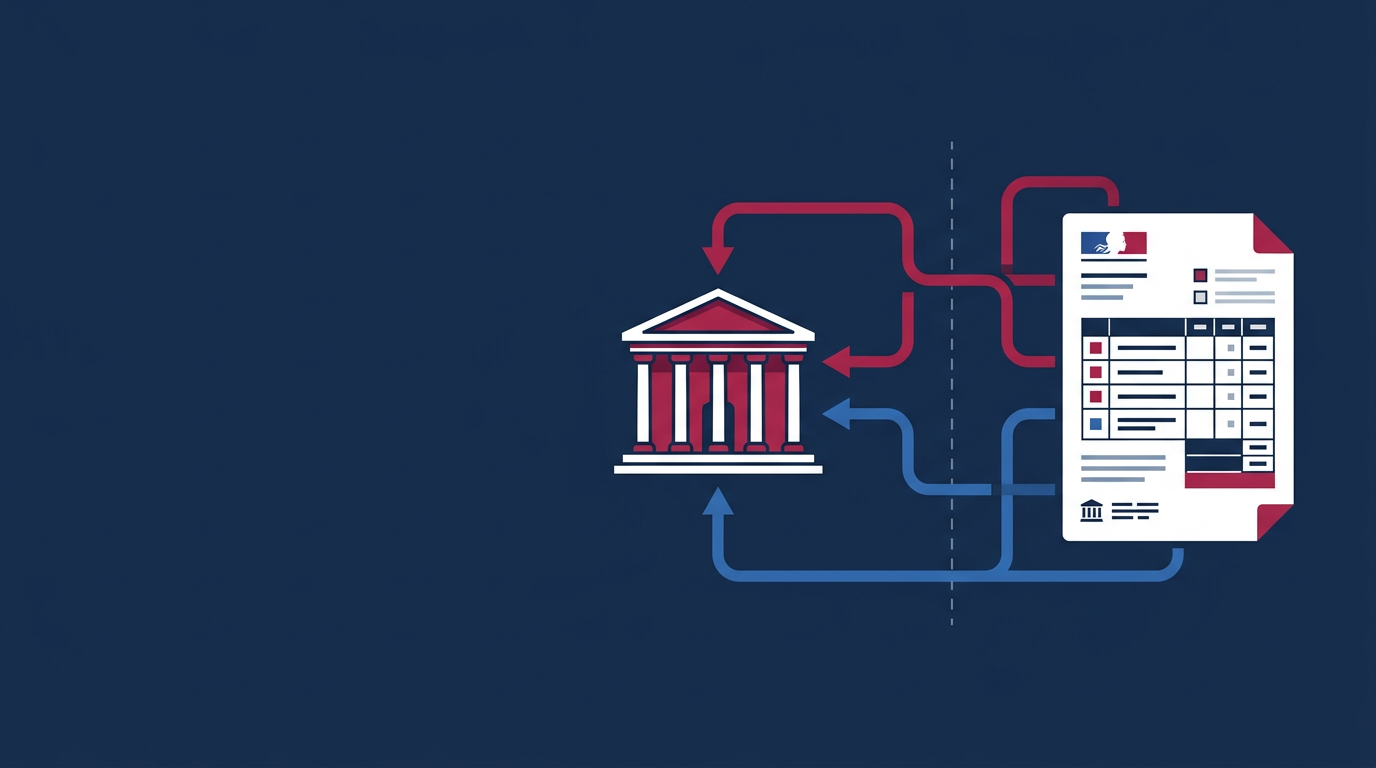
Both e-invoicing and e-reporting leverage the same centralized platforms in France: the Portail Public de Facturation (PPF) and certified Plateformes de Dématérialisation Partenaires (PDPs). This integrated architecture simplifies compliance for businesses.
Both e-invoicing and e-reporting leverage the same centralized platforms in France: the Portail Public de Facturation (PPF) and certified Plateformes de Dématérialisation Partenaires (PDPs). This integrated architecture simplifies compliance for businesses.
The integration process works as follows:
- Business Choice: A business chooses to use either the free PPF or a private PDP for transmitting its electronic data. For more details on this choice, see France PPF vs. PDP E-Invoicing Platforms.
-
Data Transmission:
- For B2B e-invoices, the full structured invoice is sent via the chosen platform.
- For B2C and international B2B e-reporting, only the required summary data fields are extracted from sales records and sent via the same chosen platform.
- Platform Processing: The PPF or PDP acts as an intermediary, receiving the data, performing validation checks, and then transmitting the relevant information to the DGFiP.
- DGFiP Access: The DGFiP uses this aggregated data to pre-populate VAT declarations and analyze transaction trends, enhancing tax control and reducing fraud.
This unified approach means businesses can manage both their e-invoicing and e-reporting obligations through a single technical connection point, streamlining operations and reducing the complexity of compliance.
What Are the Penalties for Non-Compliance with E-Reporting?
Non-compliance with France's e-reporting obligations can lead to financial penalties, underscoring the importance of timely and accurate submission.
Non-compliance with France's e-reporting obligations can lead to financial penalties, underscoring the importance of timely and accurate submission.
- Missing E-Reporting: A penalty of €15 per transaction is applied for missing or incorrect e-reporting submissions.
- Annual Cap: This penalty is capped at €15,000 per year for a single business.
- First Offence Tolerance: The DGFiP has indicated a degree of tolerance for initial periods of the mandate, particularly for first offences, to allow businesses to adapt to the new system. Specific details on this tolerance period are expected closer to the mandate dates.
These penalties are designed to encourage compliance and ensure the integrity of the tax system. Businesses should prioritize implementing robust systems to meet their e-reporting requirements from the outset.
E-Reporting Timeline Overview
The phased rollout for both receiving and emitting e-invoices, as well as e-reporting, is critical for businesses to monitor.
The phased rollout for both receiving and emitting e-invoices, as well as e-reporting, is critical for businesses to monitor.
| Date | Obligation for All Businesses | Obligation for Large Enterprises (ETI & Grandes Entreprises) | Obligation for Mid-size Enterprises (PME) & Micro-enterprises/TPE |
|---|---|---|---|
| September 1, 2026 | Ability to receive e-invoices (all B2B transactions) | Emit e-invoices & e-report | N/A (only receive) |
| September 1, 2027 | N/A | N/A | Emit e-invoices & e-report |
How Invoicemonk Helps
Invoicemonk simplifies compliance with France's comprehensive e-invoicing and e-reporting mandates. Our platform is designed to handle both aspects of the regulation, ensuring your business stays compliant without extensive manual effort.
Invoicemonk simplifies compliance with France's comprehensive e-invoicing and e-reporting mandates. Our platform is designed to handle both aspects of the regulation, ensuring your business stays compliant without extensive manual effort.
- Automated E-Reporting: Invoicemonk extracts the necessary data for your B2C and international B2B transactions and transmits it securely through certified channels (PPF/PDP compatible).
- Seamless E-Invoicing: Generate and send compliant e-invoices in Factur-X, UBL, or CII formats for your domestic B2B sales.
- Payment Integration: Our platform tracks payment statuses automatically, ensuring accurate and timely payment reporting for services.
- Expense Management: Integrate your expense management to maintain a holistic view of your financial transactions, complementing your reporting needs.
- Free Invoice Generator: Explore our free invoice generator to understand how structured data is captured from the start.
Partner with Invoicemonk to navigate the complexities of French tax compliance efficiently and accurately. Learn more about our compliance solutions.
More in this series (202 articles)
From this series
Stay audit-ready and compliant with tax regulations across different regions.
Related Topics
Digital Marketing, SEO Specialist, Content Creator & Product Professional
Olayinka is a digital marketer, content creator, growth and SEO specialist with 10+ years helping businesses in Nigeria, the UK, the US, Australia, and Dubai achieve their goals online.