PPF vs PDP: Which Platform Should French Businesses Use for E-Invoicing?
Tax & Compliance Series
This guide is part of a comprehensive series. Explore all 202 topics:
For French businesses navigating the upcoming e-invoicing mandate, the choice between the Portail Public de Facturation (PPF) and a Plateforme de Dématérialisation Partenaire (PDP) is critical. The PPF is the free public platform, while PDPs are certified private platforms offering additional services, both routing invoices through a central directory managed by the DGFiP. The mandate phases in from September 1, 2026, requiring all businesses to receive e-invoices and large enterprises to emit them, with penalties for non-compliance reaching €15 per invoice, capped at €15,000 annually.
What is France's E-Invoicing Mandate Timeline?
France's e-invoicing and e-reporting mandate introduces a phased approach, requiring all businesses to adapt to digital invoicing.
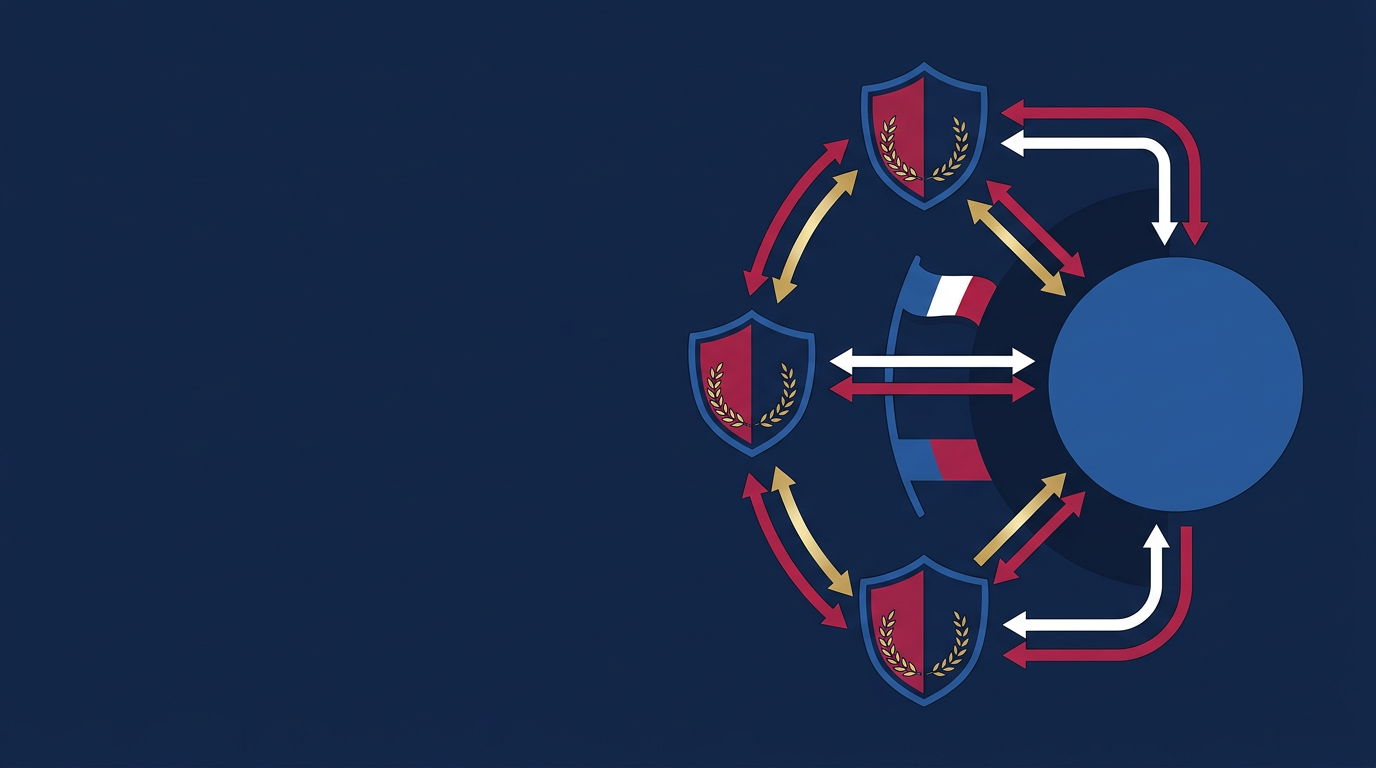
France's e-invoicing and e-reporting mandate introduces a phased approach, requiring all businesses to adapt to digital invoicing. The system, based on the "Y" invoice model, mandates that all B2B invoices are issued electronically and transmitted via either the Portrail Public de Facturation (PPF) or a certified Plateforme de Dématérialisation Partenaire (PDP). E-reporting also applies to B2C and international B2B transactions, transmitting transaction data to the DGFiP.
When do businesses need to comply?
The updated timeline per Finance Law 2024 (Article 91), as amended by Finance Law 2026, specifies key dates for both receiving and issuing e-invoices, as well as for e-reporting obligations.
The updated timeline per Finance Law 2024 (Article 91), as amended by Finance Law 2026, specifies key dates for both receiving and issuing e-invoices, as well as for e-reporting obligations.
| Obligation Type | Effective Date | Applicable Businesses |
|---|---|---|
| E-Invoice Reception | 1 September 2026 | All businesses (regardless of size) |
| E-Invoice Emission | 1 September 2026 | Large enterprises (ETI and grandes entreprises) |
| E-Invoice Emission | 1 September 2027 | Mid-size enterprises (PME) |
| E-Invoice Emission | 1 September 2027 | Micro-enterprises and TPE |
| E-Reporting | Same phased timeline as emission obligations | All businesses (for B2C and cross-border B2B) |
A pilot program is scheduled to launch in January 2025 with select companies, allowing for testing and refinement of the system before the broader rollout.
What are the Penalties for Non-Compliance in France?
Non-compliance with France's e-invoicing and e-reporting mandate carries specific penalties imposed by the Direction Générale des Finances Publiques (DGFiP).
Non-compliance with France's e-invoicing and e-reporting mandate carries specific penalties imposed by the Direction Générale des Finances Publiques (DGFiP).
- Missing E-invoice: €15 per invoice, capped at €15,000 per year.
- Missing E-reporting: €15 per transaction, capped at €15,000 per year.
The DGFiP has confirmed a first-offence tolerance period for initial non-compliance, indicating a more lenient approach during the early stages of the mandate. However, businesses should still strive for full compliance from the outset to avoid potential financial repercussions.
What is the Portail Public de Facturation (PPF)?
The Portail Public de Facturation (PPF), formerly known as Chorus Pro, is the free, government-provided platform for transmitting and receiving e-invoices and e-reporting data in France. It serves as the central hub for the French e-invoicing system and is managed by the DGFiP.
The Portail Public de Facturation (PPF), formerly known as Chorus Pro, is the free, government-provided platform for transmitting and receiving e-invoices and e-reporting data in France. It serves as the central hub for the French e-invoicing system and is managed by the DGFiP.
Key Features of the PPF
- Free of Charge: The primary advantage of the PPF is its cost-free nature for businesses.
- Mandatory Routing: All e-invoices, regardless of the platform used (PPF or PDP), will ultimately be routed through the PPF to the DGFiP for tax authority validation.
- Core Functionality: It supports the essential functions of sending and receiving e-invoices, as well as transmitting e-reporting data for B2C and international B2B transactions.
- Data Formats: The PPF supports standard formats such as Factur-X (a hybrid of CII and UBL), UBL 2.1, and CII, ensuring interoperability.
- Status Monitoring: Businesses can track the status of their invoices within the PPF interface.
Who is the PPF suitable for?
The PPF is generally well-suited for:
The PPF is generally well-suited for:
- Micro-enterprises and TPEs: Businesses with simpler invoicing needs and limited transaction volumes may find the free solution sufficient.
- Businesses with tight budgets: For those looking to minimize operational costs associated with e-invoicing implementation.
- Businesses requiring basic compliance: The PPF ensures compliance with the core mandate requirements without offering advanced features.
What is a Plateforme de Dématérialisation Partenaire (PDP)?
A Plateforme de Dématérialisation Partenaire (PDP) is a certified private service provider that acts as an intermediary between businesses and the PPF. PDPs offer enhanced e-invoicing and e-reporting services beyond the basic functionalities of the public portal.
A Plateforme de Dématérialisation Partenaire (PDP) is a certified private service provider that acts as an intermediary between businesses and the PPF. PDPs offer enhanced e-invoicing and e-reporting services beyond the basic functionalities of the public portal.
Key Features of PDPs
- DGFiP Certification: PDPs undergo a rigorous certification process by the DGFiP, ensuring they meet strict security, reliability, and interoperability standards.
- Value-Added Services: PDPs typically offer a range of additional features, including:
- Integration with existing ERP or accounting systems.
- Workflow automation (e.g., invoice validation, approval).
- Advanced analytics and reporting.
- Multi-format conversion (e.g., from PDF to Factur-X).
- Long-term archiving of invoices.
- Customer support and training.
- International e-invoicing capabilities leveraging networks like Peppol.
- Enhanced User Experience: Many PDPs provide more intuitive interfaces and tailored solutions compared to the standard PPF.
- Compliance Assurance: Certified PDPs are responsible for ensuring that invoices and reporting data meet the technical and legal requirements, reducing the compliance burden on businesses.
How does a PDP get certified?
The PDP certification process is overseen by the DGFiP and is designed to ensure the integrity and security of the e-invoicing ecosystem.
The PDP certification process is overseen by the DGFiP and is designed to ensure the integrity and security of the e-invoicing ecosystem. Key aspects include:
- Application and Audit: Prospective PDPs submit an application and undergo thorough audits of their systems, processes, and security protocols.
- Technical Interoperability: Verification of their ability to correctly send and receive invoices in the Factur-X, UBL 2.1, or CII formats and interact seamlessly with the PPF.
- Security Standards: Compliance with stringent data security and privacy regulations (e.g., GDPR, ISO 27001).
- Reliability and Performance: Demonstration of robust infrastructure capable of handling high volumes of transactions with specified uptime.
- Legal and Fiscal Expertise: Proof of understanding and adherence to French tax laws related to invoicing and e-reporting.
- Regular Renewals: Certification must be periodically renewed, ensuring ongoing compliance with evolving standards.
Who is a PDP suitable for?
PDPs are generally suitable for:
PDPs are generally suitable for:
- Large Enterprises (ETIs and grandes entreprises): Businesses with complex invoicing processes, high transaction volumes, and integration needs with ERP systems.
- Mid-size enterprises (PMEs): Companies seeking to optimize their invoicing workflows and leverage automation for efficiency gains.
- Businesses with international operations: PDPs often provide support for various e-invoicing standards, facilitating compliance across different jurisdictions.
- Businesses prioritizing automation and efficiency: Those looking to reduce manual tasks, minimize errors, and improve cash flow management.
You can find out more about e-invoicing in France by reading our article France E-Invoicing: Your Guide to PPF and PDP Platforms.
PPF vs. PDP: Key Differences and Comparison
The choice between PPF and PDP depends heavily on a business's size, operational complexity, budget, and strategic goals. While both ensure compliance, they offer different levels of service and integration.
The choice between PPF and PDP depends heavily on a business's size, operational complexity, budget, and strategic goals. While both ensure compliance, they offer different levels of service and integration.
Key Differentiating Factors
| Feature | Portail Public de Facturation (PPF) | Plateforme de Dématérialisation Partenaire (PDP) |
|---|---|---|
| Cost | Free of charge | Subscription-based, typically with tiered pricing |
| Core Functionality | Basic e-invoice sending/receiving, e-reporting | Advanced e-invoice processing, automation, integration |
| Value-added Services | Minimal (status tracking) | ERP integration, workflow automation, archiving, multiple formats, international capabilities (e.g., Peppol France access) |
| Integration with ERP/Accounting | Limited, often manual data entry or basic API for large volumes | Strong, often pre-built connectors for major systems |
| User Interface & Experience | Functional, but less tailored | Generally more intuitive, customizable, and user-friendly |
| Certification | Government-operated, inherently compliant | DGFiP certified, ensuring compliance and security |
| Support Level | Standard public sector support | Dedicated customer support, training, and consulting |
| Target Audience | Micro-enterprises, TPEs, budget-conscious businesses | PMEs, large enterprises, businesses seeking efficiency and integration |
| Data Formats Supported | Factur-X, UBL 2.1, CII | Factur-X, UBL 2.1, CII, and often conversion from other formats (e.g., PDF) |
Cost Comparison: PPF vs. PDP
The most evident difference lies in cost. The PPF is free, making it an attractive option for businesses prioritizing cost savings. PDPs, on the other hand, are commercial entities and charge fees, typically on a subscription basis or per-invoice model. These costs are justified by the additional services, automation, and integration capabilities they provide.
- PPF Cost: €0.
- PDP Cost: Varies significantly by provider and service tier, typically ranging from tens to hundreds or thousands of Euros per month, depending on invoice volume, features, and level of support.
Which is right for SMEs (PMEs, Micro-enterprises, TPEs)?
For SMEs, the decision hinges on their specific needs and desired level of automation and integration.
For SMEs, the decision hinges on their specific needs and desired level of automation and integration.
- Micro-enterprises and TPEs (Très Petites Entreprises):
- PPF: Often the most suitable choice due to its free nature and basic functionality being sufficient for lower invoice volumes. Manual entry on the PPF portal might be manageable.
- PDP: May be overkill unless they have specific integration needs or a high growth trajectory.
- PMEs (Petites et Moyennes Entreprises):
- PPF: Viable for those with modest invoice volumes and no complex integration requirements. They might use the PPF directly or through free/basic modules provided by their accounting software.
- PDP: Increasingly beneficial, especially for PMEs looking to streamline accounts payable and receivable, integrate with their accounting software (e.g., Invoicemonk for expense management), and improve overall financial efficiency. The investment in a PDP can pay off through reduced manual errors, faster processing, and better cash flow management.
The long-term benefits of automation and integration offered by a PDP often outweigh the recurring costs for growing SMEs. These benefits include reduced administrative burden, fewer errors (leading to fewer penalties), and faster payment cycles.
What are the Technical Requirements for E-Invoicing in France?
France's e-invoicing system relies on specific technical standards to ensure interoperability and compliance across all platforms.
France's e-invoicing system relies on specific technical standards to ensure interoperability and compliance across all platforms.
- Mandatory Formats: Invoices must be submitted in one of three structured or hybrid formats:
- Factur-X: A hybrid format combining a structured XML data file (either UBL or CII) with a human-readable PDF. This is the preferred format as it allows for both automated processing and easy human readability.
- UBL 2.1 (Universal Business Language): An XML-based standard for electronic business documents.
- CII (Cross Industry Invoice): Another XML-based standard for electronic invoices.
- Routing Infrastructure: All e-invoices are routed through either the PPF or a certified PDP. These platforms act as "access points" to the central e-invoicing directory managed by the DGFiP.
- E-Reporting: For B2C and international B2B transactions, businesses must transmit specific transaction data (e.g., total amount, VAT amount, customer identifier) to the DGFiP via their chosen platform. This is to facilitate VAT pre-filling and combat fraud.
- Central Directory: The DGFiP maintains a central directory of businesses and their chosen e-invoicing platforms (PPF or PDP). This ensures that invoices can be routed correctly to the recipient's chosen platform.
How Can Peppol Facilitate French E-Invoicing?
While the French system is unique with its "Y" model involving the PPF and PDPs, Peppol (Pan-European Public Procurement Online) plays a role, particularly for businesses involved in international trade or those already using Peppol for B2G invoicing. Many PDPs are certified Access Points on the Peppol network.
While the French system is unique with its "Y" model involving the PPF and PDPs, Peppol (Pan-European Public Procurement Online) plays a role, particularly for businesses involved in international trade or those already using Peppol for B2G invoicing. Many PDPs are certified Access Points on the Peppol network.
Peppol and PDPs Integration
- International Reach: For French businesses transacting with partners in other Peppol-enabled countries, a PDP that is also a Peppol Access Point can streamline international e-invoicing processes.
- Simplified Exchange: A PDP can convert national French e-invoicing formats (Factur-X, UBL, CII) into Peppol BIS Billing 3.0 (the standard Peppol invoice format) and vice-versa.
- Single Platform: Using a PDP that supports both French domestic requirements and Peppol standards allows businesses to manage all their e-invoicing (domestic and international) through a single platform, reducing complexity.
Peppol itself is not a direct replacement for the French PPF/PDP model but rather an interconnected network that PDPs can leverage to extend their services internationally.
How Invoicemonk Helps
Navigating the complexities of French e-invoicing, whether through the PPF or a certified PDP, requires robust tools. Invoicemonk simplifies your billing and compliance needs.
Navigating the complexities of French e-invoicing, whether through the PPF or a certified PDP, requires robust tools. Invoicemonk simplifies your billing and compliance needs.
- Automated Invoicing: Generate professional, compliant invoices quickly with our invoicing software and free invoice generator.
- Expense Management: Track and manage all your business expenses with ease, ensuring accurate records for e-reporting and tax purposes via our expenses module.
- Compliance Ready: While Invoicemonk itself is not a certified PDP, we ensure our invoicing outputs can be readily adapted for submission via your chosen PDP or the PPF, adhering to formats like Factur-X.
- Streamlined Payments: Facilitate faster payments from your clients with integrated payment processing options.
- Compliance Resources: Stay informed with our compliance resources and blog, keeping you up-to-date on the latest e-invoicing mandates.
More in this series (202 articles)
From this series
Stay audit-ready and compliant with tax regulations across different regions.
Related Topics
Digital Marketing, SEO Specialist, Content Creator & Product Professional
Olayinka is a digital marketer, content creator, growth and SEO specialist with 10+ years helping businesses in Nigeria, the UK, the US, Australia, and Dubai achieve their goals online.