How Currency Conversion Works in International Money Transfers (2026)
Getting Paid Faster Series
This guide is part of a comprehensive series. Explore all 40 topics:
The foreign-exchange market moves over $7.5 trillion daily, making it the largest financial market in the world. Yet most small-business owners and freelancers sending or receiving international payments have no idea how currency conversion actually works — or how much it's costing them. Understanding the mechanics is the first step to keeping more of your money.
What Is Currency Conversion?
Currency conversion is the process of exchanging one currency for another at a specific exchange rate. When a client in the UK pays your USD invoice, British pounds must be converted into US dollars at some point in the payment chain.
Currency conversion is the process of exchanging one currency for another at a specific exchange rate. When a client in the UK pays your USD invoice, British pounds must be converted into US dollars at some point in the payment chain. The rate at which that conversion happens — and who controls it — determines how much money you actually receive.
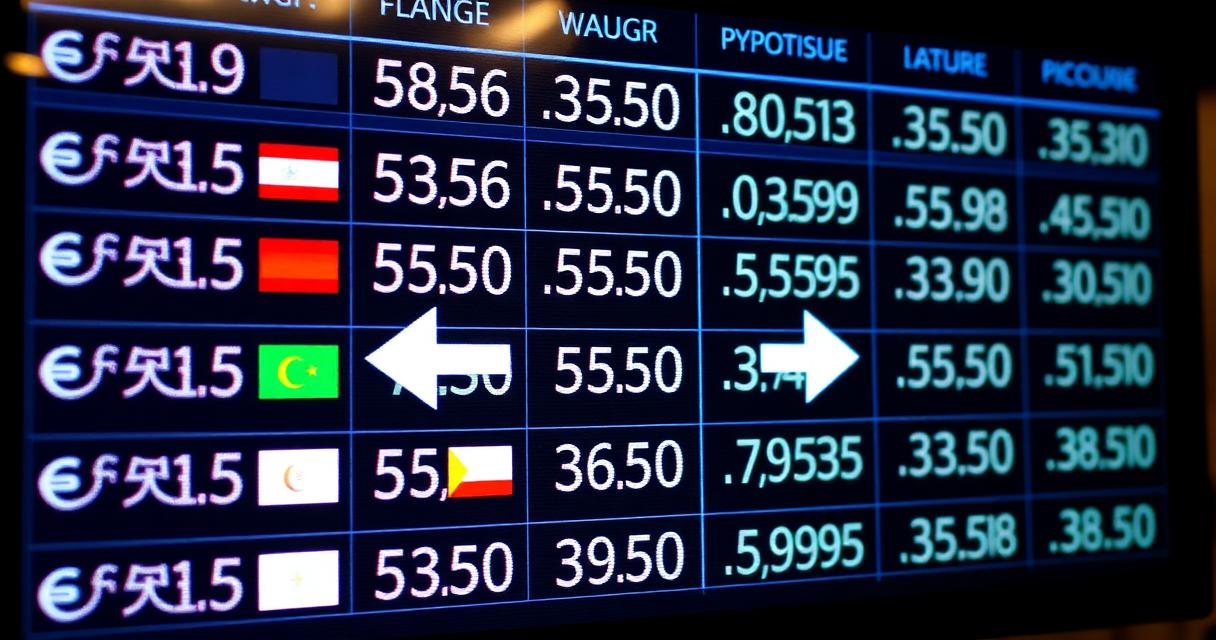
Every exchange rate is expressed as a currency pair — for example, GBP/USD = 1.27 means one British pound equals 1.27 US dollars. Rates fluctuate constantly based on economic indicators, central bank policies, geopolitical events, and market sentiment.
The Mid-Market Rate: Your Benchmark
The mid-market rate (also called the interbank rate or spot rate) is the midpoint between the buy and sell prices of a currency pair on the global foreign-exchange market. It's the rate you see on Google, XE.
The mid-market rate (also called the interbank rate or spot rate) is the midpoint between the buy and sell prices of a currency pair on the global foreign-exchange market. It's the rate you see on Google, XE.com, or Reuters. It's the "real" rate — the one large banks and institutions trade at among themselves.
Here's the problem: you almost never get the mid-market rate. Banks, payment processors, and currency exchange services add a markup — the difference between the mid-market rate and the rate they offer you. This markup is their profit on the conversion, and it ranges from 0.3% (best-in-class platforms) to 4%+ (traditional banks).
On a $10,000 transfer, the difference between a 0.5% markup and a 3% markup is $250. Over a year of regular international payments, this adds up to thousands of dollars in hidden costs.
Where Conversion Happens in a Payment
In a typical international bank transfer, currency conversion can happen at multiple points — and each conversion costs money:
In a typical international bank transfer, currency conversion can happen at multiple points — and each conversion costs money:
Scenario 1: Sender's bank converts. Your client's bank converts GBP to USD before sending the transfer. The client pays their bank's exchange rate (typically 1.5–3% markup).
Scenario 2: Recipient's bank converts. The transfer arrives in GBP, and your bank converts it to USD at their rate (another 1.5–3% markup). This is the default for many standard wire transfers.
Scenario 3: Double conversion. The worst case. If neither bank can directly convert between the two currencies, the money is first converted to an intermediary currency (usually USD or EUR), then converted again to the target currency. Each conversion incurs a markup. This is common for less-traded currency pairs like NGN/AUD or THB/CZK.
Scenario 4: Payment platform converts. Services like Wise, Payoneer, or multi-currency business accounts convert at near-mid-market rates (0.3–0.7% markup) and deliver funds via local bank networks. This is typically the cheapest option.
How to Get Better Exchange Rates
1. Always Check the Mid-Market Rate First
Before accepting any conversion, check the current mid-market rate on XE.com or Google. Then calculate the markup your bank or payment provider is charging. If the mid-market rate for USD/GBP is 0.79 and your bank offers 0.76, that's a 3.8% markup — unacceptably high for most transfer amounts.
2. Use Platforms with Transparent Pricing
Some platforms display their markup explicitly (e.g., "0.5% conversion fee + mid-market rate"). Others hide it in an opaque "exchange rate" with no reference to the mid-market rate. Transparent pricing is almost always cheaper because companies that hide their margins tend to have higher margins. Compare platforms with our fee calculator.
3. Hold and Convert at Optimal Times
If your payment platform offers multi-currency accounts, you can receive funds in the original currency and convert when the rate is favourable. This isn't currency speculation — it's simply avoiding conversion on days when your target currency is temporarily weak. Even a 1% rate improvement on a $20,000 payment saves $200.
4. Invoice in Your Client's Currency
When you invoice in your client's local currency, they pay via a domestic transfer (no conversion on their end), and you control when and how conversion happens on your side. Invoicemonk supports multi-currency invoicing and displays real-time exchange rates so both parties know exactly what to expect.
5. Avoid Double Conversion
If you can, choose a payment method that converts directly between the two currencies involved. If direct conversion isn't available for your currency pair, use a platform that at least converts through a single intermediary (typically USD or EUR) rather than a chain of conversions. Check our cheapest international payments tool for the best routes for your specific corridors.
Exchange Rate Markups by Provider Type
Here's what you can typically expect in exchange-rate markup (the hidden cost above the mid-market rate):
Here's what you can typically expect in exchange-rate markup (the hidden cost above the mid-market rate):
Traditional banks: 1.5–4% markup. Often presented as a "competitive rate" with no reference to the mid-market rate. Best for domestic banking; expensive for international transfers.
PayPal / Stripe: 2.5–4% above mid-market for currency conversion. Convenient for small amounts; expensive at scale. See our detailed PayPal vs. Wise comparison.
Multi-currency platforms (Wise, Payoneer): 0.3–1.5% above mid-market. The best rates for most business transfers. Some offer rate locks and forward contracts for larger amounts.
Forex brokers: 0.1–0.5% above mid-market. Designed for large transfers ($50K+). Not practical for regular small-business payments.
Recording Exchange Rates in Your Accounting
If you send or receive payments in foreign currencies, your accounting needs to track: the original invoice amount in the foreign currency, the exchange rate used for conversion, the amount received in your home currency, and any foreign-exchange gain or loss (the difference between the rate when you invoiced and the…
If you send or receive payments in foreign currencies, your accounting needs to track: the original invoice amount in the foreign currency, the exchange rate used for conversion, the amount received in your home currency, and any foreign-exchange gain or loss (the difference between the rate when you invoiced and the rate when you received payment).
Invoicemonk handles this automatically when you create multi-currency invoices, recording the exchange rate at invoice time and reconciling it against the actual rate when payment arrives.
Key Takeaway
Currency conversion is the largest hidden cost in international payments. The single most impactful action you can take is to compare your current provider's exchange rate against the mid-market rate — and switch if the markup exceeds 1%.
Currency conversion is the largest hidden cost in international payments. The single most impactful action you can take is to compare your current provider's exchange rate against the mid-market rate — and switch if the markup exceeds 1%. Use our international payment fee calculator to run the numbers for your specific transfer routes.
More in this series (40 articles)
From this series
Strategies and tools to accelerate your payment collection and improve cash flow.
Related Topics
Digital Marketing, SEO Specialist, Content Creator & Product Professional
Olayinka is a digital marketer, content creator, growth and SEO specialist with 10+ years helping businesses in Nigeria, the UK, the US, Australia, and Dubai achieve their goals online.