Monthly Financial Review Checklist for Small Business Owners
Business Finances Series
This guide is part of a comprehensive series. Explore all 16 topics:
Consistent monthly financial reviews are what separate thriving businesses from those that get blindsided by cash crunches, tax surprises, and missed opportunities. Yet most small business owners either skip this essential practice entirely or approach it haphazardly, checking random numbers without a systematic process. The result? Problems that could have been caught early become emergencies. Opportunities to optimize pricing, cut waste, or improve collections slip by unnoticed.
The good news is that an effective monthly financial review doesn't require hours of analysis or an accounting background. With a structured checklist and about 30-60 minutes of focused time, you can catch issues before they become crises, track your progress toward goals, and make informed decisions about your business. This guide gives you a practical, step-by-step checklist you can use every month.
When to Schedule Your Monthly Review
Consistency matters more than perfection. Choose a specific day each month—ideally between the 5th and 15th—when bank statements are available and the previous month's transactions are complete.
Consistency matters more than perfection. Choose a specific day each month—ideally between the 5th and 15th—when bank statements are available and the previous month's transactions are complete. Block the time on your calendar like any other important appointment. Many business owners find early morning, before the day's interruptions begin, works best for focused financial analysis.
If you're behind on bookkeeping, don't skip the review—use it as motivation to catch up. Even a partial review with incomplete data is better than no review at all.
Part 1: Close the Books (15-20 minutes)
Before you can review your financial performance, you need accurate records. "Closing the books" means ensuring all transactions are recorded and categorized correctly.
Before you can review your financial performance, you need accurate records. "Closing the books" means ensuring all transactions are recorded and categorized correctly.
Bank Reconciliation
Match your accounting records to your bank statement, checking that:
- Every bank transaction appears in your accounting system
- Amounts match exactly (even small discrepancies matter)
- Deposits are correctly identified (which customer paid which invoice?)
- All withdrawals have proper documentation (what was the payment for?)
- Outstanding checks and deposits in transit are identified
Most accounting software simplifies this with automatic bank feeds and matching suggestions. Reconcile every account monthly—waiting longer makes errors harder to find.
Credit Card Reconciliation
Apply the same process to each business credit card:
- Verify all charges are legitimate business expenses
- Categorize each transaction correctly
- Attach or note receipts for expenses over your threshold (many use $75)
- Flag any personal charges that accidentally went on business cards
Review Outstanding Invoices
Pull your accounts receivable aging report and take action:
- Current (not yet due): No action needed, but note any large amounts upcoming.
- 1-30 days past due: Send a polite reminder email today.
- 31-60 days past due: Personal call or escalated email. Understand why payment is delayed.
- 61-90 days past due: Firm collection call. Consider payment plans or stop future work.
- Over 90 days: Evaluate whether to pursue collection, write off, or negotiate settlement.
Slow collections are one of the biggest cash flow killers for small businesses. Don't let unpaid invoices age without action.
Verify Bills Are Recorded
Check that all expenses are in your system:
- Review email for invoices from vendors
- Check for recurring expenses that should have posted
- Confirm utility bills, subscriptions, and regular payments are recorded
- Look for any paper invoices that haven't been entered
Check Transaction Categorization
Quick scan for common errors:
- Owner draws miscategorized as expenses
- Loan payments not split correctly between principal and interest
- Expenses in wrong categories (advertising vs. professional services, etc.)
- Uncategorized transactions that need attention
Part 2: Review Key Financial Reports (15-20 minutes)
With clean books, now generate and analyze your core financial reports.
With clean books, now generate and analyze your core financial reports.
Profit and Loss Statement
Generate your P&L for the month just closed. Look for:
- Revenue: Did you hit your target? Up or down from last month? Same month last year?
- Gross Profit Margin: (Revenue – Cost of Goods Sold) ÷ Revenue. Is this consistent or trending?
- Each Expense Category: Any unexpected spikes? Any categories significantly different from budget?
- Net Profit: Positive or negative? What's the trend over recent months?
Cash Flow Analysis
Beyond the formal cash flow statement, ask these questions:
- Did cash balance increase or decrease this month?
- What were the largest cash inflows? (Customer payments, loan proceeds, etc.)
- What were the largest cash outflows? (Payroll, inventory, major purchases, etc.)
- Are you on track for upcoming obligations? (Tax payments, loan payments, large bills)
Accounts Receivable Aging
Beyond the action items from closing, analyze the trends:
- Total AR compared to last month—growing or shrinking?
- What percentage is over 30 days? (Should typically be under 15%)
- Are the same customers consistently slow to pay?
- How does AR compare to monthly revenue? (AR days calculation)
Accounts Payable Aging
Review what you owe and when:
- Total AP compared to last month
- What's due in the next 7 days? Do you have cash to cover it?
- Any early payment discounts you should take?
- Any bills you should strategically delay without damaging relationships?
Part 3: Key Metrics Dashboard (10 minutes)
Track a small set of key performance indicators (KPIs) consistently. Plot them month over month to visualize trends.
Track a small set of key performance indicators (KPIs) consistently. Plot them month over month to visualize trends.
Essential Monthly Metrics
- Revenue vs. Target: Actual revenue compared to your monthly goal. Express as a percentage.
- Gross Profit Margin: (Gross Profit ÷ Revenue) × 100. Compare to prior months and industry benchmarks.
- Net Profit Margin: (Net Income ÷ Revenue) × 100. The ultimate measure of efficiency.
- Cash Runway: Current Cash ÷ Average Monthly Expenses. How many months could you survive with no new revenue?
- AR Days (DSO): (Average Accounts Receivable ÷ Revenue) × 30. How long on average until customers pay?
- Revenue Per Employee: If you have staff, track this efficiency metric.
Trend Analysis
The single data point matters less than the trend. Create a simple spreadsheet or use your software's dashboard to track these metrics over 6-12 months. A declining trend in any key metric warrants investigation—don't wait until it's a crisis.
Part 4: Decision-Making Actions (10-15 minutes)
The purpose of financial review isn't just understanding—it's action.
The purpose of financial review isn't just understanding—it's action. Based on what you've learned, make decisions:
Cost-Cutting Opportunities
- Any subscriptions or services no longer providing value?
- Expenses that grew without corresponding benefit?
- Vendor contracts that should be renegotiated?
- Processes that could be streamlined or automated?
Pricing Signals
- Is gross margin declining? Costs may be rising faster than prices.
- Are you winning too many projects? You might be priced too low.
- Are competitors raising prices? Market may support a price increase.
Collection Actions
- Which specific customers need follow-up calls this week?
- Should you tighten payment terms for chronic late payers?
- Would offering payment plans help with large overdue balances?
Investment Decisions
- Is cash position strong enough to invest in growth?
- Should you build cash reserves before any major expenditure?
- Are there equipment or technology investments that would improve efficiency?
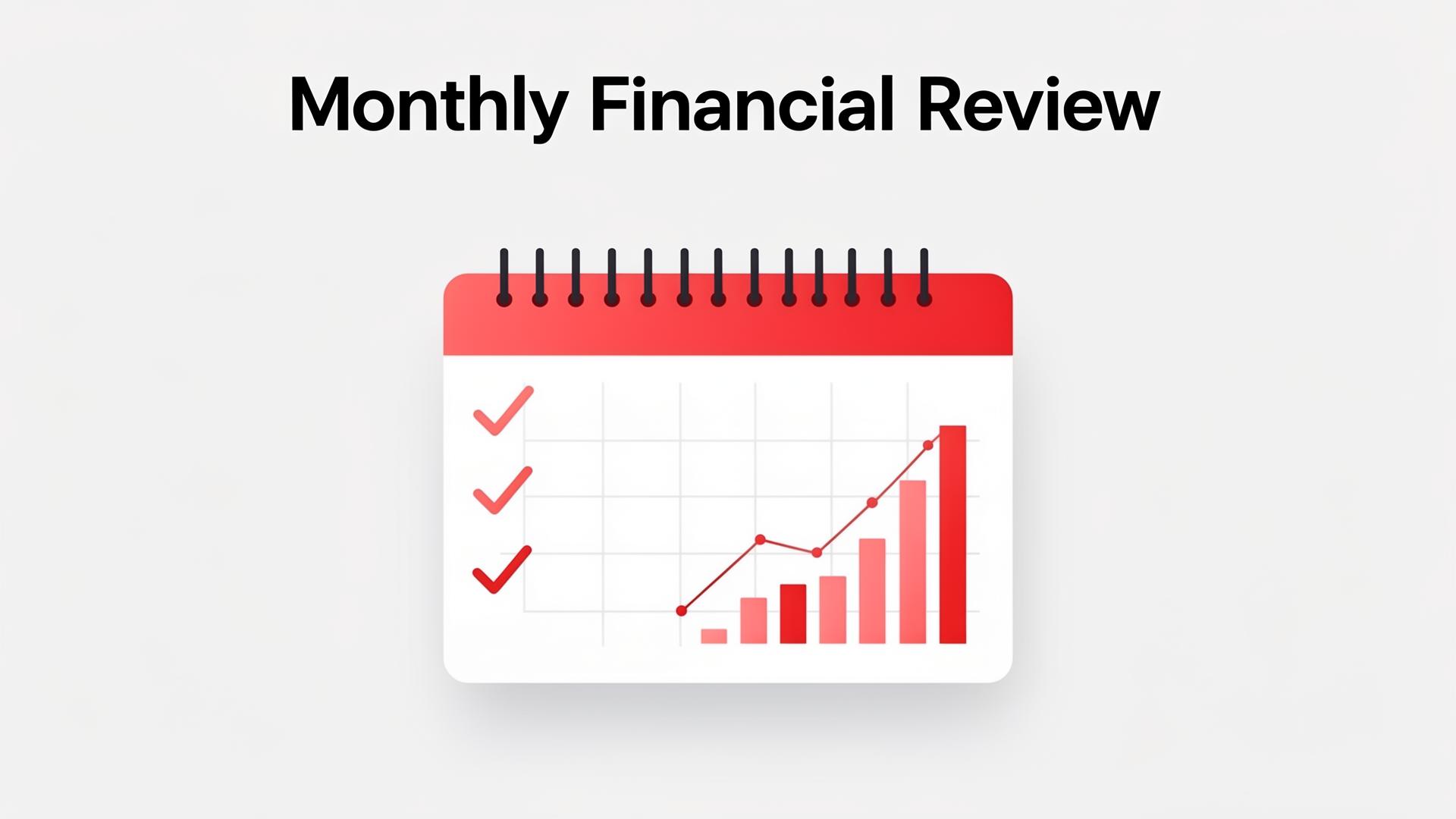
Monthly Review Calendar Template
Structure your month for financial success:
Structure your month for financial success:
Week 1 (1st-7th): Transaction entry and categorization. Enter any remaining expenses, categorize bank transactions, file receipts.
Week 2 (8th-14th): Reconciliations. Complete bank and credit card reconciliations, review AR/AP aging, send payment reminders.
Month-End (15th-20th): Monthly financial review meeting (even if just with yourself). Generate reports, calculate metrics, document decisions and action items.
Ongoing: Implement actions identified in review. Track progress on decisions made.
Frequently Asked Questions
How long should my monthly financial review take?
A thorough monthly review typically takes 30-60 minutes for a straightforward small business. If you're spending more time, you might have bookkeeping issues that need addressing or might be over-analyzing.
A thorough monthly review typically takes 30-60 minutes for a straightforward small business. If you're spending more time, you might have bookkeeping issues that need addressing or might be over-analyzing. If you're spending less than 20 minutes, you're probably skipping important steps. With practice and good systems, most business owners settle into an efficient 45-minute routine.
What if I'm behind on bookkeeping?
Start where you are. Schedule dedicated time to catch up—even 30 minutes daily can clear a backlog within a couple of weeks.
Start where you are. Schedule dedicated time to catch up—even 30 minutes daily can clear a backlog within a couple of weeks. Consider hiring a bookkeeper for a one-time catch-up project if you're significantly behind. Going forward, commit to entering transactions weekly rather than letting them pile up. Modern accounting software with bank feeds significantly reduces manual entry time.
Can I do this without an accountant?
Yes, most small business owners can handle monthly financial reviews themselves with good accounting software and a systematic approach. However, consider consulting an accountant at least quarterly or annually to validate your processes, identify issues you might miss, and provide strategic guidance.
Yes, most small business owners can handle monthly financial reviews themselves with good accounting software and a systematic approach. However, consider consulting an accountant at least quarterly or annually to validate your processes, identify issues you might miss, and provide strategic guidance. Think of it as getting a professional second opinion on your self-diagnosis.
Make Monthly Reviews a Non-Negotiable Habit
The businesses that thrive are those that understand their numbers. By committing to a monthly financial review, you transform from a business owner who reacts to financial problems into one who anticipates and prevents them.
The businesses that thrive are those that understand their numbers. By committing to a monthly financial review, you transform from a business owner who reacts to financial problems into one who anticipates and prevents them. The 30-60 minutes you invest each month will save you countless hours of crisis management and help you make decisions that drive profitable growth.
Invoicemonk provides all the reports and tools you need for effective monthly reviews—automatic reconciliation, real-time dashboards, and the key financial statements that keep you in control. Start your monthly review practice today.
Related Resources
More in this series (16 articles)
From this series
Essential accounting and expense management knowledge for small business success.
Related Topics
Digital Marketing, SEO Specialist, Content Creator & Product Professional
Olayinka is a digital marketer, content creator, growth and SEO specialist with 10+ years helping businesses in Nigeria, the UK, the US, Australia, and Dubai achieve their goals online.