Small Business Accounting: A Practical Guide for Owners & Freelancers (2026)
Business Finances
Essential accounting and expense management knowledge for small business success.
Business Finances Series
This guide is part of a comprehensive series. Explore all 16 topics:
Here's the uncomfortable truth: 82% of small businesses that fail cite cash flow problems as a factor — and most cash flow problems trace back to poor accounting habits. Not complicated accounting, not advanced financial modelling. Just the basics, done consistently.
This guide is written for the people who actually have to make the decisions: small business owners and freelancers. You don't need to become a CPA. You need to know what your numbers are telling you, what to do about them, and where the system starts. Spoiler: it starts with the invoice. Every dollar of revenue you record begins as an invoice you sent — get that step right and the rest of accounting becomes mostly automatic. Tools like Invoicemonk's invoicing feed clean data into your books so you spend less time on bookkeeping and more time on the decisions that matter.
Bookkeeping vs Accounting: What's the Difference?
Bookkeeping is the day-to-day recording of transactions — logging income, expenses, and bank movements, categorising them, and reconciling to your bank statement.
Bookkeeping is the day-to-day recording of transactions — logging income, expenses, and bank movements, categorising them, and reconciling to your bank statement. Accounting is the broader discipline that includes bookkeeping plus interpreting the data: preparing financial statements, tax planning, advising on decisions. Most small business owners do their own bookkeeping and outsource the accounting work (especially tax). That split is what this guide will help you build.
How to Do Accounting for Small Business: The 7-Step Process
Before diving into the details, here's the complete accounting workflow you'll implement for your small business.
Before diving into the details, here's the complete accounting workflow you'll implement for your small business. Follow these steps and you'll have a solid accounting foundation:
- Separate business and personal finances: Open dedicated business bank accounts and credit cards
- Choose your accounting method: Decide between cash and accrual accounting based on your business type
- Set up your chart of accounts: Create a standardized list of account categories for organizing transactions
- Record all transactions: Enter every business transaction—income, expenses, and transfers
- Reconcile accounts monthly: Compare your records against bank statements to catch errors
- Generate financial statements: Create income statements, balance sheets, and cash flow reports
- Review and analyze regularly: Use your financial data to make informed business decisions
Now let's explore each of these concepts in detail so you can implement them confidently.
Simple Accounting for Small Business: The Fundamentals
At its core, accounting answers three questions: How much money did you make? How much do you own?
At its core, accounting answers three questions: How much money did you make? How much do you own? How much do you owe? Everything else is details.
The Fundamental Accounting Equation
Assets = Liabilities + Equity. This equation is the foundation of all accounting. Assets are what you own (cash, equipment, receivables). Liabilities are what you owe (loans, payables). Equity is what's left—your ownership stake in the business. The equation must always balance: when you take a $10,000 loan, your cash (asset) goes up $10,000 and your loan balance (liability) goes up $10,000.
Revenue vs. Profit
Revenue is money coming in. Profit is what's left after expenses. A business with $100,000 in revenue and $95,000 in expenses has only $5,000 in profit. Focus on profit, not just revenue.
Fixed vs. Variable Costs
Fixed costs stay the same regardless of how much you sell: rent, insurance, subscriptions, salaries. Variable costs change with activity: materials, shipping, subcontractor fees, payment processing. Understanding the split lets you calculate your break-even point — the revenue you need before you make a profit.
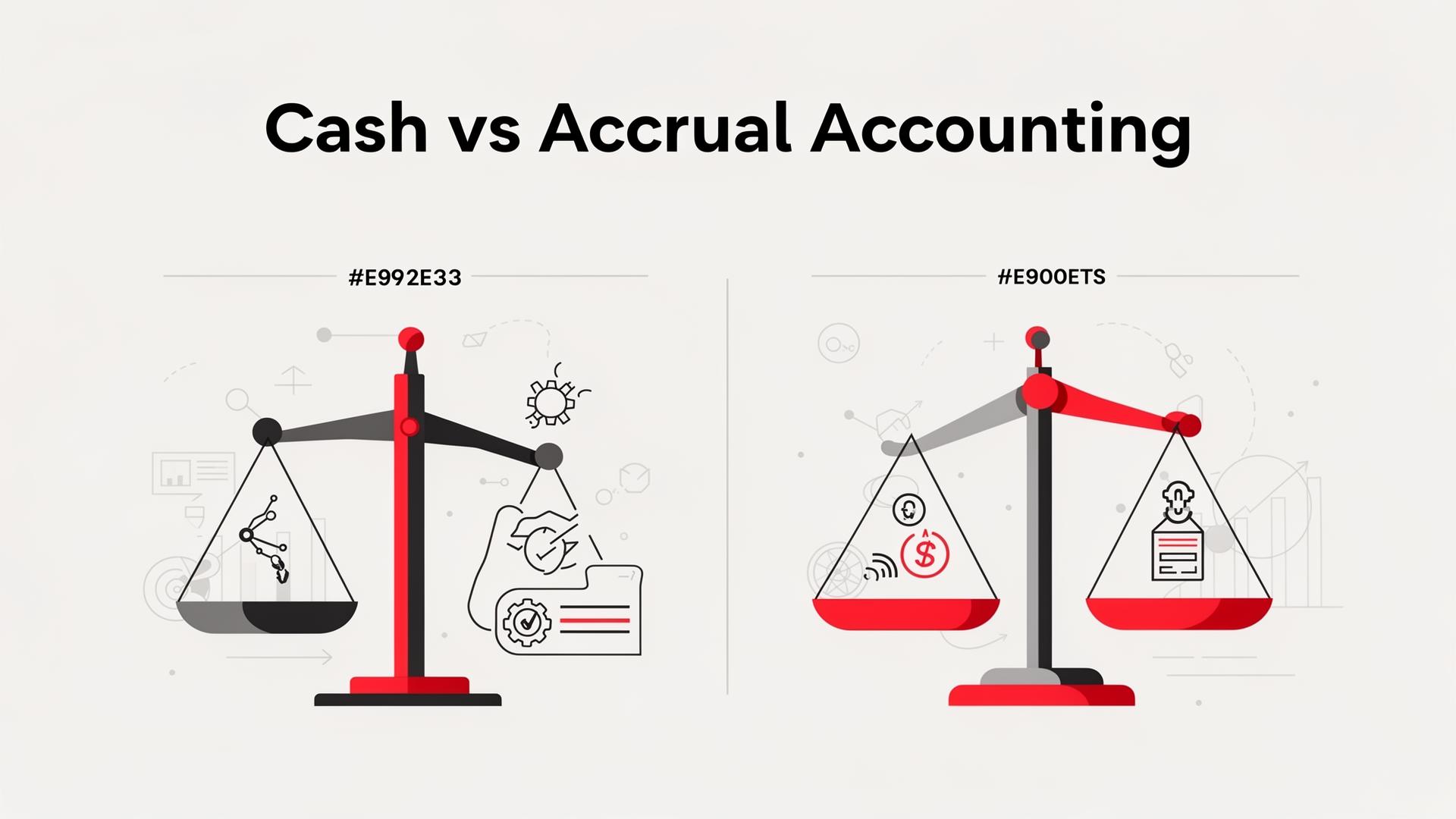
Cash vs. Accrual Basics
Two methods of recording transactions. Cash accounting records when money actually changes hands. Accrual accounting records when transactions occur, regardless of when payment happens. We'll explore both methods in detail below.
Basic Small Business Accounting Steps: Cash vs. Accrual Methods
One of the first decisions you'll make is choosing your accounting method. This choice affects how you record transactions, recognize income, and plan for taxes.
One of the first decisions you'll make is choosing your accounting method. This choice affects how you record transactions, recognize income, and plan for taxes.
Cash Basis Accounting
You record income when you receive payment and expenses when you pay them. It's simpler and shows your actual cash position. Most small businesses start here because:
- It's straightforward to implement and understand
- You only pay taxes on money you've actually received
- It reflects your real-time cash availability
- It requires less accounting expertise to manage
Best for: Service businesses, freelancers, consultants, and businesses with straightforward transactions.
Accrual Basis Accounting
You record income when earned and expenses when incurred, regardless of when money changes hands. This method provides a more accurate picture of business performance over time because:
- It matches revenue with the expenses that generated it
- It shows the true financial position of your business
- It's required for larger businesses in many jurisdictions
- It helps with long-term planning and forecasting
Best for: Inventory-based businesses, companies with complex payment terms, and businesses planning to grow substantially.
Making the Choice
Cash basis is simpler and often sufficient for small businesses with less than $25 million in annual revenue. However, if you carry significant inventory, have complex payment terms, or plan to seek investment, accrual accounting provides better insights. Consult with an accountant about your specific situation before deciding. For a deeper dive, see our cash vs accrual comparison.
Single-Entry vs Double-Entry Bookkeeping
Single-entry bookkeeping records each transaction once — similar to a checkbook register. It's simple and works for very small businesses with straightforward finances.
Single-entry bookkeeping records each transaction once — similar to a checkbook register. It's simple and works for very small businesses with straightforward finances. You track income and expenses in a single ledger.
Double-entry bookkeeping records every transaction in two accounts — a debit and a credit. For example, when you receive a $500 client payment, you debit (increase) cash and credit (decrease) accounts receivable. This method catches errors automatically because the books must always balance.
Most businesses should use double-entry bookkeeping. It's the standard for any business that needs accurate financial statements, and modern accounting software like Invoicemonk handles the debit/credit complexity for you behind the scenes — you just record the transaction once.
Understanding Your Chart of Accounts
A chart of accounts is your accounting system's backbone—it's an organized list of all the categories you'll use to classify transactions. Think of it as a filing system for your financial data.
A chart of accounts is your accounting system's backbone—it's an organized list of all the categories you'll use to classify transactions. Think of it as a filing system for your financial data.
Standard Account Categories
Every chart of accounts includes five main account types, each with subcategories:
- Assets (1000-1999): What your business owns
- 1000 - Cash and bank accounts
- 1100 - Accounts receivable (money owed to you)
- 1200 - Inventory
- 1500 - Equipment and property
- 1600 - Prepaid expenses
- Liabilities (2000-2999): What your business owes
- 2000 - Accounts payable (money you owe)
- 2100 - Credit cards payable
- 2200 - Loans and notes payable
- 2300 - Taxes payable
- Equity (3000-3999): Owner's stake in the business
- 3000 - Owner's capital
- 3100 - Retained earnings
- 3200 - Owner's draws
- Revenue (4000-4999): Income from business activities
- 4000 - Sales revenue
- 4100 - Service revenue
- 4200 - Other income
- Expenses (5000-9999): Costs of running the business
- 5000 - Cost of goods sold
- 6000 - Rent and utilities
- 6100 - Payroll expenses
- 6200 - Marketing and advertising
- 6300 - Professional services
- 6400 - Insurance
- 6500 - Office supplies
Setting Up Your Chart of Accounts
When creating your chart of accounts:
- Start with templates: Use industry-standard templates as a starting point
- Keep it simple: Only create accounts you'll actually use — 10–25 categories is plenty to start
- Think ahead: Add accounts for activities you plan to have, not just current ones
- Stay consistent: Use the same account numbers and names across all systems
Invoicemonk provides a pre-configured chart of accounts that you can customize for your business, saving you time and ensuring you follow best practices. For a fuller walk-through, see our chart of accounts setup guide.
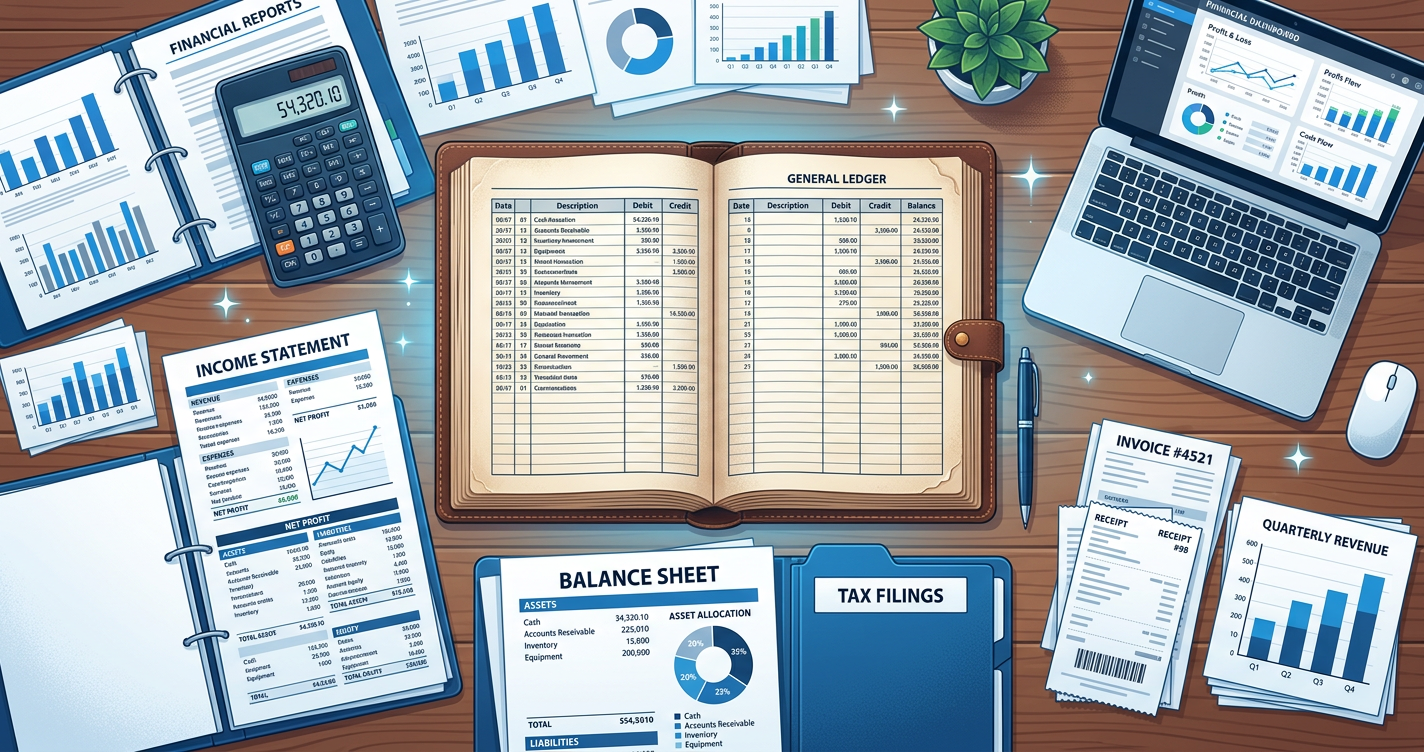
Essential Financial Statements for Small Business Owners
Three financial statements tell the story of your business. Understanding them is crucial for making informed decisions and attracting investors or lenders.
Three financial statements tell the story of your business. Understanding them is crucial for making informed decisions and attracting investors or lenders.
Income Statement (Profit and Loss)
Shows your revenue, expenses, and profit over a period (month, quarter, year). This tells you whether you're making money. Key components include:
- Revenue: Total income from sales and services
- Cost of Goods Sold: Direct costs to produce what you sold
- Gross Profit: Revenue minus cost of goods sold
- Operating Expenses: Indirect costs like rent, salaries, marketing
- Net Profit: What's left after all expenses—your bottom line
Review your income statement monthly to understand trends and identify problems early.
Balance Sheet
A snapshot of what you own and owe at a specific moment. It follows the accounting equation (Assets = Liabilities + Equity) and shows:
- Current Assets: Cash, receivables, inventory—things convertible to cash within a year
- Fixed Assets: Equipment, property, vehicles—long-term holdings
- Current Liabilities: Bills and debts due within a year
- Long-term Liabilities: Loans and obligations due beyond a year
- Owner's Equity: Your stake in the business after all debts are paid
Cash Flow Statement
Tracks the actual movement of cash in and out of your business. Crucial because profitable businesses can still run out of cash. The statement shows:
- Operating Activities: Cash from your core business operations
- Investing Activities: Cash spent on or received from assets
- Financing Activities: Cash from loans, investments, or distributions
Monitor cash flow continuously—it's the oxygen of your business. Need help projecting it? See our guide to cash flow forecasting.
The Three Numbers Every Owner Must Track
Forget the dozens of accounting metrics.
Forget the dozens of accounting metrics. As an owner, three numbers tell you almost everything about whether your business is healthy:
1. Monthly Revenue
Total money coming in this month. Track month-over-month and year-over-year. Is it growing, declining, or seasonal? Owner action: know this number without looking it up. It should be top of mind.
2. Profit Margin
What percentage of revenue actually becomes profit. Formula: (Revenue − Expenses) ÷ Revenue × 100. Example: $10,000 revenue − $7,000 expenses = $3,000 profit, or a 30% margin. Owner action: know your typical margin and investigate when it changes by more than a couple of points.
3. Cash Runway
How long you can operate with current cash if no new money comes in. Formula: Cash on hand ÷ monthly expenses. Example: $15,000 cash ÷ $5,000 monthly expenses = 3 months of runway. Owner action: keep at least 2–3 months of runway. More is better.
Decision Frameworks: Using Your Numbers to Choose
Accounting is only useful if it changes what you do. Here are the four decisions owners face most often, and the numbers that should drive each one.
Accounting is only useful if it changes what you do. Here are the four decisions owners face most often, and the numbers that should drive each one.
Should I hire someone?
Calculate the full cost: salary + taxes + benefits + equipment.
Calculate the full cost: salary + taxes + benefits + equipment. Then compare it to:
- Revenue the hire will enable (or how much of your time they free up, valued at your effective hourly rate)
- Whether your cash runway can sustain the cost during the ramp-up period
- The expected payback time — typically you want 6–12 months
Can I take a larger salary?
Check three things: profit margin (is there room after expenses? ), cash runway (will it stay healthy?
Check three things: profit margin (is there room after expenses?), cash runway (will it stay healthy?), and business investments (are there better uses for the money — inventory, marketing, hires?).
Should I raise prices?
If your profit margin is shrinking, you probably need to raise prices. Model the impact: how much would a 10% increase improve margin?
If your profit margin is shrinking, you probably need to raise prices. Model the impact: how much would a 10% increase improve margin? How many clients could you afford to lose before it's net-negative? What are competitors charging?
Is this client worth it?
Calculate true client profitability: revenue from the client, minus direct costs to serve them, minus indirect costs (your time, support, scope creep), and adjusted for payment behaviour (slow payers cost real money). Some high-revenue clients turn out to be low-profit when you account for everything.
Calculate true client profitability: revenue from the client, minus direct costs to serve them, minus indirect costs (your time, support, scope creep), and adjusted for payment behaviour (slow payers cost real money). Some high-revenue clients turn out to be low-profit when you account for everything.
What to Own vs. What to Delegate
As the owner, you don't have to do everything — but there are things you can't hand off if you want to stay in control of the business.
As the owner, you don't have to do everything — but there are things you can't hand off if you want to stay in control of the business.
Delegate:
- Day-to-day transaction recording
- Categorising expenses
- Reconciling accounts
- Preparing tax returns
- Running payroll
Own (don't delegate):
- Reviewing monthly financial summaries
- Understanding your profit drivers
- Making major financial decisions
- Setting financial goals
- Monitoring the cash position
The Owner's Monthly 30-Minute Finance Check-In
Schedule 30 minutes once a month — same day every month — to run through these six checks. This single ritual is what separates owners who feel in control from owners who feel anxious about money.
Schedule 30 minutes once a month — same day every month — to run through these six checks. This single ritual is what separates owners who feel in control from owners who feel anxious about money.
- Revenue review: How did we do this month? Why?
- Expense scan: Any surprises or categories growing faster than expected?
- Profit check: Are we on target for the quarter?
- Cash position: Comfortable runway? Any large outflows coming?
- Receivables: Anyone slow to pay? Time to chase?
- Forward look: What's coming next month or quarter that affects finances?
Bookkeeping Best Practices for Small Business Accounting
Good bookkeeping is the foundation of good accounting.
Good bookkeeping is the foundation of good accounting. Here's how to do it right:
Keep Business and Personal Separate
This is non-negotiable. Have separate bank accounts and credit cards for business. Mixing personal and business finances creates confusion, accounting errors, and potential legal problems with your business structure.
Record Everything—Daily
Every transaction—every one—should be recorded. Small expenses add up. Missed records create inaccurate reports. Make recording transactions a daily habit, not a monthly scramble.
Keep Documentation
Save receipts, invoices, contracts, and bank statements. Digital copies are fine in most jurisdictions. Organize them systematically—by date, type, or project. You'll need them for tax time and potentially for audits.
Reconcile Monthly
Compare your records against bank statements monthly at minimum. This catches errors, fraud, and missing transactions. It's easier to fix problems when they're recent.
Use Accounting Software
Spreadsheets work when you're tiny, but software like Invoicemonk saves time, reduces errors, and provides better insights as you grow. The investment pays for itself quickly through time saved and errors prevented.
Bookkeeping Methods Compared
You have three realistic options for actually recording transactions. Pick the one that matches where your business is today, not where you want it to be in three years.
You have three realistic options for actually recording transactions. Pick the one that matches where your business is today, not where you want it to be in three years.
- Spreadsheet method. Columns for date, description, amount in, amount out, running balance. Free and straightforward. Works well under ~50 transactions/month — beyond that it becomes error-prone.
- Accounting software. Tools like Invoicemonk connect to your bank, categorise transactions, and generate reports. Worth the investment once you're doing consistent business or have more than ~50 transactions/month.
- Bank-statement method. Categorise transactions directly on your bank statement. Minimal but workable for very simple side-hustles or businesses with one income stream.
Your Accounting Routine: Daily, Weekly, Monthly, Quarterly, Annual
The best accounting system is the one you actually use.
The best accounting system is the one you actually use. Build these habits and the year-end scramble disappears:
| Cadence | What you do |
|---|---|
| Daily | Record any cash transactions; photograph receipts |
| Weekly (~30 min) | Categorise expenses, review outstanding invoices, send overdue reminders |
| Monthly (~60 min) | Reconcile bank statements, generate P&L, run the 30-min owner check-in, send recurring invoices |
| Quarterly | Review financial performance, prepare and pay estimated taxes |
| Annually | Year-end closing, tax preparation with your accountant, annual review |
Expense Categorization for Tax Deductions
Categorizing expenses correctly matters for tax deductions, financial analysis, and budgeting.
Categorizing expenses correctly matters for tax deductions, financial analysis, and budgeting. Use these common categories:
- Cost of Goods Sold: Direct costs to produce what you sell (materials, labor, shipping)
- Operating Expenses: Rent, utilities, office supplies, equipment maintenance
- Payroll: Salaries, wages, benefits, payroll taxes
- Marketing: Advertising, promotions, content creation, website costs
- Professional Services: Legal, accounting, consulting fees
- Insurance: Business insurance premiums (liability, property, health)
- Travel: Business travel expenses, mileage, transportation
- Equipment: Tools, computers, machinery, vehicles
- Interest: Loan interest, credit card interest for business
- Depreciation: Wear and tear on business assets over time
Be consistent in how you categorize. Use the same categories your tax authority uses when possible—this simplifies tax preparation significantly.
Tax Preparation Basics for Small Business Owners
Good accounting throughout the year makes tax time manageable instead of stressful.
Good accounting throughout the year makes tax time manageable instead of stressful. Here's what every business owner needs to know:
Estimated Tax Payments
If you're self-employed or your business is a pass-through entity, you may need to make quarterly estimated tax payments. Missing these results in penalties. Set aside 25-30% of your profit as you earn it—don't wait until year-end.
Common Deductible Expenses
Understand what you can deduct. Business expenses that are ordinary and necessary for your business are generally deductible, including:
- Home office expenses (dedicated workspace only)
- Vehicle expenses for business use
- Health insurance premiums (if self-employed)
- Retirement contributions
- Professional development and training
- Software and technology subscriptions
Keep documentation for everything you claim.
Tax Filing Deadlines
Know your deadlines. Mark them on your calendar. Missing deadlines means penalties and interest. If you need more time, file for an extension—but pay estimated taxes on time regardless.
Tax Planning vs. Tax Preparation
Tax preparation is looking backward—filing returns for completed years. Tax planning is looking forward—structuring your business and timing decisions to minimize taxes legally. Good accountants do both.
For more detailed guidance, see our tax compliance guide.
Budgeting for Your Small Business
A budget is your financial plan for the future.
A budget is your financial plan for the future. It helps you make better decisions and avoid surprises:
Creating a Budget
Start with projected revenue based on historical data and realistic growth assumptions. Then project expenses, including both fixed costs (rent, salaries) and variable costs (materials, commissions). The difference is your projected profit. For detailed guidance, see our article on creating a business budget.
Monitoring vs. Budget
A budget is only useful if you compare actual results against it. Monthly review is ideal. Investigate significant variances—both positive and negative—and adjust your approach accordingly.
Updating Your Budget
Budgets aren't set in stone. As circumstances change, update your projections. A budget that's wildly out of touch with reality provides no guidance.
When to Hire an Accountant
You can handle basic bookkeeping yourself, but there are times when professional help is worth the investment:
You can handle basic bookkeeping yourself, but there are times when professional help is worth the investment:
Signs You Need Help
- Your tax situation is complex (multiple income sources, employees, international dealings)
- You're spending too much time on accounting instead of running your business
- You're making significant business decisions without clear financial data
- You're facing an audit or other compliance issue
- You're planning major changes (expansion, new entity type, taking investors)
Types of Accounting Help
- Bookkeeper: Handles day-to-day transaction recording. Lower cost, good for routine work.
- Accountant: Prepares financial statements, provides advice, handles tax returns.
- CPA: Certified public accountant. Licensed, can represent you before tax authorities.
- CFO services: Strategic financial guidance. Often fractional/part-time for small businesses.
What to Expect from a Bookkeeper
Accurate, timely transaction recording Monthly reconciled accounts
- Accurate, timely transaction recording
- Monthly reconciled accounts
- Basic financial reports
- Organised records for tax time
What to Expect from an Accountant
Tax planning and preparation Financial analysis and insights
- Tax planning and preparation
- Financial analysis and insights
- Strategic advice on business decisions
- Compliance guidance
Questions to Ask Your Accountant
- What should I be concerned about in these numbers?
- How does this compare to similar businesses?
- What would you do differently if this was your business?
- What questions should I be asking that I'm not?
Stage-Based Setup: How Your Accounting Should Evolve
Start simple. Add complexity only when the business demands it.
Start simple. Add complexity only when the business demands it. Here's roughly how the right setup changes as you grow:
| Business stage | Recommended accounting setup |
|---|---|
| Side hustle / early freelancing | Invoicing software (e.g. Invoicemonk) + spreadsheet for expenses |
| Full-time solo business | Integrated invoicing + expense tracking + bank feed |
| Small team (2–5 people) | Full accounting software + part-time bookkeeper |
| Growing business (5+ people) | Accounting software + part-time accountant + tax advisor |
Common Accounting Mistakes to Avoid
Learn from others' mistakes and save yourself time, money, and stress:
Learn from others' mistakes and save yourself time, money, and stress:
- Mixing personal and business finances: Creates chaos and potential legal issues
- Failing to save for taxes: Quarterly tax payments are a shock if you haven't prepared
- Not reconciling accounts: Errors compound over time if unchecked
- Ignoring small expenses: They add up and distort your profit picture
- Waiting until year-end: Monthly maintenance prevents year-end chaos
- Only looking at revenue: Profit matters more than top-line revenue
- Not understanding your numbers: If you don't understand them, you can't use them
- Using the wrong accounting method: Choose based on your business needs, not convenience
- Missing deadlines: Late payments mean penalties and damaged credit
Best Accounting Software for Small Business
The right accounting software automates much of the work described in this guide.
The right accounting software automates much of the work described in this guide. Here's how the leading platforms compare for small businesses:
- Invoicemonk — Best all-in-one for freelancers and service businesses. Combines invoicing, expense tracking, receipt scanning, and accounting in one platform. Pro from $15/month. Multi-currency and multi-jurisdiction tax compliance built in. Ideal if you want one tool instead of three.
- QuickBooks Online — Best for US businesses needing payroll. The most popular small business accounting software in the US. Comprehensive features including payroll, inventory, and the largest ecosystem of accountants. Expensive ($30+/month, no Pro plan) and increasingly complex.
- Xero — Best for accountant collaboration. Dominant in the UK, Australia, and New Zealand. Excellent bank reconciliation and the largest network of bookkeepers/accountants outside the US. Strong multi-currency. From $29/month.
- Wave — Best free option for US/Canadian businesses. Genuinely free accounting and invoicing with no client limits. Limited features (no multi-currency, basic receipt scanning) and US/Canada-focused. Good starting point if budget is the primary concern.
For a detailed comparison with pricing tables and feature matrices, see our Best Invoicing Software guide.
Accounting by Business Type
While the fundamentals are the same, different business types face unique accounting challenges:
While the fundamentals are the same, different business types face unique accounting challenges:
Freelancers and Sole Proprietors
Your biggest challenges are separating personal and business finances, managing irregular income, and handling self-employment tax. Use cash basis accounting (simpler, shows real cash position), set aside 25–30% of every payment for taxes, and track mileage if you drive for work. Quarterly estimated tax payments are usually required. Our freelance finance guide covers this in depth.
Retail and Inventory Businesses
Inventory accounting adds complexity: you must track cost of goods sold (COGS), manage stock valuations (FIFO, LIFO, or weighted average), and handle shrinkage. Accrual accounting is usually better for inventory businesses because it matches revenue with the costs of the products sold. You'll also need to handle sales tax collection and remittance. Consider software with built-in inventory tracking.
Service Businesses
Service businesses have simpler accounting (no inventory) but face challenges with project-based revenue recognition and work-in-progress tracking. If you bill by the hour, integrate time tracking with your invoicing. If you do project-based work, track expenses per project to understand profitability. Cash basis accounting works well for most service businesses.
E-Commerce Businesses
E-commerce accounting involves multi-channel sales tracking (your website, Amazon, Etsy), marketplace fees, shipping costs, returns and refunds, and multi-currency transactions for international sales. You'll need to reconcile payouts from platforms like Stripe, PayPal, and Amazon Seller Central. Sales tax nexus rules are complex — you may owe tax in multiple states or countries. Automated accounting software is essential at scale.
Getting Started: Your Accounting Action Plan
Ready to take control of your small business accounting? Here's your action plan:
- Week 1: Separate business and personal finances if you haven't already
- Week 2: Choose an accounting method (cash or accrual) and set up your chart of accounts
- Week 3: Set up accounting software to track income and expenses
- Week 4: Establish a routine for recording transactions and reconciling accounts
- Month 2: Create a simple budget, run your first 30-minute owner check-in, and review actual results
- Ongoing: Understand your tax obligations and set aside money accordingly
- As needed: Consider professional help for complex situations or as you grow
Professional accounting isn't just about compliance—it's about having the financial clarity to make confident business decisions. Start implementing these practices today, and you'll be ahead of most small business owners.
Frequently Asked Questions About Small Business Accounting
What's the difference between bookkeeping and accounting?
Bookkeeping is the day-to-day recording of transactions — categorising expenses, reconciling accounts, and maintaining ledgers. Accounting is the broader discipline that includes interpreting financial data, preparing financial statements, tax planning, and strategic advice.
Bookkeeping is the day-to-day recording of transactions — categorising expenses, reconciling accounts, and maintaining ledgers. Accounting is the broader discipline that includes interpreting financial data, preparing financial statements, tax planning, and strategic advice. Bookkeeping is a subset of accounting.
How much does it cost to do accounting for a small business?
Costs vary based on complexity. DIY with software like Invoicemonk costs $15-50/month.
Costs vary based on complexity. DIY with software like Invoicemonk costs $15-50/month. Hiring a bookkeeper runs $150-500/month. A full accountant costs $200-500/month for ongoing work, plus $500-2,000 for annual tax preparation. Start with software and add professional help as your business grows.
What's the easiest accounting method for small businesses?
Cash basis accounting is simpler for most small businesses. You record income when received and expenses when paid.
Cash basis accounting is simpler for most small businesses. You record income when received and expenses when paid. It requires less expertise and shows your real-time cash position. Most businesses under $25 million revenue can use this method.
Do I need to hire an accountant for my small business?
Not necessarily for day-to-day bookkeeping—software can handle that. But consider professional help for tax preparation, compliance questions, and strategic financial planning.
Not necessarily for day-to-day bookkeeping—software can handle that. But consider professional help for tax preparation, compliance questions, and strategic financial planning. At minimum, consult an accountant when starting your business and annually for tax planning.
How often should I update my accounting records?
Daily is ideal for recording transactions. Weekly at minimum.
Daily is ideal for recording transactions. Weekly at minimum. Reconcile bank accounts monthly. Review financial statements monthly. Do a thorough review quarterly. This rhythm keeps you informed and makes year-end much easier.
How often should I reconcile my accounts?
At minimum, monthly. Reconciliation means comparing your accounting records against your bank statements to ensure they match.
At minimum, monthly. Reconciliation means comparing your accounting records against your bank statements to ensure they match. This catches errors, duplicate charges, missing transactions, and potential fraud. Many businesses reconcile weekly for tighter control.
How long should I keep my business financial records?
Keep all income records (invoices, sales receipts, bank deposit slips), expense records (receipts, bills, credit card statements), bank statements, tax returns, and any contracts or legal documents. In most jurisdictions, tax-related records must be kept for 3–7 years.
Keep all income records (invoices, sales receipts, bank deposit slips), expense records (receipts, bills, credit card statements), bank statements, tax returns, and any contracts or legal documents. In most jurisdictions, tax-related records must be kept for 3–7 years. Store digital copies as backup.
What financial reports do I need for my small business?
Three essential reports: Income Statement (shows profitability), Balance Sheet (shows financial position), and Cash Flow Statement (shows cash movement). Generate these monthly or at least quarterly to stay informed about your business health.
Three essential reports: Income Statement (shows profitability), Balance Sheet (shows financial position), and Cash Flow Statement (shows cash movement). Generate these monthly or at least quarterly to stay informed about your business health.
How do I separate business and personal finances?
Open a dedicated business bank account and credit card. Pay yourself a regular salary or draw.
Open a dedicated business bank account and credit card. Pay yourself a regular salary or draw. Never use personal accounts for business expenses or vice versa. This simplifies accounting, protects your liability protection, and makes tax preparation straightforward.
What is the best free accounting software?
For US and Canadian businesses, Wave offers free accounting and invoicing with no limits. For international businesses, Invoicemonk's Pro plan provides multi-currency support and tax compliance for multiple jurisdictions.
For US and Canadian businesses, Wave offers free accounting and invoicing with no limits. For international businesses, Invoicemonk's Pro plan provides multi-currency support and tax compliance for multiple jurisdictions. Both are genuine free tools, not limited trials. If you need payroll, no major platform offers that for free — expect to pay $30+/month for payroll add-ons.
How do I do my own accounting without an accountant?
Start with accounting software (Invoicemonk, QuickBooks, or Wave) and follow these steps: (1) separate business and personal accounts, (2) record every transaction daily, (3) reconcile bank accounts monthly, (4) review your income statement and balance sheet quarterly, and (5) set aside money for taxes.
Start with accounting software (Invoicemonk, QuickBooks, or Wave) and follow these steps: (1) separate business and personal accounts, (2) record every transaction daily, (3) reconcile bank accounts monthly, (4) review your income statement and balance sheet quarterly, and (5) set aside money for taxes. Handle day-to-day bookkeeping yourself, but consider hiring an accountant for annual tax preparation and strategic tax planning — a good accountant typically saves you more than they cost.
Related Resources
- How to Create a Budget for Your Small Business
- Chart of Accounts: A Complete Guide
- Cash vs. Accrual Accounting Explained
- Financial Reports Every Business Needs
- Cash Flow Forecasting for Small Businesses
- DIY vs Hiring an Accountant
- Small Business Tax Compliance Guide
- The Complete Business Finances Guide
- Best Invoicing Software Compared
- Invoicemonk Accounting Tools
Frequently Asked Questions
Should I use cash or accrual accounting?
Cash accounting records income when received and expenses when paid—simpler for small businesses. Accrual accounting records when earned/incurred, providing a more accurate financial picture. Most small businesses start with cash; switch to accrual as you grow or if required by regulations.
Learn more: Accounting BasicsWhat financial reports do I need to track?
Essential reports include: Profit & Loss (income statement) for profitability, Balance Sheet for assets and liabilities, Cash Flow Statement for money movement, and Accounts Receivable Aging for unpaid invoices.
Learn more: Budget CreationHow do I create a small business budget?
Start by reviewing past income and expenses. Categorize fixed costs (rent, salaries) and variable costs (supplies, marketing). Set realistic revenue targets, allocate funds by priority, and review monthly to adjust for actual performance.
Learn more: Financial ReportsWhen should I hire an accountant?
Consider hiring an accountant when: your business grows beyond simple bookkeeping, you need tax planning advice, you're seeking funding, or you're spending more time on finances than your core business. Start with a bookkeeper and upgrade to a CPA as needed.
Learn more: Profit MarginsTable of Contents
Explore the Business Finances Series
16 articles to master this topic

How to Do Accounting for Your Small Business (Step-by-Step)
A practical, step-by-step tutorial on how to do accounting for a small business. Follow this guide to set up your books, track transactions, and generate the reports you need.
15 min read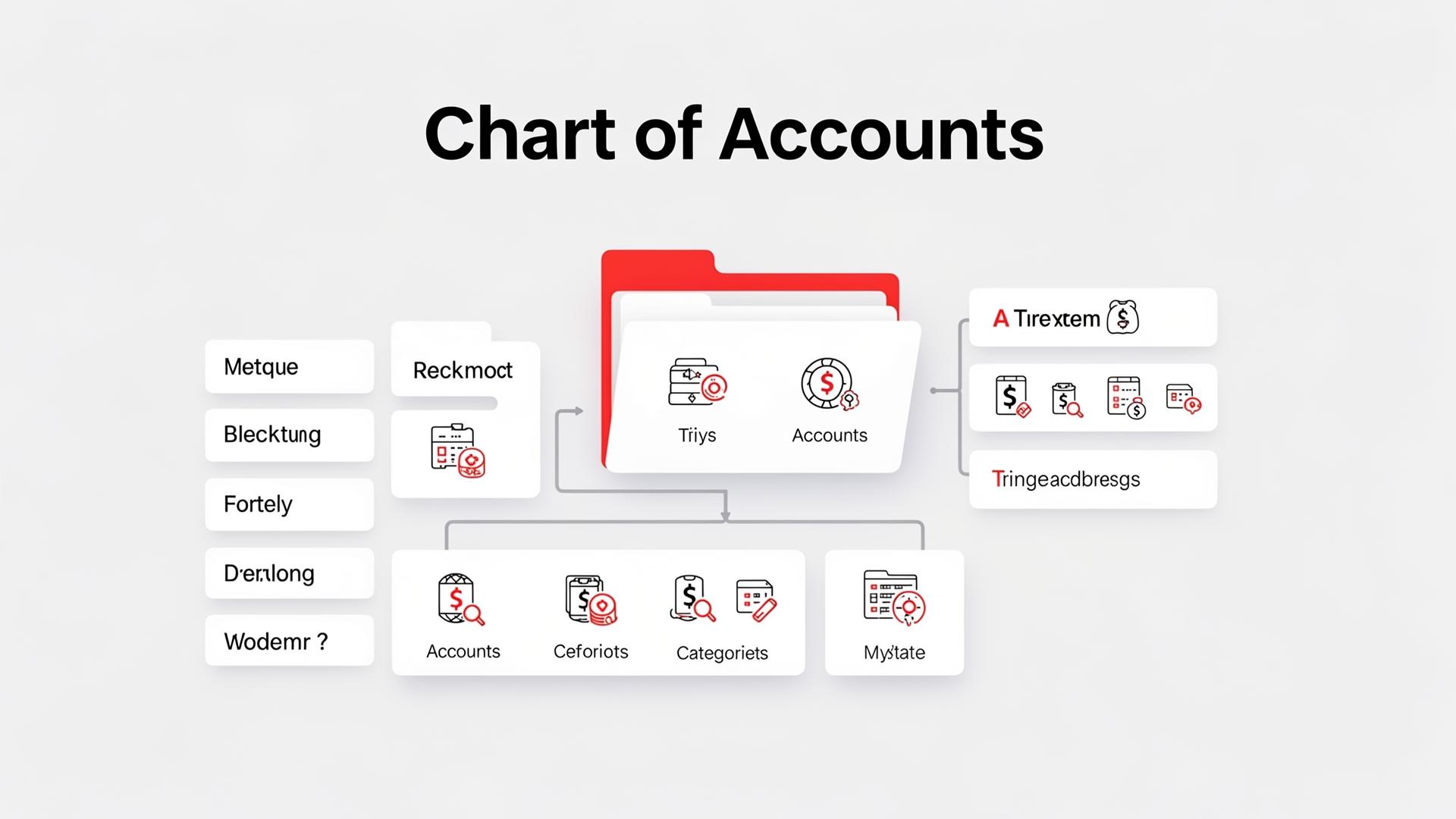
Chart of Accounts for Small Business: Complete Setup Guide
Learn how to set up a chart of accounts for your small business. Master account categories, numbering systems, and bookkeeping organization for financial clarity.
14 min read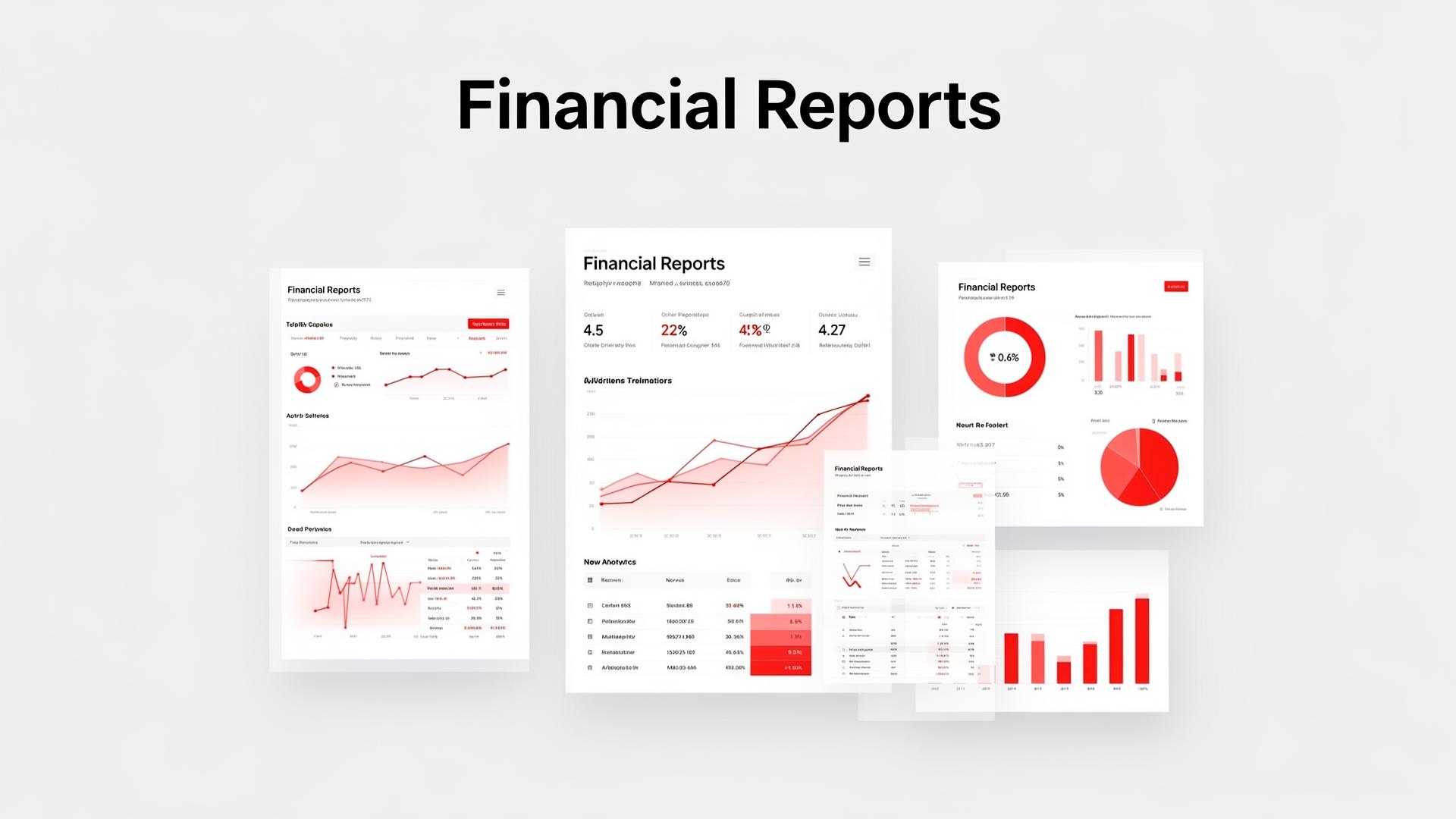
Financial Reports Every Business Needs: A Complete Guide
Master the essential financial reports for small business success. Learn to read and use P&L statements, balance sheets, and cash flow reports to make better decisions.
15 min readDigital Marketing, SEO Specialist, Content Creator & Product Professional
Olayinka is a digital marketer, content creator, growth and SEO specialist with 10+ years helping businesses in Nigeria, the UK, the US, Australia, and Dubai achieve their goals online.