SEFAZ Brazil Explained: NF-e, NFS-e, CT-e, the Chave de Acesso, and the IBS/CBS Reform Through 2033
Global E-Invoicing Platform Series
This guide is part of a comprehensive series. Explore all 36 topics:
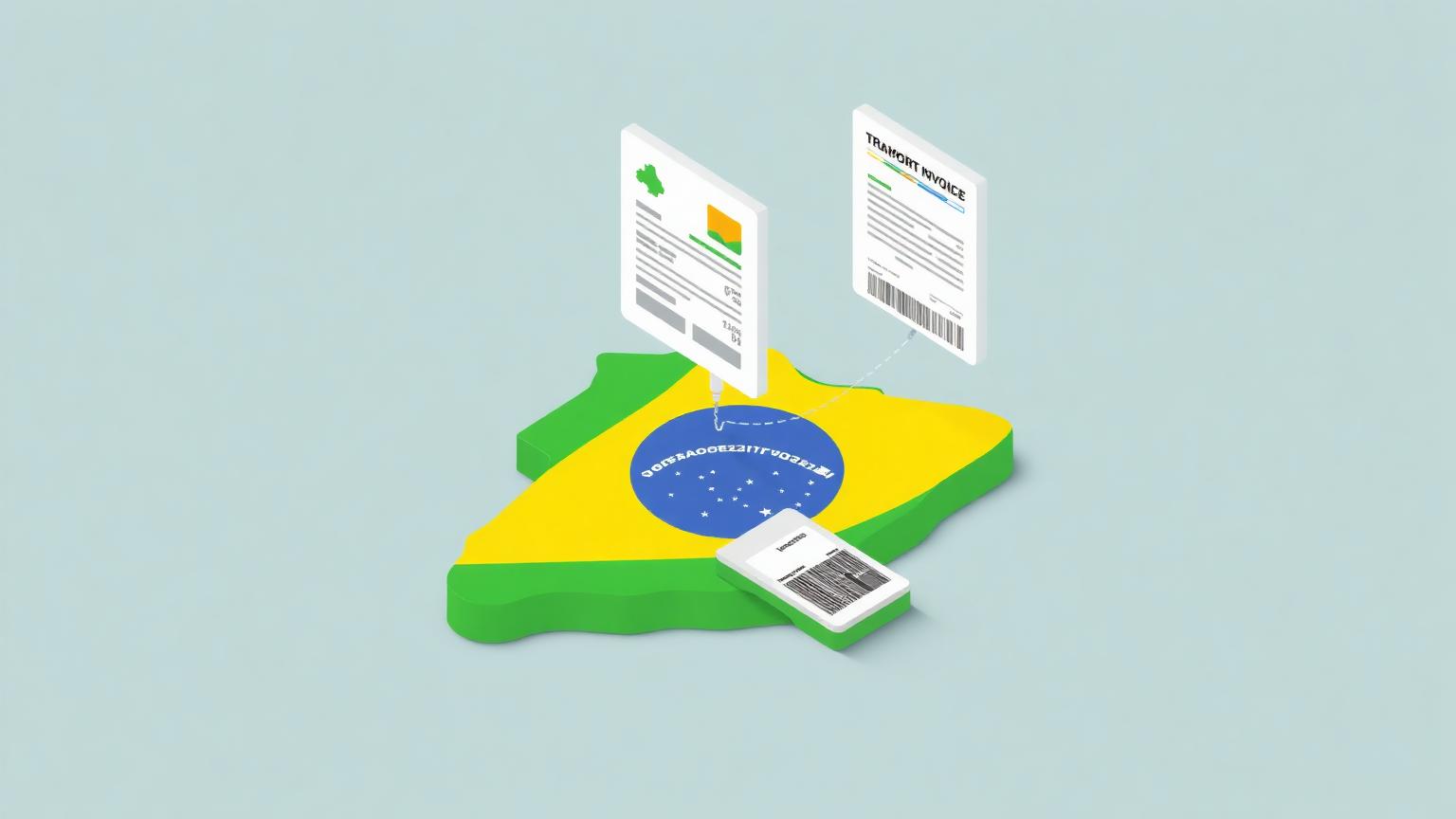
SEFAZ Brazil is the family of state tax authorities (Secretaria de Estado da Fazenda) that operate the world's oldest production clearance regime: every sale of goods (NF-e), every freight movement (CT-e), and most services (NFS-e, cleared by the municipality not SEFAZ) are pre-validated by the tax authority before the buyer can receive the goods or claim the input credit. From 1 January 2026, every fiscal document must also carry the new IBS and CBS reform fields, with full replacement of ICMS/PIS/COFINS completing in 2033.
At a glance
- Authority: 27 SEFAZ (one per UF) for NF-e/CT-e; 5,500+ municipalities for NFS-e; Receita Federal and Comitê Gestor do IBS for federal-level reform oversight.
- Documents: NF-e (goods), NFS-e (services), CT-e (freight), MDF-e (manifest), NFC-e (consumer), CT-OS (passenger transport).
- Identifier: 44-digit chave de acesso encoding UF + year-month + CNPJ + model + series + number + check digit.
- Stats: 58+ billion NF-e authorised; 3+ million active emitters (Portal Nacional NF-e).
- Reform timeline: CBS+IBS itemisation mandatory 1 Jan 2026; penalties from 1 Aug 2026; ICMS/PIS/COFINS fully replaced by 2033.
- Last reviewed: 20 November 2026 against Receita Federal Orientações 2026 and NT 2025/002 v1.33.
What SEFAZ actually is
SEFAZ (Secretaria de Estado da Fazenda) is the state tax authority — one per UF (Brazilian state) — that operates the NF-e and CT-e clearance webservices and enforces the state-level ICMS.
SEFAZ (Secretaria de Estado da Fazenda) is the state tax authority — one per UF (Brazilian state) — that operates the NF-e and CT-e clearance webservices and enforces the state-level ICMS. The schema and core validation rules are national (set by ENCAT and codified in successive Notas Técnicas), but each UF runs its own production endpoint and contingency endpoint, and applies state-specific ICMS rates.
For service invoices (NFS-e), the clearance authority is not SEFAZ at all — it is the municipality where the service is rendered, enforcing the municipal ISS. The unified national NFS-e (system maintained by Receita Federal) is rolling out gradually and standardises the DPS payload, but the legacy municipal endpoints continue in parallel.
NF-e — the goods invoice
NF-e — the goods invoice includes: Mandatory for every B2B sale of goods and most B2C goods sales since 2006 (NFC-e is the consumer-facing variant). Schema: SEFAZ-published XML, currently v4.
- Mandatory for every B2B sale of goods and most B2C goods sales since 2006 (NFC-e is the consumer-facing variant).
- Schema: SEFAZ-published XML, currently v4.00, extended by NT 2025/002 v1.33 for IBS/CBS reform fields.
- Signing: XML-DSig in XAdES-BES profile with an ICP-Brasil A1 certificate bound to the emitter CNPJ.
- Clearance: the emitter UF's SEFAZ returns an authorisation protocol (cStat=100); the 44-digit chave de acesso is the legal identifier.
- Print: DANFE — the printable representation that travels with the goods, carrying the chave de acesso, the QR pointing to SEFAZ verification, and the authorisation protocol number.
What if the buyer does not have a CNPJ?
For B2C goods sales, use NFC-e (model 65), the consumer-facing electronic invoice. It uses the same signing and clearance stack as NF-e but does not require the buyer's identification below a low-value threshold set by each UF.
For B2C goods sales, use NFC-e (model 65), the consumer-facing electronic invoice. It uses the same signing and clearance stack as NF-e but does not require the buyer's identification below a low-value threshold set by each UF.
NFS-e — the service invoice
Municipal, not state. Each municipality runs its own webservice and schema — São Paulo, Rio de Janeiro, Belo Horizonte, and Curitiba maintain proprietary systems; the majority of smaller municipalities standardise on ABRASF, Ginfes, or Betha shared platforms.
Municipal, not state. Each municipality runs its own webservice and schema — São Paulo, Rio de Janeiro, Belo Horizonte, and Curitiba maintain proprietary systems; the majority of smaller municipalities standardise on ABRASF, Ginfes, or Betha shared platforms. The new unified national NFS-e (DPS payload coordinated by Receita Federal) is mandatory for an expanding list of service categories from 2026.
The ICMS (state VAT) is replaced by ISS (municipal services tax) for service flows. ISS rates are set per municipality, capped between 2% and 5% by federal law.
CT-e — the freight document
Conhecimento de Transporte Eletrônico (model 57). Required for every freight movement of goods, separate from the NF-e that documents the sale.
Conhecimento de Transporte Eletrônico (model 57). Required for every freight movement of goods, separate from the NF-e that documents the sale. Same XML signing model as NF-e, cleared by the originating UF's SEFAZ. The MDF-e (Manifesto Eletrônico de Documentos Fiscais) wraps multiple CT-e and NF-e into a single transport manifest used at fiscal posts.
The chave de acesso decoded
The 44-digit access key encodes:
The 44-digit access key encodes:
- Positions 1–2: UF code (e.g. 35 = São Paulo, 33 = Rio de Janeiro).
- Positions 3–6: year and month of emission (YYMM).
- Positions 7–20: emitter CNPJ.
- Positions 21–22: document model (55 = NF-e, 65 = NFC-e, 57 = CT-e).
- Positions 23–25: series.
- Positions 26–34: document number.
- Position 35: emission type (1 = normal, 2 = contingency FS-IA, 4 = EPEC, 6 = SVC-AN, 7 = SVC-RS, 9 = offline NFC-e).
- Positions 36–43: numeric code (cNF).
- Position 44: modulo-11 check digit.
The chave de acesso is the canonical identifier — every system that touches the document (buyer accounting, SEFAZ, freight carrier, customer portal) references it.
ICMS, IPI, PIS, COFINS — and the IBS/CBS replacement
ICMS, IPI, PIS, COFINS — and the IBS/CBS replacement includes: ICMS: state VAT on goods. Rate varies by UF and product (typically 17–18% intra-state, 7–12% inter-state with DIFAL on the differential).
- ICMS: state VAT on goods. Rate varies by UF and product (typically 17–18% intra-state, 7–12% inter-state with DIFAL on the differential).
- IPI: federal excise on manufactured goods. Rate from the TIPI table by NCM code.
- PIS / COFINS: federal social-contribution taxes. Cumulative or non-cumulative regime depending on the taxpayer's federal tax election.
- ISS: municipal services tax (replaces ICMS for services). Rate set by each municipality, capped between 2% and 5%.
- CBS (new): Contribuição sobre Bens e Serviços. Federal, replaces PIS/COFINS by 2027.
- IBS (new): Imposto sobre Bens e Serviços. State+municipal, replaces ICMS and ISS by 2033.
The 2026–2033 reform timeline
Per the Receita Federal Orientações 2026, Decree 12.
Per the Receita Federal Orientações 2026, Decree 12.955/2026, and CGIBS Resolution 6/2026:
- 1 January 2026: CBS and IBS enter into force; every fiscal document must itemise them.
- 1 August 2026: penalties for non-itemisation begin.
- 2027: PIS/COFINS extinguished; CBS becomes the sole federal indirect tax.
- 2029–2032: ICMS and ISS gradually phased out as IBS rate rises.
- 2033: Full ICMS/ISS replacement by IBS; reform completes.
Until 2033, every NF-e must support both stacks in parallel — legacy ICMS/PIS/COFINS plus the new IBS/CBS — driving the NT 2025/002 schema extensions.
How SEFAZ differs from other clearance regimes
SEFAZ sits in the clearance-model family alongside ZATCA Phase 2, MyInvois, FIRS MBS, and India GST IRN.
SEFAZ sits in the clearance-model family alongside ZATCA Phase 2, MyInvois, FIRS MBS, and India GST IRN. Distinguishing features:
- The federation of clearance authorities — 27 SEFAZ plus 5,500+ municipalities.
- The 44-digit chave de acesso (longer than India's 64-char IRN hash, longer than ZATCA's invoice hash).
- The strict separation of NF-e (goods), NFS-e (services), CT-e (freight), and NFC-e (consumer).
- The parallel-run of legacy and reform tax stacks through to 2033 — unique to Brazil.
- 20-year operational history — far older than any other live mandate.
For the broader architecture, see clearance vs reporting models in e-invoicing.
Authority sources
- Portal Nacional da Nota Fiscal Eletrônica — SEFAZ
- Receita Federal — Orientações da Reforma Tributária para 2026
- Sistema Nacional NFS-e — Receita Federal
- Portal Nacional do Conhecimento de Transporte Eletrônico (CT-e)
- ITI — Instituto Nacional de Tecnologia da Informação (ICP-Brasil)
- Comunicado Conjunto Receita Federal × Comitê Gestor do IBS
TL;DR
SEFAZ is 27 state tax authorities running NF-e and CT-e clearance; NFS-e is municipal. Every document is signed with ICP-Brasil A1, cleared synchronously, and identified by a 44-digit chave de acesso.
SEFAZ is 27 state tax authorities running NF-e and CT-e clearance; NFS-e is municipal. Every document is signed with ICP-Brasil A1, cleared synchronously, and identified by a 44-digit chave de acesso. From 2026 the IBS/CBS reform itemisation is mandatory; legacy taxes phase out fully by 2033.
Related reading
Related reading includes: SEFAZ Brazil — how Invoicemonk implements NF-e and NFS-e How to comply with SEFAZ in Brazil
- SEFAZ Brazil — how Invoicemonk implements NF-e and NFS-e
- How to comply with SEFAZ in Brazil
- ICP-Brasil A1 certificates explained
- Clearance vs reporting models
- What is an IRN — across jurisdictions
Ready to implement SEFAZ? See how to comply with SEFAZ in Brazil end to end.
More in this series (36 articles)
From this series
Mandate-compliant e-invoicing in 17 jurisdictions, with the local artefact (CSID, IRN, UUID, QR, digital signature) issued automatically.
Digital Marketing, SEO Specialist, Content Creator & Product Professional
Olayinka is a digital marketer, content creator, growth and SEO specialist with 10+ years helping businesses in Nigeria, the UK, the US, Australia, and Dubai achieve their goals online.