Estimate vs Quote vs Invoice: What Is the Difference?
Estimates & Proposals Series
This guide is part of a comprehensive series. Explore all 11 topics:
Estimates, quotes, and invoices serve different purposes in the client-to-payment journey. Using them correctly—and understanding when each applies—helps you set clear expectations and get paid smoothly.
Estimate: An Approximation
An estimate is an educated guess at what work will cost. It's explicitly not binding—final costs may vary based on what you discover during the work.
An estimate is an educated guess at what work will cost. It's explicitly not binding—final costs may vary based on what you discover during the work.
When to Use an Estimate
The scope isn't fully defined yet You need to investigate before knowing exact costs
- The scope isn't fully defined yet
- You need to investigate before knowing exact costs
- The work involves variables you can't control
- You're giving a ballpark figure early in discussions
Estimate Best Practices
- Clearly label it as an estimate, not a final price
- State assumptions and what might cause costs to change
- Include a range if appropriate ("typically £500-£800")
- Set an expiry date—estimates become stale
Quote: A Fixed Price Commitment
A quote is a firm offer to complete specific work at a specific price. Once accepted, you're typically bound to that price even if the work takes longer than expected.
A quote is a firm offer to complete specific work at a specific price. Once accepted, you're typically bound to that price even if the work takes longer than expected.
When to Use a Quote
The scope is clearly defined and agreed You can accurately predict the work required
- The scope is clearly defined and agreed
- You can accurately predict the work required
- The client needs price certainty before proceeding
- You're competing against other providers
Quote Best Practices
- Define scope precisely—be explicit about what's included and excluded
- Set a validity period ("valid for 30 days")
- Include terms and conditions
- Build in contingency for unknowns—you can't increase the price later
Invoice: A Request for Payment
An invoice is issued after work is complete (or at agreed milestones) to request payment. It's a formal record of the transaction and a legal document.
An invoice is issued after work is complete (or at agreed milestones) to request payment. It's a formal record of the transaction and a legal document.
When to Use an Invoice
Work has been completed or a milestone reached Payment is due according to agreed terms
- Work has been completed or a milestone reached
- Payment is due according to agreed terms
- You need to formally request payment
- You need documentation for accounting and tax purposes
Invoice Best Practices
- Send promptly—don't wait until month-end
- Include all required elements (see our invoice elements guide)
- Reference the original quote or estimate if applicable
- Use invoicing software for professional presentation and tracking
How They Work Together
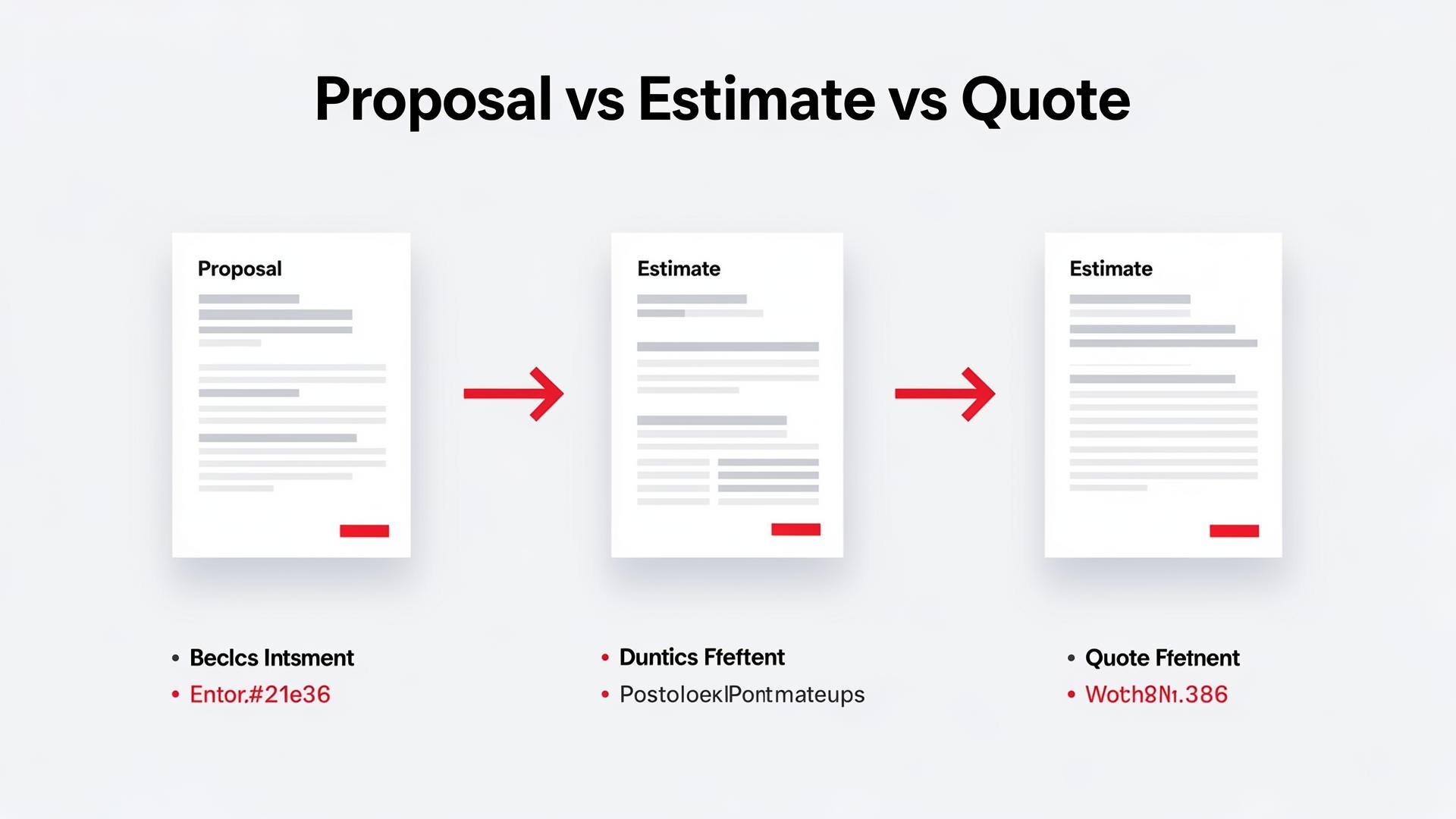
The typical workflow flows from estimate to quote to invoice:
The typical workflow flows from estimate to quote to invoice:
- Estimate: Client asks "roughly how much?" You provide an approximation.
- Quote: After defining scope precisely, you provide a firm price.
- Invoice: After work is complete, you request payment based on the agreed price.
Not every project needs all three. For repeat clients with standard work, you might skip straight to invoicing. For well-defined projects, you might skip the estimate and start with a quote.
Key Differences Summary
| Document | Binding? | When Issued | Purpose |
|---|---|---|---|
| Estimate | No | Before work, scope unclear | Give approximate cost |
| Quote | Yes | Before work, scope clear | Commit to fixed price |
| Invoice | Yes | After work or milestone | Request payment |
Legal Considerations
The legal weight of these documents varies by jurisdiction, but generally:
The legal weight of these documents varies by jurisdiction, but generally:
- Estimates create no obligation to honor the approximate price
- Quotes, once accepted, typically create a binding contract
- Invoices are legal records of transactions that must be retained for tax purposes
When in doubt about legal implications, consult with a legal professional in your jurisdiction.
Using Software to Manage the Flow
Estimate and proposal tools that convert to invoices with a click save time and ensure consistency. When your estimate becomes a quote becomes an invoice, the information flows through automatically—no retyping, no errors.
Estimate and proposal tools that convert to invoices with a click save time and ensure consistency. When your estimate becomes a quote becomes an invoice, the information flows through automatically—no retyping, no errors.
For more on winning clients with professional proposals, see our complete proposals and estimates guide.
More in this series (11 articles)
From this series
Win more clients with compelling proposals and accurate estimates.
Related Topics
Digital Marketing, SEO Specialist, Content Creator & Product Professional
Olayinka is a digital marketer, content creator, growth and SEO specialist with 10+ years helping businesses in Nigeria, the UK, the US, Australia, and Dubai achieve their goals online.