Year-End Accounting Checklist for Small Businesses and Freelancers
Business Finances Series
This guide is part of a comprehensive series. Explore all 16 topics:
Close your financial year with confidence — a step-by-step checklist covering reconciliation, tax prep, deductions, and planning for the new year. This guide gives the answer first, then covers required invoice fields, workflow choices, compliance checks, common mistakes, and practical next steps so readers can act without comparing multiple sources.
Why Year-End Accounting Matters
Year-end is when everything comes together — revenue, expenses, tax obligations, and financial planning for the next year. A thorough year-end process ensures you file accurate taxes, claim all legitimate deductions, and start the new year with clean books.
Year-end is when everything comes together — revenue, expenses, tax obligations, and financial planning for the next year. A thorough year-end process ensures you file accurate taxes, claim all legitimate deductions, and start the new year with clean books.
This checklist covers everything you need to do in the final weeks of your financial year.
4-6 Weeks Before Year-End
1. Reconcile All Accounts
- Match every bank transaction to an invoice, expense, or transfer in your accounting software
- Resolve any unmatched or duplicated transactions
- Reconcile PayPal, Stripe, and other payment platform balances
- Verify petty cash balance matches your records
2. Chase Outstanding Invoices
- Review all overdue invoices and send final reminders
- Decide which uncollectible invoices to write off as bad debt
- Send year-end statements to clients with outstanding balances
- Consider offering a small discount for immediate payment on old debts
3. Review and Categorize Expenses
- Go through every expense and ensure correct categorization
- Check for personal expenses accidentally recorded as business
- Verify all receipts are attached to their expense records
- Calculate home office, vehicle, and other proportional deductions
2-4 Weeks Before Year-End
4. Review Revenue
- Verify total invoiced matches total revenue recorded
- Check for invoices issued but not recorded (or vice versa)
- Reconcile multi-currency transactions and exchange rate gains/losses
- Verify deposits received are properly classified (deferred revenue vs. recognized revenue)
5. Tax Preparation
- Calculate total tax collected (VAT/GST/sales tax)
- Prepare final VAT/GST return for the period
- Review estimated tax payments made during the year vs. actual liability
- Identify any tax credits or incentives you qualify for
- Gather all forms needed: W-9s/1099s (US), CIS statements (UK), TDS certificates (India)
6. Fixed Assets
- Review equipment purchases and calculate depreciation
- Write off any disposed or obsolete assets
- Update your asset register
Final Week
7. Generate Reports
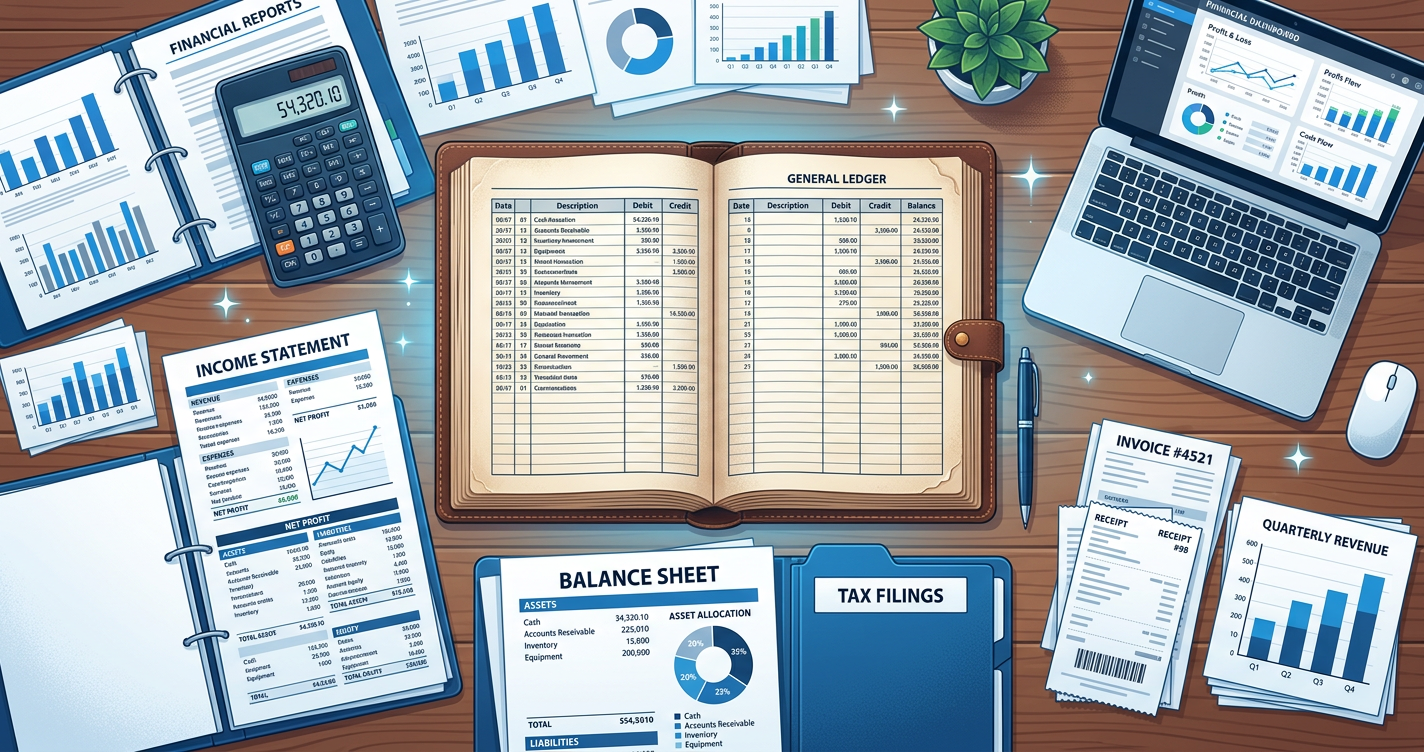
- Profit & Loss statement for the full year
- Balance sheet (if applicable)
- Tax summary report — total income, deductions, and tax owed
- Aged receivables report — outstanding invoices by age
- Expense summary by category
8. Backup Everything
- Export all invoices, expenses, and reports from your invoicing software
- Download bank statements for the full year
- Archive all receipts and supporting documents
- Store backups securely (encrypted cloud storage recommended)
9. Plan for Next Year
- Review pricing — are your rates still competitive and profitable?
- Set revenue goals for the coming year
- Update your payment terms if needed
- Adjust tax installment payments based on this year's actual liability
- Schedule quarterly reviews instead of waiting until year-end
Country-Specific Deadlines
Country-Specific Deadlines includes: UK: Self Assessment deadline January 31 (online), financial year typically April 5 US: April 15 for individual returns, March 15 for partnerships/S-corps
- UK: Self Assessment deadline January 31 (online), financial year typically April 5
- US: April 15 for individual returns, March 15 for partnerships/S-corps
- India: July 31 for individuals, March 31 financial year-end
- Nigeria: June 30 for individual returns (FIRS), December 31 financial year-end
- Australia: October 31 for individual returns (June 30 financial year-end)
FAQ
Do I need an accountant for year-end?
If you're a solo freelancer with straightforward income and expenses, you can likely handle year-end yourself using good accounting software.
If you're a solo freelancer with straightforward income and expenses, you can likely handle year-end yourself using good accounting software. However, if you have employees, multiple revenue streams, international income, or complex tax situations, an accountant is worth the investment — they'll often save you more in deductions than they cost.
What records do I need to keep and for how long?
In most jurisdictions, keep business records for at least 5-7 years from the end of the tax year they relate to. This includes invoices, receipts, bank statements, contracts, and tax returns.
In most jurisdictions, keep business records for at least 5-7 years from the end of the tax year they relate to. This includes invoices, receipts, bank statements, contracts, and tax returns. Digital records are acceptable — use Invoicemonk's expense tracking to maintain a permanent digital archive.
More in this series (16 articles)
From this series
Essential accounting and expense management knowledge for small business success.
Related Topics
Digital Marketing, SEO Specialist, Content Creator & Product Professional
Olayinka is a digital marketer, content creator, growth and SEO specialist with 10+ years helping businesses in Nigeria, the UK, the US, Australia, and Dubai achieve their goals online.