Proposal vs Estimate vs Quote: Differences Explained (2026)
Estimates & Proposals Series
This guide is part of a comprehensive series. Explore all 11 topics:
Proposals, estimates, and quotes—many business owners use these terms interchangeably, but they're actually different documents with different purposes, legal implications, and best use cases.
Using the wrong one can lead to scope creep, pricing disputes, and lost clients. This guide clarifies the differences so you always send the right document.
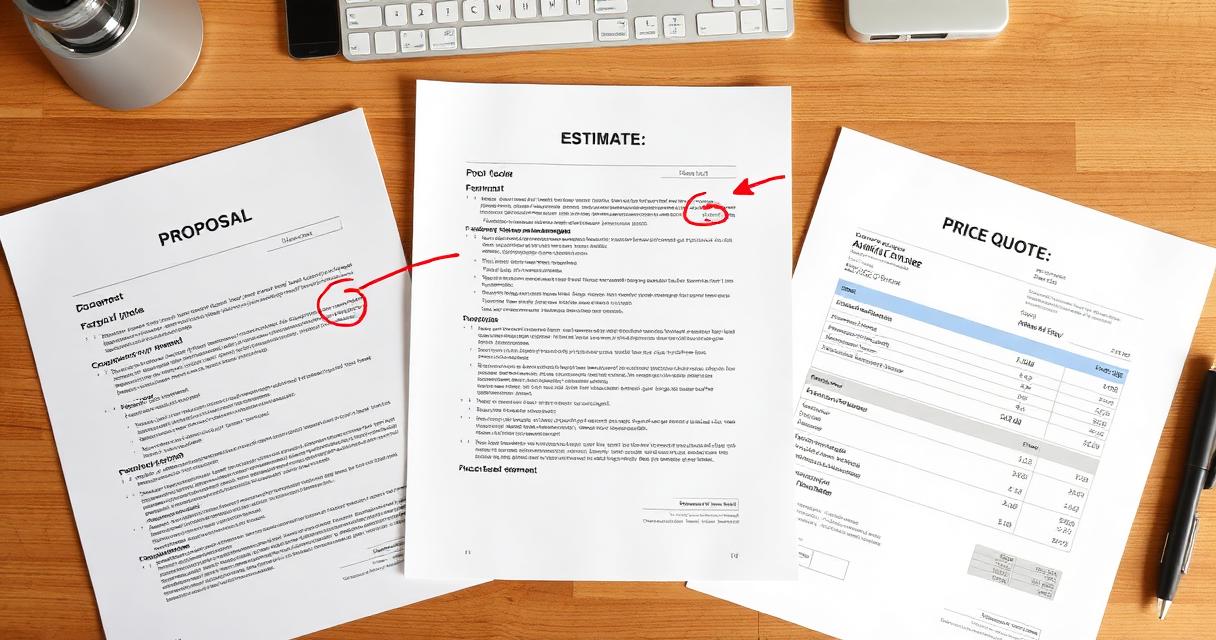
Quick Comparison
Quick Comparison — Purpose: Persuade and sell — Approximate cost.
| Feature | Proposal | Estimate | Quote |
|---|---|---|---|
| Purpose | Persuade and sell | Approximate cost | Fixed price offer |
| Price binding? | No | No | Usually yes |
| Level of detail | High (strategy + pricing) | Moderate | Specific line items |
| Includes scope? | Detailed scope + approach | Brief scope | Specific deliverables |
| Typical length | 2–10 pages | 1–2 pages | 1 page |
| Validity period | 30 days typical | 30 days typical | 14–30 days |
What Is a Proposal?
A proposal is a comprehensive document that sells your solution to a client's problem. It goes beyond pricing to explain your approach, methodology, timeline, and why you're the right choice.
A proposal is a comprehensive document that sells your solution to a client's problem. It goes beyond pricing to explain your approach, methodology, timeline, and why you're the right choice.
When to Use a Proposal
For tips on crafting compelling proposals, see our guide on writing winning proposals.
- Complex projects requiring explanation of approach
- Competitive situations where you need to stand out
- New client relationships where trust hasn't been established
- Large-value projects ($5,000+)
For tips on crafting compelling proposals, see our guide on writing winning proposals.
What Is an Estimate?
An estimate is an approximate calculation of how much a project will cost. It's not a commitment—it's your best educated guess based on the information available.
An estimate is an approximate calculation of how much a project will cost. It's not a commitment—it's your best educated guess based on the information available.
When to Use an Estimate
For more on the differences between these and invoices, read our detailed comparison.
- Early-stage discussions before scope is finalised
- Projects with variable requirements
- When the client needs a ballpark figure for budgeting
- Time-and-materials work where the final cost is uncertain
For more on the differences between these and invoices, read our detailed comparison.
What Is a Quote?
A quote (or quotation) is a fixed-price offer for specific work. Once accepted, the price is generally considered binding—you've committed to delivering the defined scope at the stated price.
A quote (or quotation) is a fixed-price offer for specific work. Once accepted, the price is generally considered binding—you've committed to delivering the defined scope at the stated price.
When to Use a Quote
Well-defined projects with clear deliverables When the client needs price certainty
- Well-defined projects with clear deliverables
- When the client needs price certainty
- Repeat work where you know the exact effort required
- Standardised services with predictable scope
Legal Implications
Understanding the legal weight of each document matters:
Understanding the legal weight of each document matters:
- Proposals: Generally not binding unless explicitly stated. They're invitations to negotiate.
- Estimates: Not binding. They set expectations but allow for adjustment as the project unfolds.
- Quotes: Usually considered binding for the validity period. If a client accepts your quote, you're expected to honour that price.
Always include expiry dates on quotes, and clearly state whether estimates are subject to change. Protect yourself with proper contracts.
Choosing the Right Document
Choosing the Right Document includes: Client asks "how much roughly? ": Send an estimate Client asks "what's the exact price?
- Client asks "how much roughly?": Send an estimate
- Client asks "what's the exact price?": Send a quote
- Client asks "can you help with this project?": Send a proposal
- RFP (Request for Proposal): Always a proposal
- Small, defined task: A quote is usually sufficient
Converting Between Documents
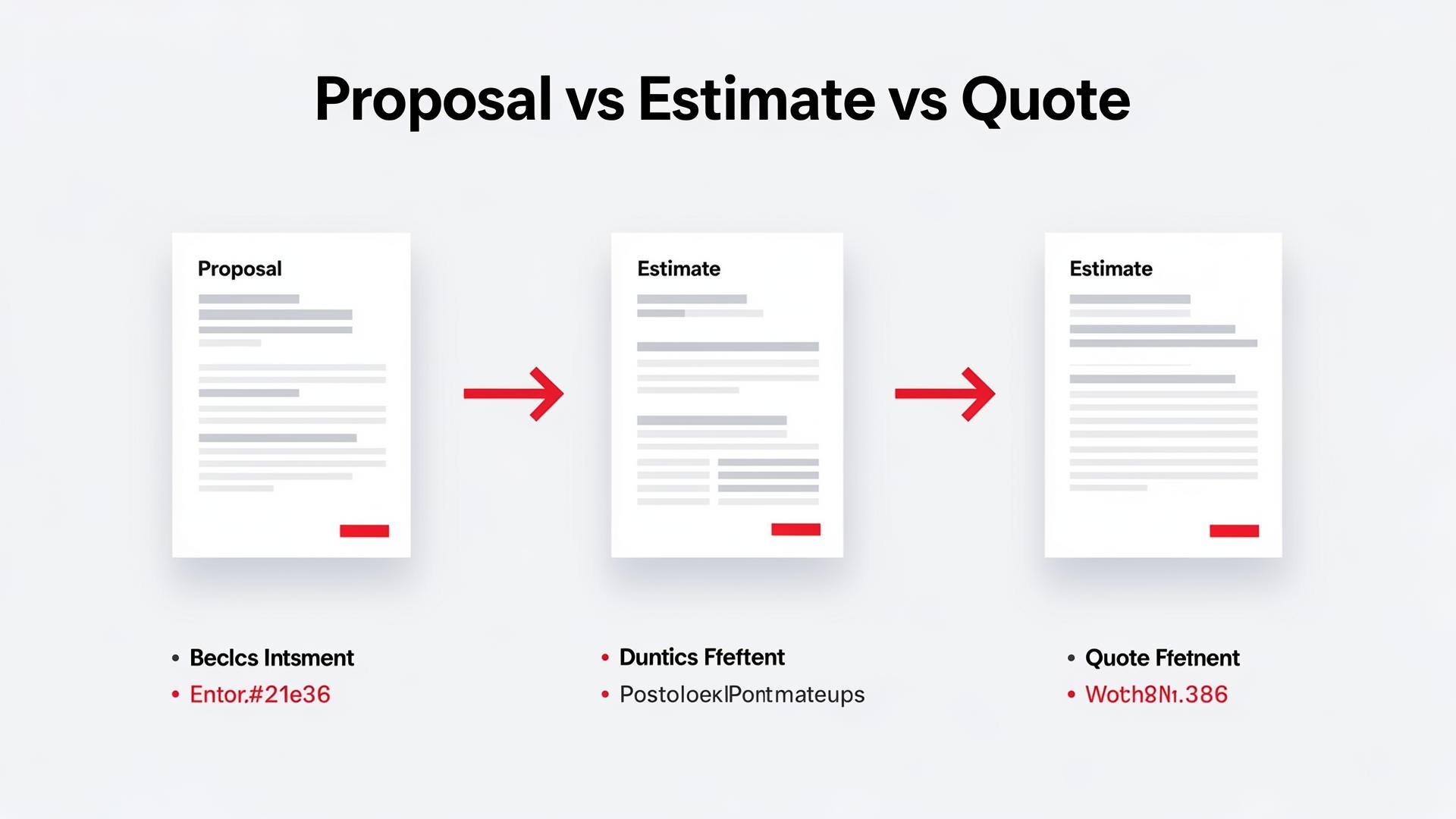
The typical flow is: Estimate → Proposal → Quote → Invoice
The typical flow is: Estimate → Proposal → Quote → Invoice
- Start with an estimate for initial budgeting discussions
- Develop a proposal once the client is interested
- Issue a formal quote when scope is agreed
- Convert to an invoice once work is completed
Invoicemonk supports this entire workflow, letting you convert between document types seamlessly.
Related Resources
- Complete Proposals & Estimates Guide
- Writing Winning Proposals
- Estimate vs Quote vs Invoice
- How to Price Project Work
From quote to paid invoice in one place
Send an estimate, get it approved, and convert it to an invoice without retyping anything in Invoicemonk, then collect through online payments. See plans and pricing or our comparison of US invoicing software.
Send an estimate, get it approved, and convert it to an invoice without retyping anything in Invoicemonk, then collect through online payments. See plans and pricing or our comparison of US invoicing software.
More in this series (11 articles)
From this series
Win more clients with compelling proposals and accurate estimates.
Related Topics
Digital Marketing, SEO Specialist, Content Creator & Product Professional
Olayinka is a digital marketer, content creator, growth and SEO specialist with 10+ years helping businesses in Nigeria, the UK, the US, Australia, and Dubai achieve their goals online.