Winning Proposal Templates by Industry: Customise for Success
Estimates & Proposals Series
This guide is part of a comprehensive series. Explore all 11 topics:
A generic proposal loses to a tailored one every time. Clients want to see that you understand their industry, speak their language, and have solved similar problems before.
This guide provides proposal frameworks for six major industries, plus tips on customising templates for any sector.
Universal Proposal Structure
Every effective proposal follows this basic structure, regardless of industry. For comprehensive guidance, see our complete proposal writing guide.
Every effective proposal follows this basic structure, regardless of industry. For comprehensive guidance, see our complete proposal writing guide.
- Executive summary: The client's problem and your solution in 2–3 paragraphs
- Understanding: Demonstrate that you understand their situation
- Approach: Your methodology and how you'll solve their problem
- Deliverables: Exactly what they'll receive
- Timeline: Milestones and deadlines
- Investment: Pricing with clear breakdowns
- About you: Relevant experience and social proof
- Next steps: Clear call to action
Consulting Proposal Template
Key Elements
- Situation analysis: Show deep understanding of their business challenges
- Methodology: Explain your consulting framework (discovery, analysis, recommendations, implementation)
- Expected outcomes: Quantify ROI wherever possible
- Case studies: Similar clients with measurable results
- Team bios: Highlight relevant industry experience
Tip: Consulting proposals should feel like a preview of your thinking. Show insight in the proposal itself—don't save all value for after they hire you.
Web Design / Development Proposal
Key Elements
- Current site audit: Brief analysis of what's working and what isn't
- Design direction: Mood boards or style references
- Technical specifications: Platform, features, integrations
- Content plan: Who provides content and in what format
- Launch plan: Testing, migration, and post-launch support
- Maintenance: Ongoing support options and costs
Marketing / Content Proposal
Key Elements
- Market research: Competitive landscape and opportunities
- Strategy overview: Channels, messaging, and target audiences
- Content calendar: Sample month of planned content
- KPIs: Specific, measurable goals and how you'll track them
- Reporting: Frequency and format of performance reports
IT / Technical Services Proposal
Key Elements
- Current infrastructure assessment: What they have now
- Proposed solution: Technical architecture and components
- Security considerations: Data protection and compliance measures
- Migration plan: How to transition without disruption
- SLAs: Service level agreements and support terms
- Training: Knowledge transfer and documentation
Creative Services Proposal
Key Elements
- Creative brief: Interpreted brief showing your understanding
- Concept direction: 2–3 initial concept descriptions
- Revision policy: Number of revisions included
- File deliverables: Formats, sizes, usage rights
- Usage licensing: Where and how designs can be used
Customisation Tips for Any Industry
Customisation Tips for Any Industry includes: Use their terminology: Mirror the language your client uses Reference their competitors: Show awareness of their market
- Use their terminology: Mirror the language your client uses
- Reference their competitors: Show awareness of their market
- Address industry-specific concerns: Compliance, seasonality, regulations
- Show relevant experience: Case studies from the same or similar industry
- Align with their goals: Frame everything in terms of their business objectives
After the Proposal
Sending the proposal is not the final step:
Sending the proposal is not the final step:
- Follow up strategically — see our proposal follow-up guide
- Be prepared for questions and negotiations
- If rejected, learn from it — read about handling proposal rejection
- Convert accepted proposals to formal estimates and then invoices
Related Resources
- Complete Proposals & Estimates Guide
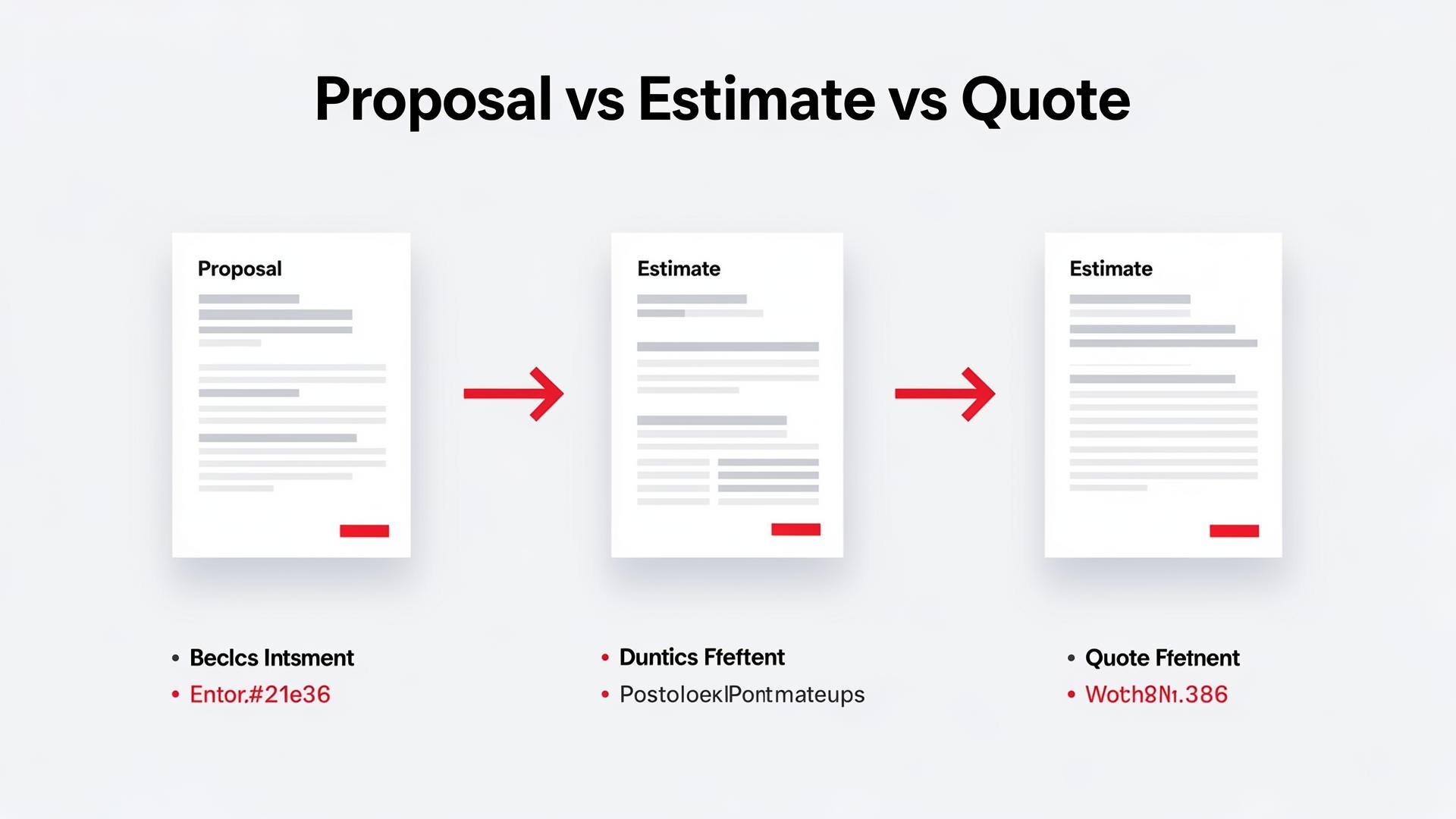
- Proposal vs Estimate vs Quote
- How to Price Project Work
- Invoicemonk Estimates & Proposals
Pricing Presentation by Industry
How you present investment/pricing should match client expectations in that sector—enterprise IT buyers expect itemized SLAs and support tiers, while creative clients often prefer a simple package price with clearly listed inclusions.
Adapting a Template for a New Industry
If a client's sector isn't covered above, start from the universal structure and research three things before writing.
- Terminology: Read the client's website and recent posts to mirror how they describe their work
- Regulatory context: Note any compliance, licensing, or seasonal factors specific to their industry
- Comparable case studies: Even an adjacent industry example is more persuasive than a generic one
Industry Templates Compared
Each industry template emphasizes different proof points—matching the right elements to the client's decision criteria increases your win rate.
| Industry | Key Proof Point | Typical Length | Best For |
|---|---|---|---|
| Consulting | Case studies, quantified ROI | 4-8 pages | Best for: strategic engagements where insight sells the deal |
| Web design/development | Portfolio, technical specs | 3-6 pages | Best for: clients evaluating look-and-feel plus functionality |
| Marketing/content | KPIs, sample content calendar | 3-5 pages | Best for: clients who want to see measurable growth plans |
| IT/technical services | Security, SLAs, migration plan | 5-10 pages | Best for: risk-averse clients needing detailed technical assurance |
| Creative services | Concept direction, usage rights | 2-4 pages | Best for: fast-moving creative decisions with clear deliverables |
Frequently Asked Questions
How long should a business proposal be?
Most effective proposals are 3-8 pages. Simple projects need 2-3 pages; complex enterprise projects may require 10+ pages. The key is being comprehensive without padding.
Should I use the same proposal template for every client?
No. While having a base template saves time, every proposal should be customised for the specific client and industry—adjust the executive summary, case studies, and terminology to show you understand their unique situation.
Do I need a different proposal structure for every industry?
Not entirely—the universal structure (summary, understanding, approach, deliverables, timeline, investment) works across industries; what changes is which sections you expand, such as security details for IT clients or concept direction for creative clients.
Should pricing be shown as a single number or broken down?
Breaking pricing into line items or phases is usually more persuasive than a single lump sum, since it helps clients see exactly what they're paying for and makes it easier to approve partial scope if budget is tight.
More in this series (11 articles)
From this series
Win more clients with compelling proposals and accurate estimates.
Related Topics
Digital Marketing, SEO Specialist, Content Creator & Product Professional
Olayinka is a digital marketer, content creator, growth and SEO specialist with 10+ years helping businesses in Nigeria, the UK, the US, Australia, and Dubai achieve their goals online.