Document Types Comparison for Business: Invoices, Receipts, POs, and More
Estimates & Proposals Series
This guide is part of a comprehensive series. Explore all 11 topics:
Invoices, receipts, purchase orders, quotes, credit notes—the world of business documents can be confusing. Each serves a specific purpose, and using the wrong one can create accounting errors, compliance issues, and client confusion.
This guide explains every common business document, when to use it, and how they all fit together.
Quick Reference Guide
Quick Reference Guide — Invoice: Seller — Request payment.
| Document | Created By | Purpose | Legally Binding? |
|---|---|---|---|
| Invoice | Seller | Request payment | Yes |
| Receipt | Seller | Confirm payment received | Proof of payment |
| Purchase Order (PO) | Buyer | Authorise a purchase | Yes, when accepted |
| Quote/Quotation | Seller | State fixed price offer | Binding for validity period |
| Estimate | Seller | Approximate cost | No |
| Proposal | Seller | Sell solution + pricing | No |
| Proforma Invoice | Seller | Pre-delivery estimate | No |
| Credit Note | Seller | Reduce/cancel invoice amount | Yes |
| Delivery Note | Seller | Confirm goods delivered | Proof of delivery |
| Statement | Seller | Summary of account activity | No |
Invoices
An invoice is a formal request for payment issued by the seller after goods are delivered or services completed. It's the most important financial document in business.
An invoice is a formal request for payment issued by the seller after goods are delivered or services completed. It's the most important financial document in business.
- When to use: After delivering goods or completing services
- Key elements: Invoice number, date, itemised charges, payment terms, total due
- Legal status: Creates a legal obligation to pay
For everything about invoicing, see our complete invoicing guide.
Receipts
A receipt confirms that payment has been received. It's issued by the seller to the buyer as proof of purchase.
A receipt confirms that payment has been received. It's issued by the seller to the buyer as proof of purchase.
- When to use: After receiving payment
- Key elements: Date, amount paid, payment method, items purchased
- Important: Receipts are essential for expense tracking and tax deductions
Learn about managing receipts with Invoicemonk's receipt management tools.
Purchase Orders (POs)
A purchase order is created by the buyer to authorise a purchase from a seller. It specifies what is being ordered, in what quantity, and at what agreed price.
A purchase order is created by the buyer to authorise a purchase from a seller. It specifies what is being ordered, in what quantity, and at what agreed price.
- When to use: When a business wants to formalise a purchase before delivery
- Flow: PO sent → Seller accepts → Goods/services delivered → Invoice sent → Payment made
- Common in: Corporate procurement, government purchasing, manufacturing
Quotes and Estimates
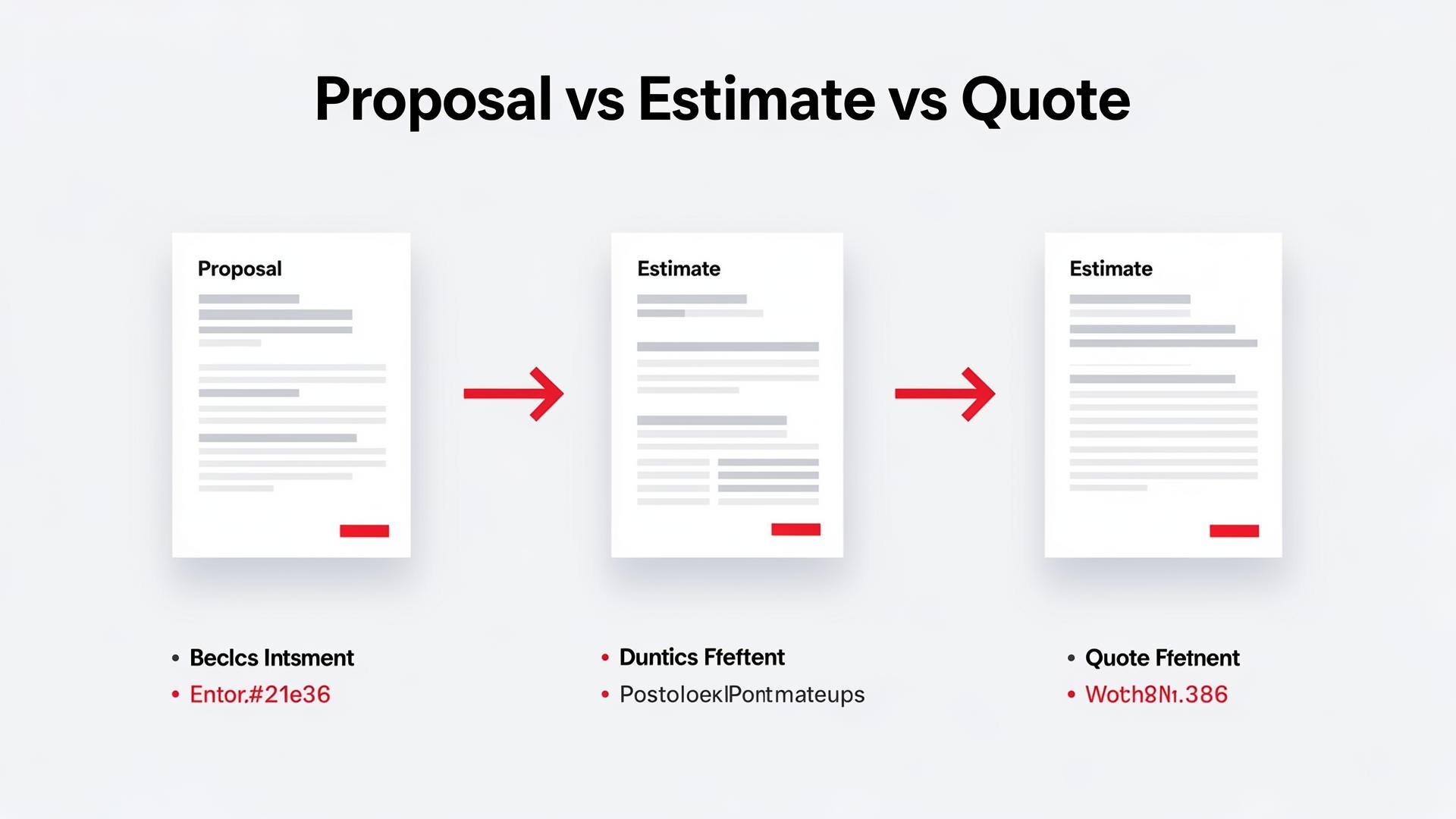
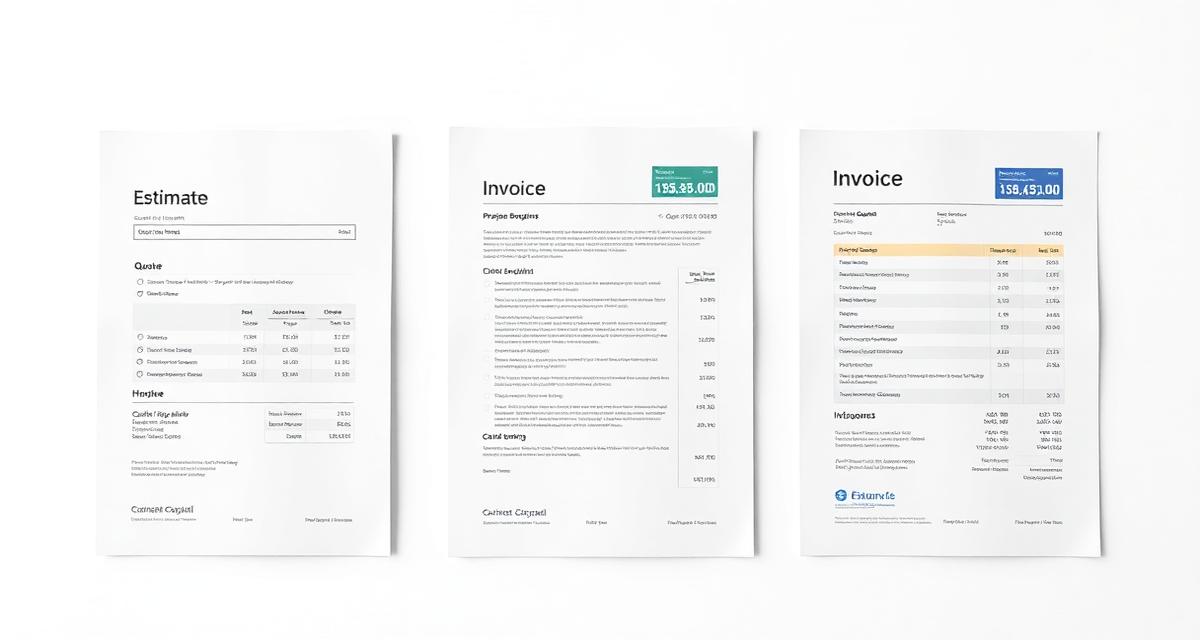
These pre-sale documents help clients understand costs before committing. For a detailed comparison, see proposal vs estimate vs quote explained.
These pre-sale documents help clients understand costs before committing. For a detailed comparison, see proposal vs estimate vs quote explained.
Credit Notes
A credit note reduces or cancels the amount owed on a previously issued invoice. It's essentially a "negative invoice.
A credit note reduces or cancels the amount owed on a previously issued invoice. It's essentially a "negative invoice."
- When to use: Returns, overcharges, discounts applied after invoicing, cancelled orders
- Key rule: Never delete or alter an issued invoice—issue a credit note instead
For details, read our guide on credit notes and invoice corrections.
Proforma Invoices
A proforma invoice is a preliminary invoice sent before goods are shipped. It's commonly used in international trade for customs pre-clearance.
A proforma invoice is a preliminary invoice sent before goods are shipped. It's commonly used in international trade for customs pre-clearance.
Learn the key differences in our proforma vs commercial invoice guide.
The Document Flow
In a typical business transaction, documents flow in this order:
In a typical business transaction, documents flow in this order:
- Estimate/Quote: Client asks "how much?" → you provide pricing
- Purchase Order: Client authorises the purchase (formal businesses)
- Delivery Note: Goods are delivered with documentation
- Invoice: You request payment for delivered goods/services
- Receipt: Payment is confirmed
- Statement: Monthly summary of all transactions (optional)
Tax and Compliance Implications
Different documents have different tax implications:
Different documents have different tax implications:
- Invoices: Must meet local tax authority requirements — see our compliance guides
- Receipts: Essential for claiming tax deductions
- Credit notes: Must reference the original invoice for proper accounting
- Purchase orders: Support expense justification during audits
Related Resources
More in this series (11 articles)
From this series
Win more clients with compelling proposals and accurate estimates.
Related Topics
Digital Marketing, SEO Specialist, Content Creator & Product Professional
Olayinka is a digital marketer, content creator, growth and SEO specialist with 10+ years helping businesses in Nigeria, the UK, the US, Australia, and Dubai achieve their goals online.